Even for a world getting used to wild weather, May seems stuck on strange.
Torrential downpours in Texas that have whiplashed the region from drought to flooding. A heat wave that has killed more than 1,800 people in India. Record 32 Celsius readings in Alaska, of all places. A pair of top-of-the-scale typhoons in the Northwest Pacific. And a drought taking hold in the East.
"Mother Nature keeps throwing us crazy stuff," Rutgers University climate scientist Jennifer Francis says. "It's just been one thing after another."
Jerry Meehl, an extreme-weather expert at the National Center for Atmospheric Research, points out that May is usually a pretty extreme month, with lots of tornadoes and downpours. Even so, he says, this has been "kind of unusually intense."
The word "stuck" provides one possible explanation. Francis, Meehl and some other meteorologists say the jet stream is in a rut, not moving nasty weather along. The high-speed, constantly shifting river of air 30,000 feet above Earth normally guides storms around the globe, but sometimes splits and comes back together somewhere else.
A stuck jet stream, with a bit of a split, explains the extremes in Texas, India, Alaska and the US East, but not the typhoons, Francis says.
Other possible factors contributing to May's wild weather: the periodic warming of the central Pacific known as El Nino, climate change and natural variability, scientists say.
For every degree Celsius the air is warmer, it can hold 7% more moisture. That, Texas state climatologist John Nielsen-Gammon says, "is supplying more juice to the event."
While it is too early to connect one single event to man-made warming, scientific literature shows "that when it rains hard, it rains harder than it did 20 to 30 years ago," says University of Georgia meteorology professor Marshall Shepherd.
As bad as the Texas flooding has been, the heat wave in India has been far worse - in fact, the world's fifth-deadliest since 1900, with reports of the 38 Celsius- plus heat even buckling roads. And it's a consequence of the stuck jet stream, according to Francis and Weather Underground meteorology director Jeff Masters.
When climate scientists look at what caused extreme events - a complex and time-consuming process that hasn't been done yet - heat waves are the ones most definitely connected to global warming, Shepherd says.

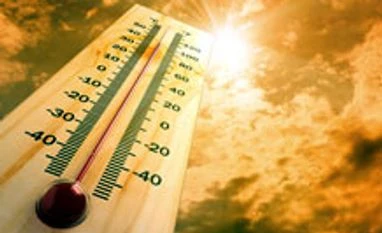 "May has been a month of extreme weather around the world")

