Sunset for public sector drug makers

Of the five units it owns, New Delhi wants to close two and sell another two
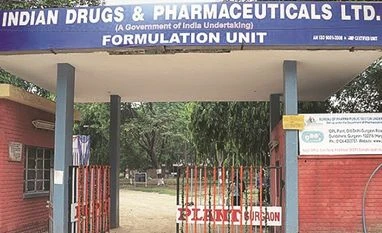
Pharmaceuticals, drugs, Indian Drugs & Pharmaceuticals, pharma industry, India
Indian Drugs and Pharmaceuticals’ declared mandate was not to make a profit but to supply affordable life-saving drugs.
Subir Roy Kolkata
Last Updated : Jan 12 2017 | 2:40 AM IST
Public sector pharmaceutical companies, which had long dropped out of the media’s sight, were recently briefly back among the headlines. The central government effectively decided to close four of the five which come under it and are loss-making. (Only Karnataka Antibiotics & Pharmaceuticals makes a profit.) While two will be closed straightaway, an attempt at strategic sale will be made for the other two. But the way the news reports were worded, all four seem eventually headed for the chopping block.

The two that are clearly headed for closure are Indian Drugs & Pharmaceuticals and Rajasthan Drugs & Pharmaceuticals. The two that still have a theoretical chance of a new life in the hands of a new owner are Hindustan Antibiotics and Bengal Chemicals & Pharmaceuticals. 

Considering the sorry state in which the four companies are and the losses they have incurred over decades, it makes sense for the government to cut its losses and close them down. But the country’s current complex healthcare reality is such there is also an argument for at least some of them to be reborn in a new avatar. 

The life story of these companies is intricately linked to the birth and growth of India’s pharmaceutical industry and they have played a key role in making India a global leader in delivering essential medicines to the poor at affordable prices. Bengal Chemicals, as it is popularly referred to, was India’s first pharmaceutical company, set up in 1901 by Acharya Prafulla Chandra Ray, considered the father of Indian chemistry.

Other than staple antibiotics, it produced several successful home and personal care products that still have a niche market like Cantharidine hair oil and Aqua Ptychotis, a remedy for treatment of stomach ailment made primarily from a natural product, ajowan oil. 

Interestingly, Bengal Chemicals has in recent years staged a clear financial recovery. Sales have gone up over five times in two years to Rs 88 crore in 2015-16. In a recent interaction with Business Standard, Bengal Chemicals Managing Director PM Chandriah said the company could close the current financial year with a profit of Rs 4-5 crore. 

A steady reduction in staff by over 50 per cent in the last decade has caused employee productivity to zoom in the last two years by nearly seven times. Coupled with better financial management, the company is all set to turn around, though it will be a long while before it can wipe out its accumulated losses of Rs 282 crore. 

Bengal Chemicals went into losses during the ’50s and was nationalised in 1980. It is in the process of setting up new capacity and some of its home care (cleanliness) brands figure in the list of recommended products for the Swacch Bharat mission. 

From past to present

Hindustan Antibiotics, which was set up in 1954 with help from the World Health Organisation and United Nations International Children’s Education Fund, was the first public sector pharmaceutical company in India and the first to undertake commercial manufacture of antibiotics. Its unit at Pimpri near Pune made penicillin.
 
Production has been virtually shut for two years and in 2014-15 (till January) it made a loss of Rs 75 crore on a turnover of Rs 14 crore. One revival package having failed, Hindustan Antibiotics is now working on a second revival package. 

Indian Drugs & Pharmaceuticals was set up in 1961 to achieve self-sufficiency in essential life-saving medicine and to build up the infrastructure for an Indian drug industry. In keeping with the ideology of the times, Jawaharlal Nehru wanted it in the public sector as he thought the private drug industry exploited the public. Its first unit came up in Hyderabad with help from the Soviet Union, India’s closest strategic ally of that time. 

Its declared mandate was not to make a profit but to supply affordable life-saving drugs— the last it made a profit was in 1979. In 2013-14, it made a net loss of Rs 171 crore on a turnover of Rs 60 crore. 

It played a key role in enabling national programmes for family planning and fighting tuberculosis and leprosy. Indian Drugs & Pharmaceuticals has in a way been a mother institution for the Indian drug industry where young scientists have picked up their skills and then moved on. Anji Reddy, the founder of Dr Reddy’s Laboratories, worked at its Hyderabad unit before branching out on his own. 

Indian Drugs & Pharmaceuticals played a stellar role in the development of Indian process chemistry, or the skill to make generic medicine through a new route, which has helped companies like Sun, Cipla, Dr Reddy’s and Lupin do well in the US, the world’s largest market. 
Rajasthan Drugs & Pharmaceuticals, again a supplier of drugs to the public health system, was set up in 1979. It first ran into loss in 2013-14, at Rs 19 crore on a turnover of Rs 43 crore. 

Considering the huge losses that these state-owned units are running up and with the government as owner and the type of management at the helm of affairs, it seems doubtful if revival packages can be formulated, funded and seen through within a finite time frame so as to move towards recovery. So it would be logical to argue that since the idea of going in for public ownership in order to serve certain welfare gains is now dated, it would be better to close down the units. 

But there is another perspective. The government is now engaged in a battle with the industry to effectively exercise price control so as to make available essential medicines at affordable prices. It is worth considering if, as an alternative to price control, these firms could be used to produce at least some of those generic essential medicines. And in order to ensure efficient functioning, the management of the units can be contracted out while maintaining a vigil to ensure that good manufacturing practices are followed. 

In 2013, the parliamentary standing committee for the department of pharmaceuticals, headed by Shanta Kumar of the Bharatiya Janata Party, recommended that sick state-owned units be revived so as to make available an adequate supply of generic, essential medicines for public health services. The committee’s logic was that this had become necessary as private companies were not the answer to the need for adequate supply of essential affordable generics.

One subscription. Two world-class reads.

Already subscribed? Log in

Subscribe to read the full story →
*Subscribe to Business Standard digital and get complimentary access to The New York Times

Smart Quarterly

₹900

3 Months

₹300/Month

SAVE 25%

Smart Essential

₹2,700

1 Year

₹225/Month

SAVE 46%
*Complimentary New York Times access for the 2nd year will be given after 12 months

Super Saver

₹3,900

2 Years

₹162/Month

Subscribe

Renews automatically, cancel anytime

Here’s what’s included in our digital subscription plans

Exclusive premium stories online

  • Over 30 premium stories daily, handpicked by our editors

Complimentary Access to The New York Times

  • News, Games, Cooking, Audio, Wirecutter & The Athletic

Business Standard Epaper

  • Digital replica of our daily newspaper — with options to read, save, and share

Curated Newsletters

  • Insights on markets, finance, politics, tech, and more delivered to your inbox

Market Analysis & Investment Insights

  • In-depth market analysis & insights with access to The Smart Investor

Archives

  • Repository of articles and publications dating back to 1997

Ad-free Reading

  • Uninterrupted reading experience with no advertisements

Seamless Access Across All Devices

  • Access Business Standard across devices — mobile, tablet, or PC, via web or app

Next Story



