The Ambassador's French rally

With Peugeot taking over, will the iconic brand find a second life?
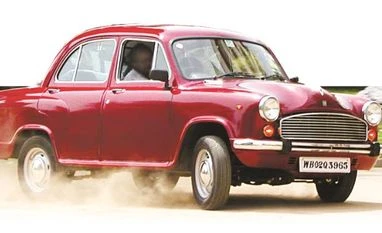
Ambassador, car
Avishek Rakshit Kolkata
Last Updated : Feb 13 2017 | 1:03 AM IST
The Indian Ambassador, once synonymous with the country and its people for its ability to navigate rugged and rough terrains and accommodate large-sized families is making a final bid for a new lease of life. As Peugeot takes the brand over from its original maker, Hindustan Motors (HM), many are hoping that the car will get a fresh shot on the road. 

Modelled on the Morris Oxford Series 3, the car ruled Indian roads for over three decades until a plethora of reasons and finally the small car revolutionary, Maruti Suzuki, finally drove it off the ledge. As people moved on to new cars, HM struggled to keep up with the changing times and the brand saw its domain shrinking until today it survives as a government car and as the ubiquitous Kolkata cab. With Peugeot, many expect the brand to get another shot, on the lines of Mini Cooper, Royal Enfield and others. 

“It is clear that the original owners of the brand are not interested. Under the new owners, the brand has a better chance of revival,” Ramesh Thomas, president of Equitor, a management consultancy firm said. Thomas believes that the Ambassador, with “nostalgia” as the unique selling point can be modernised while maintaining the similar vintage looks. “There are several examples in history, particularly with the World War II brands which were reengineered and are still relevant today,” he said citing examples of the Jeep, Land Rover, Volkswagen Beetle, Bullet motorcycles and others. “However, it needs to be seen how much Peugeot has understood Ambassador’s brand equity,” Thomas added.

Ambassador’s success lies in the pre-1980’s market scenario. Only three players operated in the market at the time: HM with Ambassador and Contessa, Premier Automobiles with Fiat and Standard Motor Products with Pennant, Herald and others. While the Fiat was popular in the southern and western markets, HM ruled in north and east India. 

The biggest boost for the brand came from the Indian government. The car was the de facto preference for ministers, bureaucrats, army and other government departments. “This gave the brand an elitist tag and the Ambassador stood for government authority and power,” brand expert, Sandeep Goyal said. All that changed with the 800 cc Maruti Suzuki coming in, in 1983. By the time the Korean and Japanese carmakers stepped in, the iconic Ambassador was all but history. From a 75 per cent market share in 1970, Ambassador’s market share dipped below 20 per cent between 1984 and1991. 

As it prepares for a new life, experts point to an interesting fact. The Ambassador straddles two ends of the market with equal ease, they say, and hence may find easy acceptance in all categories even now. While it is a symbol of power, it is also a symbol of the masses. Goyal believes that right from the beginning, the car has been able to break the barriers of mass and premium quite easily. In the beginning, it would have been more elitist, for how many people could afford a car at the time, asks Goyal. It became a family car because it offered value for money; durable, spacious and able to go long distances. “By the time, it became a taxi, the brand had exited its position as a family car”, Goyal said. Unfortunately, the brand did not keep up with the rapidly changing contours of the car market and HM ultimately had two choices – to turn it into a collector’s edition or give it one more chance. It seems to have chosen the latter, although many would argue that they gave up too easily on a good thing.

London to Paris via Kolkata

1942-54
B M Birla sets up an assembly plant in collaboration with Morris Motors in Gujarat and begins importing the Morris 10 Series M kits. Soon thereafter the Morris 14 is launched as Hindustan 14; Morris Minor comes in as Baby Hindustan. Finally, the Morris Oxford Series III was adapted to the Hindustan Landmaster that went on the road for a princely sum of Rs 10,000

1954-63
Morris Oxford Series III tooling was transferred to India; design tweaked and re-christened the Ambassador Mark I. It cost Rs 17,000, the Mark II followed soon but it would be 12 years before the Amby changed its looks again

1975-79
The Mark III and IV models were launched and it was heydays for the brand; Clunky and spacious, the brand became a metaphor for the nation as it was seen as the ultimate family car

1979-2003
The decline began sometime around the eighties with the launch of the Maruti 800 driving it off the roads

2003-04
A new model was launched. It even had an optional sunroof and it was called Ambassador Avigo. But it was too late and soon the brand became the staple of bureaucrats and taxi drivers, the only two uses it has today

2014
The production lines went silent no new Ambassadors would roll out ever again 

2017
HM sells the Ambassador brand to Peugeot for Rs 80 crore

One subscription. Two world-class reads.

Already subscribed? Log in

Subscribe to read the full story →
*Subscribe to Business Standard digital and get complimentary access to The New York Times

Smart Quarterly

₹900

3 Months

₹300/Month

SAVE 25%

Smart Essential

₹2,700

1 Year

₹225/Month

SAVE 46%
*Complimentary New York Times access for the 2nd year will be given after 12 months

Super Saver

₹3,900

2 Years

₹162/Month

Subscribe

Renews automatically, cancel anytime

Here’s what’s included in our digital subscription plans

Exclusive premium stories online

  • Over 30 premium stories daily, handpicked by our editors

Complimentary Access to The New York Times

  • News, Games, Cooking, Audio, Wirecutter & The Athletic

Business Standard Epaper

  • Digital replica of our daily newspaper — with options to read, save, and share

Curated Newsletters

  • Insights on markets, finance, politics, tech, and more delivered to your inbox

Market Analysis & Investment Insights

  • In-depth market analysis & insights with access to The Smart Investor

Archives

  • Repository of articles and publications dating back to 1997

Ad-free Reading

  • Uninterrupted reading experience with no advertisements

Seamless Access Across All Devices

  • Access Business Standard across devices — mobile, tablet, or PC, via web or app

Next Story



