Strategic coupling

A post-Pahalgam analysis of India's relations with friendly military powers
11 min read
Updated On: Jun 25 2025 | 9:44 PM IST
indian military, indian army, defence, army

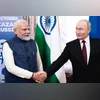
Russian President Vladimir Putin (right) with Indian Prime Minister Narendra Modi during their meeting on the sidelines of the Brics Summit in Kazan, Russia, on October 22, 2024. Photo: Reuters

With the post-World War II global order in disarray since the start of US President Donald Trump’s second term in January, and with two adversarial neighbours, one way India can safeguard its interests is through strategic bilateral relations. 
India has defence ties with four of the five permanent members of the UN Security Council —Russia, France, the United States and the United Kingdom. All four support India’s bid for a seat at the high table. The three Western powers need India to balance the rise of the other UNSC permanent member, China.  
India has historical defence ties with Russia and growing security relations with Israel. France has emerged as India’s strongest partner in the European Union. These relations helped India during its four-day military clash with Pakistan that was triggered by a targeted terrorist attack in the Indian town of Pahalgam on April 22, in which 26 people were killed. 
While India’s era of nonalignment is long over, the country has maintained its strategic autonomy by not entering any formal military alliance. India must continue to deepen selective ties, foreign policy experts say. 
Continental support 
Trump’s public position on the India-Pakistan conflict, coinciding with a seemingly temporary truce in US-China trade, has bothered India.Now, the 78-year-old India-Russia diplomatic relationship is being favourable looked upon by many in India. Defined as a strategic partnership in 2000, it became “special and privileged” by 2010, and today includes dialogues of the defence and foreign ministers, and summit-level talks between the leaders of the two countries.
 
Despite risks of Western sanctions, India integrated the Russian-made S-400 air defence system, considered the world’s most advanced such technology, with its armed forces’ indigenous platforms. India used the systems to thwart Pakistan’s aerial raids over May 7-10.  
India and Russia coproduce the supersonic BrahMos missiles, which were used during India’s strikes on Pakistan airbases; the T-90 tanks; the AK-203 rifles; and the Su-30 MK1 fighter jets. Although India has diversified its import of defence goods to include France, the US and the UK, Russia remains the single-largest exporter. 
 
The India-Russia relationship, according to both governments, has evolved from a buyer-seller framework to that of joint research, development and production of advanced defence technologies — projects are underway to create new weapons and systems.  
“This round of intense military action with Pakistan has certainly proved the indispensability of the Russia relationship. It is a reminder to all those who advocated that India distance itself from Russia. Fortunately, those who matter in the government have a mature view and understanding of the partnership,” Pankaj Saran, India’s former deputy national security advisor and ambassador to Russia (2016-18), said. 
Russia’s role goes beyond defence supplies to supporting India in geopolitics.“Of course, as India itself changes and evolves and our needs change, those will also reflect in the areas of cooperation we develop with Russia in the future.” Russia has, on occasion, also acted as a backroom negotiator between India and China. But Saran said that aspect should not be overinterpreted. India has its own channels with China.
 
Russia-China relations have come a long way since the Sino-Soviet split during the Cold War. This relationship complicates things between India and Russia, especially owing to China’s alliance-like military support of Pakistan, as evident in the May conflict. Examples: India evaded Pakistan’s HQ-9 air defence system and has collected the remains of at least one PL-15 missile, both Chinese-made. China also provided satellite help to Pakistan. 
India must prepare for a strategic environment in which a China-Pakistan alignment in the Himalayas becomes less tactical and more entrenched, according to a post-Pahalgam paper, titled “proxy wars”, authored by Jagannath Panda and Eerishika Pankaj, for the Institute for Security and Development Policy, a Stockholm-based nonprofit.  
It would be a mistake to paint Russia and China with the same brush, Saran said, adding that as a major power, India should influence international opinions, so as not to push Russia into China’s embrace.Trump’s re-election has eased the Western pressure on Russia that followed its invasion of Ukraine in 2022. That has allowed Russia to be less dependent on China globally, said Srikanth Kondapalli, professor, China studies, Jawaharlal Nehru University, New Delhi.
 
China has courted countries in Western Europe and the EU, which Russia regards as adversarial. The US maintains good ties with Pakistan, despite China’s influence. The US is aware that Turkiye, a member of the North Atlantic Treaty Organisation (Nato), has good relations with Russia. 

INDIA'S FIVE MAIN DEFENCE AND SECURITY PARTNERS 

France

  • Formal agreement: Since 1998
  • Major areas of cooperation: Defence, security, civil nuclear matters, outer space, maritime and cyber security, advanced computing and counterterrorism. Plus, joint military exercises.
  • Road map: Set for the next 25 years 
 

Israel

  • Formal agreement: Since 2017
  • Major areas of cooperation: Security, defence and counterterrorism.
  • Road map: To bolster the joint working group on defence
 

Russia

  • Formal agreement: Since 2000 
  • Major areas of cooperation: Defence (military-technical collaboration), geopolitical, security, science and technology. Plus, joint military exercises.   
  • Road map: Set until 2030


United Kingdom


  • Formal agreement: Since 2004
  • Major areas of cooperation : Defence, security and counterterrorism. Plus, joint military exercises.   
  • Road map: Defence and International Security Partnership, signed in 2015; India-UK agreement on critical and emerging technologies led by the national security advisors

United States

  • Formal agreement: Since 2004
  • Major areas of cooperation: Defence, security, intelligence-sharing, geopolitical, counterterrorism, civil nuclear matters, outer space, science and technology. Plus, joint military exercises. 
  • Road map: A framework for India-US defence cooperation has existed since 2005, renewed every 10 years; India-US agreement on critical and emerging technologies led by the NSAs. 
  • Other bilateral mechanisms: Maritime and industrial security meetings. 
In May, Pakistan unsuccessfully tried to hit India with barrages of the Turkish-origin Yiha-III drones. India used Israeli-made Harop loitering munitions in its counterattacks. Prime Minister Narendra Modi became the first Indian head of government to visit Israel, in 2017. The two countries have been strategic partners, since collaborating on counterterrorism and defence. Their bilateral trade, minus defence, was $6.53 billion in 2023-34.
 
Days after the Pahalgam attack, External Affairs Minister S Jaishankar posted a photo on X of his meeting with the Israeli Ambassador to India, Reuven Azar, and wrote: “Appreciated Israel’s steadfast support in combating cross-border terrorism.”
It is unclear if Israel provided intelligence to India for Operation Sindoor. The Israeli embassy in New Delhi refused to comment. A spokesperson only said: “Our relations are very strong and wide, especially now.” 
 
Israel, which was attacked by Hamas in 2023, continues to wage a  war in Gaza. India supports a two-state solution: Israel and Palestine, living in peace. 'Western friends’  
India’s strategic relations with the US have grown, through both Republican and Democrat governments. On the night of December 9, 2022, Chinese and Indian troops clashed near a high-altitude border ridge in Yangtse, a region in Tawang, Arunachal Pradesh, India, with melee weapons. It was the deadliest fight between the two armies since the Galwan River valley clash killed at least 24 Indian and Chinese soldiers in 2020. 
 
India and China have honoured the non-use of firearms at each other’s troops near the Line of Actual Control over the past four decades.During the Yangtse incident, the Indian Army was able to stop “a Chinese military incursion” along the LAC, as a result of live intelligence provided by the US government in the fastest ever such information-sharing with the Indian government. 
“This set a precedent for how intelligence-sharing between Delhi and Washington can be made more robust and real-time,” Observer Research Foundation, a New Delhi-based think tank, wrote in an in-house journal. 
Rear Admiral Vishal Bishnoi (left) and Rear Admiral Casey Moton of the Indian and the US navies at the 8th meeting of the India-US working group on aircraft carrier technology cooperation in India over May 13-16. Photo: Indian Navy
 
The US Director of National Intelligence, Tulsi Gabbard, said in April at this year’s Raisina Dialogue, a security conference in New Delhi, that intelligence-sharing is a focus area in US-India relations. In 2020, India and the US decided to work closely on maritime security. During Trump’s first term, India was seen as contributing to maintain a peaceful Indo-Pacific region, resulting in increased defence exports from the US to India, according to analysts.
 
After dragging its feet on the grouping — among itself, the US, Japan and Australia — for years, India is ready to host the Quad Leaders’ summit later this year. India’s defence and external affairs ministers talk to their US counterparts, the secretaries of state and defence, on political, military and strategic matters. The countries hold joint military exercises, and India has bought defence goods worth more than $20 billion from the US. Trump has asked India to buy more to offset its $50 billion trade surplus with the US.  
The US wants to deploy more F-35 fighter jets in Asia, according to the Janes Defence Weekly. After Trump’s May ceasefire announcement, in which he banded India and Pakistan together, the chances of India buying the stealth aircraft from the US seem low, sources in the Indian military said. 
 
Some Indian analysts say one episode should not define India-US relations. But that, the US should know. Just as Europe’s security architecture was affected by the Russian invasion of Ukraine, the Galwan clash gave India “strategic clarity”. Even so, Indian policy hasn’t changed.
 

India has never joined a military alliance despite external and internal changes. The 1971 Indo-Soviet Treaty of Peace, Friendship and Cooperation was the closest India came to the idea. 

India has never joined a military alliance despite external and internal changes. The 1971 Indo-Soviet Treaty of Peace, Friendship and Cooperation was the closest India came to the idea. “This does not mean we cannot or will not do so in future,” Saran, the former deputy NSA, said. “The point is to ensure India has the ability and the will to exercise choices, and at the end of the day to protect and promote our vital national interests.”  
India sustaining a non-alliance position will depend on how China engages with India, as China becomes more powerful, because of the ensuing global chaos. India’s current image is non-threatening to established Western powers.   
Harsh V Pant, a foreign policy expert, said: “India is doing well, but it is not in a treaty alliance with the US or a European country. What happens when India is expected to pick sides?” 
France is India’s oldest “strategic partner”. Since 1989, the relationship has covered defence and security, civil nuclear matters and outer space, and now the Indo-Pacific. The Horizon 2047 document has set the course of bilateral cooperation for the next 25 years, until the centenary of India’s independence from British rule, by when India seeks to be a developed country. 
India has purchased Rafale fighter jets and P-75 Scorpene submarines from France. The Indian government’s Defence Research and Development Organisation opened an office at the Indian embassy in Paris in 2023. The Indian Space Research Organisation has used the French company Arianespace’s facility to launch its heavier communication satellites on a commercial basis.  The Jaitapur nuclear power plant in India is a French collaboration. Earlier this year, both countries agreed to work on low- and medium-power modular reactors. 
India’s other strategic partner is the UK, with whom it has, like the US, an agreement on critical and emerging technologies. 
Sharing defence technology lies at the heart of being self-reliant, and the UK is working with India on this, a diplomatic source said.  
The UK-India Technology Security Initiative, launched in 2024, is headed by the NSAs of the two countries.“It will set out a bold new approach for how the UK and India work together on the defining technologies of this decade – telecom, critical minerals, artificial intelligence, quantum, health and biotechnology, advanced materials and semiconductors,” a spokesperson for the British High Commission in India said.
 
The UK initiated a joint industrial working group between the defence industries of the two countries in 2022. In early April, the Ministry of External Affairs informed India’s Parliament: “Amid uncertainties and challenges of geopolitical tensions and shifting equations, the government has taken steps to strengthen India’s strategic position.” India has strategic partnerships in some form with 30 countries, developed and developing. India’s defence-industrial complex won’t be built overnight. India will need relations with military powers to access advanced technology. 
Premium ContentPremium ContentSubscription ExpiredSubscription Expired

Your access to Blueprint has ended. But the story is still unfolding.

No longer a subscriber? There’s a new reason to return.

Introducing Blueprint - A magazine on defence & geopolitics

Introducing Blueprint - A magazine on defence & geopolitics

Like what you read? There’s more in every issue of Blueprint

From military strategy to global diplomacy, Blueprint offers sharp, in-depth reportage on the world’s most consequential issues.

Exclusive pricing for Business Standard digital subscribers

Choose your plan

Exclusive Pricing

Choose your plan

58% off
₹12,000

Blueprint Digital

₹5,000

annual (digital-only)

₹416/Month

72% off
₹24,000

Blueprint Complete

₹6,500

annual (digital & print)

₹541/Month

37% off
₹12,000

Blueprint Digital

₹7,500

annual (digital-only)

₹625/Month

62% off
₹24,000

Blueprint Complete

₹9,000

annual (digital & print)

₹750/Month

Here's what's included:

  • Access to the latest issue of the Blueprint digital magazine

  • Online access to all the upcoming digital magazines along with past digital archives

  • * Delivery of all the upcoming print magazines at your home or office

  • Full access to Blueprint articles online

  • Business Standard digital subscription

  • 1-year unlimited complimentary digital access to The New York Times (News, Games, Cooking, Audio, Wirecutter, The Athletic)

Written By :

Satarupa Bhattacharjya

Satarupa Bhattacharjya is a journalist with 25 years of work experience in India, China and Sri Lanka. She covered politics, government and policy in the past. Now, she writes on defence and geopolitics.
First Published: Jun 24 2025 | 9:09 PM IST

Next Story