Anne Frank: A betrayal theory

The Last Secret of the Secret Annex sheds light on a complex historical mystery
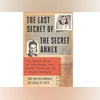
The Last Secret of the Secret Annex
Kanika Datta New Delhi
5 min read Last Updated : Oct 18 2023 | 9:52 PM IST
The Last Secret of the Secret Annex
Authors: Joop Van Wijk-Voskuijl & Jeroen De Bruyn
Publisher: Simon & Schuster
Pages: 263
Price: Rs 699

Who betrayed Anne Frank and her family to the Gestapo? Like the controversy surrounding John F Kennedy’s assassination, this question has provoked many theories. The movie of the 761-day ordeal that Anne and her family faced in the top-floor annexe of the office once owned by Frank’s businessman father points to a nosy employee. But doubts about his complicity arose when in 1990, it was revealed that the voice of the anonymous caller to the Gestapo had been that of a young woman.

In 2015, 70 years after Anne, 15, and her older sister Margot died of typhus in Bergen-Belsen concentration camp, Joop Van Wijk-Voskuijl offered a compelling theory centred on this information. He is the son of Bep Voksuijl, one of the circle of six “helpers” that kept the Frank families and four other Jews who hid in the annexe supplied with food and other necessities from mid-1942 to July 1944. Originally written in Dutch, this English translation was re-published this year, almost 80 years after Anne died just weeks before Allied troops liberated the camp.  

This is the son’s tribute to his mother (his grandfather Johan, another of the helpers, built the famous bookcase that hid the stairway leading to the annexe). It is also, despite its sensational title, a sensitive portrait of a society under siege and the conflicting ways in which individuals behave under pressure.

Bep, the most low profile of the helpers, was also deeply traumatised by her wartime role. Even the honour of the title of “Righteous Among Nations” awarded by Israel did not alter her state of mind. The title was conferred at the behest of Anne’s father, Otto, the sole survivor of the family (his wife was gassed at Auschwitz soon after arrival because an injury to her hand left her unable to work).

Bep rarely spoke about her experiences in those fateful years, suffered deep depression, attempted suicide at least once and behaved erratically towards her children. Her marriage to an alcoholic did nothing to help her mental stability. 

The book evolved from the research of a teenage boy, Jeroen De Bruyn, who was fascinated, as many teenagers have been, with Anne’s story. Jeroen eventually reached out to Wijk-Voskuijl for more information about Bep. The book was meant to be written only by De Bruyn, but Wijk-Voskuijl realised that the deeper he got into the project, the more personal it turned out and the more urgent it became to solve a “mystery that haunted my mother’s life and tore a hole in a family that to this day has never been repaired”.

So The Last Secret of the Secret Annexe has two authors but is written in Wijk-Voskuijl’s voice (De Bruyn provided the research). It is hard to put down even if you know the basic facts of Anne’s story and understand that this is a son’s attempt to reconcile with a mother with whom he was estranged till her death.

In Wijk-Voskuijl’s telling, Bep’s melancholy was linked to her older sister Nelly. He builds a plausible case that it was Nelly, a party animal at heart, who betrayed the Franks. Unlike her family, Nelly embraced the invaders in more ways than one. She schmoozed with German soldiers, worked for the Nazi administration in Amsterdam and for a while lived in Austria with a German officer. Later, she worked for the Nazis in France.

Wijk-Voskuijl relies on three pieces of circumstantial evidence to pinpoint Nelly’s role. The first was the voice of the young woman caller as allegedly identified by a former SS officer. The second is that unlike Gestapo responses to other tip-offs when officers would wait some days for corroboration, the response to this one was immediate, an indication, Van Wijk-Voskuijl contends, that the information had come from somebody up close and reliable — like Nelly. And, finally, Nelly’s name was excised from Anne’s diary at Otto’s request.

How did Nelly discover this closely guarded secret? Wijk-Voskuijl does not address the question but the reader can infer a possible indiscretion on Bep’s part — which may explain her post-traumatic stress disorder (PTSD).  

It is impossible to check the veracity of this theory because the protagonists are dead. The information about the woman caller came fourth-hand, from Frank’s second wife in an interview after his death. She said he heard it from an investigator who had pursued enquiries with one of the SS officers involved. Also, on his return from Auschwitz, Otto went around the neighbourhood asking if they knew people were secreted in the annexe. It turned out most of them did. So anybody could have been the informer.  

Anne Frank came to embody the tragedy of the Holocaust. Wijk-Voskuijl is careful to qualify this narrative. He writes that the diaries and the house, now a museum, morphed into a PR exercise for the Netherlands, giving the impression that thousands of Jews were hiding there and the Dutch people were all in the Resistance. Though the Germans orchestrated the Holocaust, it was the Dutch who provided the lists of Jews, participated in the round-ups, and laid on the transport to the death camps. Seventy-five per cent of Dutch Jews were murdered in the Holocaust, giving the Netherlands the highest death rate among western European countries occupied by the Nazis. Against the background of the Israel-Palestine war, this book, like many others on the Holocaust, is a forceful reminder of the injustice of persecuting a people for their identity and expropriating their property.

One subscription. Two world-class reads.

Already subscribed? Log in

Subscribe to read the full story →
*Subscribe to Business Standard digital and get complimentary access to The New York Times

Smart Quarterly

₹900

3 Months

₹300/Month

SAVE 25%

Smart Essential

₹2,700

1 Year

₹225/Month

SAVE 46%
*Complimentary New York Times access for the 2nd year will be given after 12 months

Super Saver

₹3,900

2 Years

₹162/Month

Subscribe

Renews automatically, cancel anytime

Here’s what’s included in our digital subscription plans

Exclusive premium stories online

  • Over 30 premium stories daily, handpicked by our editors

Complimentary Access to The New York Times

  • News, Games, Cooking, Audio, Wirecutter & The Athletic

Business Standard Epaper

  • Digital replica of our daily newspaper — with options to read, save, and share

Curated Newsletters

  • Insights on markets, finance, politics, tech, and more delivered to your inbox

Market Analysis & Investment Insights

  • In-depth market analysis & insights with access to The Smart Investor

Archives

  • Repository of articles and publications dating back to 1997

Ad-free Reading

  • Uninterrupted reading experience with no advertisements

Seamless Access Across All Devices

  • Access Business Standard across devices — mobile, tablet, or PC, via web or app

Topics :BOOK REVIEWJewsAdolf Hitler

Next Story



