The CNX Nifty PSU Bank index was among the top gainers last Wednesday (Union Budget announced) and has since risen further.
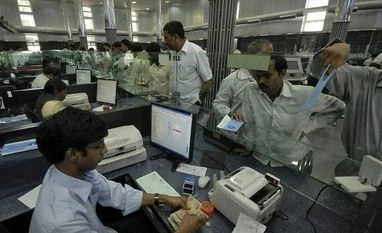
This is despite most market observers questioning the finance minister’s decision to stick with a Rs 10,000 crore allocation towards recapitalisation of public sector banks (PSBs). The general view is that these need much more government support to compete with private banks in lending.
Yet, some do believe PSBs could do well with the current allocation in FY18 and that there is no element of surprise in the move.
Krishnan Sitaraman, senior director at ratings agency CRISIL, feels the government has only reaffirmed its earlier stance that it would infuse Rs 70,000 crore of capital in PSBs during FY16-19, under its ‘Indradhanush’ scheme. “The expected allocation in FY18 was Rs 10,000 crore and the government has stuck to it,” he states. “With a promise of need-based infusion, I don’t think the government has faltered.”
That said, a lot hinges on how well banks manage to recover from bad loans and whether the government would make good on the proposed Public Sector Asset Rehabilitation Scheme. Sitaraman is hopeful that with initiatives like these yielding the desired result in China, Korea and Malaysia, the model should work for India as well.
In addition, the allowing of listing of security receipts by asset reconstruction companies is viewed as another effective means of improving the recoverability from bad loan assets.
In both cases, however, valuations could be the deterrent. “While these are laudable measures, the question remains at what valuations will these assets be taken over?” says Prakash Agarwal, Director at India Ratings & Research. “Unless the valuations are adequate to reverse the earlier provisioning, buying out the loans wouldn’t be fruitful.”
Therefore, says the research head of a foreign brokerage, it needs to be seen if the government is willing to take the haircut (the term for accepting the difference between the market value of an asset used as loan collateral and the amount of the loan). “With recapitalisation levels not increased, the onus is on the government to absorb the bad loans,” he states.
Irrespective of these measures, experts say that if accessibility to the bond market remains buoyant, as in 2016, it could reduce the need to depend heavily on government allocation. “For corporates, the government and the regulator is pushing them to tap the bond market, reducing the need to rely on banking channel. For the banks, if the AT-1 (additional tier-1) bond market remains active next year, they might be safe,” says Karthik Srinivasan, senior vice-president at ratings agency ICRA. He says the reducing pace of new NPA (non-performing asset) generation is another silver lining for PSBs. Indian Bank, Vijaya Bank and Canara Bank, which recently published their December quarter results, stand testimony to this (see table). NPAs as a ratio of loan dues had stabilised in the December quarter. Consequently, return ratios have significantly improved in the past nine months.
Sitaraman says with operations getting better at the margin, PSBs might be restrained in their lending, to conserve capital. The Union Budget indication of higher flexibility with lenders to recover their dues could also work in their favour.
However, Srinivasan warns, the government’s current recapitalisation budget might work well only from a one-year perspective. “If the target is eight per cent (annual economic) growth, relying on the government for capital seems justified in the long run, as creating an internal reserve appears stretched at the moment,” he warns.

 "Is Budget 2017's Rs 10,000-cr allocation to recapitalise PSU banks enough?")











