How India has gradually lowered its reliance on Canada for pulses imports?

Canada's share in total Masur imports has dropped to almost 38 percent when it comes to matar while it has come down to just around 31 percent
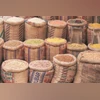
pulses
Representative Picture
Sanjeeb Mukherjee New Delhi
2 min read Last Updated : Oct 20 2024 | 10:27 PM IST
India’s diplomatic conflict with Canada has cast a shadow on the import of two major pulses: matar (peas) and masur (lentils). Relations between the two nations worsened since the June 2023 killing of Canadian national Hardeep Singh Nijjar, with Canada accusing India of involvement — claims India denies.

However, data shows that since mid-2023-24, India steadily reduced its reliance on Canada for these imports. Russia and Ukraine increased their share in India’s matar imports, while Turkey also emerged as a significant supplier. For masur, Australia has overtaken Canada as India’s primary supplier since FY24, with this trend accelerating in FY25.


“Until FY21, peas were imported under HS code 071310, which includes both green and yellow peas. Between FY16 and FY18, India became a dumping ground for large quantities of matar. Currently, only yellow peas with HS code 07131010 are being imported. From December to September, we may import 2.2 million tonnes of yellow peas,” said Rahul Chauhan, commodity analyst, iGrain India.
 
However, a decade ago, Canada dominated India’s pulse imports. In FY16, Canada supplied 92 per cent of India’s masur and 61 per cent of its matar. By July 2024, Canada’s share dropped to 38 per cent for masur and 31 per cent for matar.
 
Canadian pea imports face competition from Russia. From April to September 2024, India imported 451,000 tonnes of matar from Russia, compared to 306,000 tonnes from Canada, Chauhan highlighted. “In the case of lentils, Australia is providing strong competition to Canada. Last financial year, India imported 822,531 tonnes of masur from Australia, compared to 760,000 tonnes from Canada. This year, from April to September, imports from Australia might reach 154,000 tonnes, while Canada’s imports could total 105,000 tonnes. New countries like Russia, the USA, Turkey, and Singapore are also sending significant quantities of lentils to India.” 

One subscription. Two world-class reads.

Already subscribed? Log in

Subscribe to read the full story →
*Subscribe to Business Standard digital and get complimentary access to The New York Times

Smart Quarterly

₹900

3 Months

₹300/Month

SAVE 25%

Smart Essential

₹2,700

1 Year

₹225/Month

SAVE 46%
*Complimentary New York Times access for the 2nd year will be given after 12 months

Super Saver

₹3,900

2 Years

₹162/Month

Subscribe

Renews automatically, cancel anytime

Here’s what’s included in our digital subscription plans

Exclusive premium stories online

  • Over 30 premium stories daily, handpicked by our editors

Complimentary Access to The New York Times

  • News, Games, Cooking, Audio, Wirecutter & The Athletic

Business Standard Epaper

  • Digital replica of our daily newspaper — with options to read, save, and share

Curated Newsletters

  • Insights on markets, finance, politics, tech, and more delivered to your inbox

Market Analysis & Investment Insights

  • In-depth market analysis & insights with access to The Smart Investor

Archives

  • Repository of articles and publications dating back to 1997

Ad-free Reading

  • Uninterrupted reading experience with no advertisements

Seamless Access Across All Devices

  • Access Business Standard across devices — mobile, tablet, or PC, via web or app

Topics :India Canada RowUBS Securities

Next Story



