Centre steps up efforts for rollout of ambitious National Deepwater Mission

India targets deepwater and ultra-deepwater oil and gas to cut import reliance and boost energy security
Pipeline
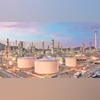
OALP X will be the largest bidding round for offshore exploration, entailing 192,000 square km of area, out of which, 175,000 square km is for offshore areas. | File Image
Sudheer Pal Singh New Delhi
4 min read Last Updated : Sep 07 2025 | 11:30 PM IST
The Centre is ramping up action on the ambitious plan for rolling out the National Deepwater Mission. It would quickly start production from mega oil and gas reserves locked in deepwater and ultra deepwater areas of the country’s offshore basins, and boost self-reliance in the hydrocarbon sector.
 
As part of the preparatory activity under the mission, announced by Prime Minister Narendra Modi in his August 15 speech, the petroleum ministry and top oil and gas public sector undertakings (PSUs) are discussing action on multiple fronts. These include identification and allocation of reserves, drilling of stratigraphic wells, seismic surveys under the National Seismic Programme (NSP), and creating a dedicated corpus of funds for works under the mission.
 
With an objective to encourage exploration in deep and ultra deep offshore areas, the Ministry of Petroleum and Natural Gas (MoPNG) has allocated ₹3,200 crore to undertake works for four stratigraphic wells.
 
They would be executed jointly by state-run Oil and Natural Gas Corp (ONGC) and Oil India Ltd (OIL). “For this, studies are underway, including identification of well locations and well designs for deep and ultra deep wells in collaboration with international oil companies,” OIL chairman and managing director Ranjit Rath told Business Standard.
 
The four basins identified to be covered under this initiative are Andaman & Nicobar Basin, Mahanadi Basin, Bengal Basin and Saurashtra Basin where
drilling of wells will be done over the next one-two years.
 
“These wells will be drilled to generate databases about Indian deepwater and ultra deepwater sedimentary basins. They will provide insights to the future exploration campaigns of the Indian subcontinent,” Rath said.
 
As part of the bidding strategy for Open Acreage Licensing Policy (OALP)-X, which covers deepwater and ultra deepwater basins, extensive petroleum system model (PSM) studies have been carried out simultaneously for Andaman & Nicobar and Mahanadi basins.
 
OALP X will be the largest bidding round for offshore exploration, entailing 192,000 square km of area, out of which, 175,000 square km is for offshore areas.
 
This involves Deepwater Andaman Nicobar, Deepwater Mahanadi, Deepwater KG Basin and Deepwater Western Offshore. “We are also seeking collaboration of International Oil Companies (IOC) and National Oil Companies (NOC) for joint bidding in ongoing OALP X rounds and for farm-in opportunities in our awarded acreages secured under the last OALP IX bidding round,” added Rath.
 
The government plans to carry out extensive 2D seismic surveys under the National Seismic Programme (NSP) in these deepwater areas.
 
The collection of seismic data, identification of well locations, PSM studies, and drilling of stratigraphic wells are part of the larger strategy-driven approach being followed under the National Deepwater Mission. For this, a mission document will be launched soon.
 
Simultaneously, discussions are on for the creation of a corpus. These would be based on size, sources and the disbursement methodology and would support strategic oil and gas exploration efforts in deepwater and ultra-deepwater areas.
 
The government will soon launch the first bidding round for oil and gas blocks under the mission.
 
They would be covering more than a million square km of geographical area in Andaman Nicobar, and ultra-deep KG and Cauvery basins, ONGC had stated last month.
 
The larger goal under the mission is to double hydrocarbon reserves by 2032, and triple the national output by 2047 in order to cut the nation’s 88 per cent import dependence on crude oil. Crude imports had cost India a whopping $140 billion in 2024-25.
 
The quest 
  • Identification and allocationof reserves
  • Drilling ofs tratigraphic wells, carrying out seismic surveys
  • Creating a corpus of funds

One subscription. Two world-class reads.

Already subscribed? Log in

Subscribe to read the full story →
*Subscribe to Business Standard digital and get complimentary access to The New York Times

Smart Quarterly

₹900

3 Months

₹300/Month

SAVE 25%

Smart Essential

₹2,700

1 Year

₹225/Month

SAVE 46%
*Complimentary New York Times access for the 2nd year will be given after 12 months

Super Saver

₹3,900

2 Years

₹162/Month

Subscribe

Renews automatically, cancel anytime

Here’s what’s included in our digital subscription plans

Exclusive premium stories online

  • Over 30 premium stories daily, handpicked by our editors

Complimentary Access to The New York Times

  • News, Games, Cooking, Audio, Wirecutter & The Athletic

Business Standard Epaper

  • Digital replica of our daily newspaper — with options to read, save, and share

Curated Newsletters

  • Insights on markets, finance, politics, tech, and more delivered to your inbox

Market Analysis & Investment Insights

  • In-depth market analysis & insights with access to The Smart Investor

Archives

  • Repository of articles and publications dating back to 1997

Ad-free Reading

  • Uninterrupted reading experience with no advertisements

Seamless Access Across All Devices

  • Access Business Standard across devices — mobile, tablet, or PC, via web or app

Topics :oil reservesIndian oil refinersoil and gas reserves

Next Story



