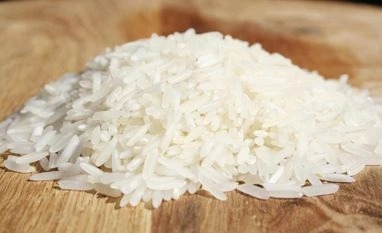
Civil unrest in Iran is hurting India’s basmati rice exports, as protests trigger a domestic price crash and leave exporters struggling to manage their exposure to the critical market, said a group representing exporters on Tuesday.
The crisis has disrupted payment cycles, delayed shipments and dented buyer confidence in Indian mandis, said the Indian Rice Exporters Federation (IREF) in a statement.
Market participants said that over the past week, prices of key basmati varieties have dropped by Rs 5-10 per kilogram.
India exported basmati rice worth $468.10 million to Iran from April to November in FY26, amounting to nearly 599,000 metric tonnes, according to IREF. Iran is one of the largest destinations for Indian basmati but civil unrest has made trade flows uncertain this year.
“Iran has historically been a pillar market for Indian basmati. However, the current internal turmoil has disrupted trade channels, slowed payments, and dented buyer confidence,” said Prem Garg, national president of IREF.
“The immediate fallout is evident in Indian mandis, where basmati prices have softened sharply within days. Exporters must exercise heightened caution, particularly with respect to credit exposure and shipment timelines,” Garg said.
IREF has issued an advisory urging exporters to reassess the risks associated with Iranian contracts, adopt more secure payment mechanisms, and avoid overleveraging inventories for the Iran market. It called for a cautious approach to protect exporters and farmers from sudden shocks.
“We are not sounding an alarm but urging prudence,” said Dev Garg, vice-president of IREF. “In periods of geopolitical and internal instability, trade is often the first casualty. India’s rice sector is resilient, but it must be safeguarded through timely intelligence and responsible trade practices.”
IREF advised stakeholders to diversify exports towards alternative markets in West Asia, Africa, and Europe to cushion the impact of any prolonged slowdown in shipments to Iran. Alongside the Iran crisis, IREF said it has noted US President Donald Trump’s remark that countries continuing trade with Iran could face a 25 per cent tariff.
The federation noted that Indian rice exports to the US are already subject to a 50 per cent tariff, higher than the earlier duty of 10 per cent. Despite the tariff increase, Indian rice exports to the US have been resilient.
From April to November 2025, India exported more than 240,000 metric tonnes of rice to the US valued at $233.83 million. That’s compared to exports of 335,000 tonnes worth $391.74 million in FY25 and 118,000 tonnes worth $145.86 million in FY24.
According to IREF, the resilience is largely because Indian rice — especially basmati — is not a like-for-like substitute for rice of Pakistani or US origin and it is embedded in the culinary traditions of the Indian diaspora and the Gulf region. As a result, demand has held up despite higher tariffs and price pressures.
However, the federation expressed far greater concern over developments in Iran, where importers have conveyed their inability to honour existing commitments and remit payments to India. While similar disruptions have occurred in the past, the current situation remains unpredictable and could further disturb prices, liquidity, and trade sentiment in the coming weeks.
As global trade becomes increasingly intertwined with geopolitics, the unfolding situation in Iran underscores how sensitive food exports — particularly strategic commodities like rice — are to regional stability. For India’s rice ecosystem, exporters believe timely caution now may help avert deeper distress later.

 "Iran crisis hurting India's basmati exports, affecting mandi prices: Group")


