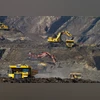
Mining sector at crossroads: Moving beyond allocation towards execution

India's mining sector has seen major reforms over the past decade, but weak exploration, slow approvals and delayed project execution continue to hold back investment and output

mining, mining industry
(Photo/Unsplash)
Sudheer Pal Singh New Delhi
7 min read Last Updated : Jun 30 2026 | 7:59 PM IST
India's mining sector stands at an inflection point, having imbibed major reforms over the past decade, and yet is unable to catapult to a higher level of growth through speedy project execution and production. For an industry that supplies key raw materials for the growth of other important economic areas, including electricity, steel, cement, mobility, technology and strategic sectors, this juncture is being viewed with interest. An analysis of recent data highlights the urgency of measures needed to spur growth and infuse a new lease of life in the mining sector.
 
The sector's share in India's Gross Value Added (GVA) has been falling steadily. From FY2012 to FY2018, mining generated around 3 per cent of total GVA. This share fell to around 2.3 per cent after FY2021, with the lowest at 2 per cent in FY2020, largely due to the impact of the Covid-19 pandemic. While FY2024 showed some improvement in production and sector growth, mining's contribution to national output remains below its potential, ratings agency ICRA said in a report. Recent data on foreign direct investment (FDI) inflows into the mining sector further highlight the need for improving performance. FDI inflows have dropped consistently to around ₹100 crore in 2024-25 from ₹2,600 crore in 2021-22, according to the report.
 
"In FY2025, mining attracted almost nil of India's total FDI inflows, showing the sector's limited appeal to international investors compared to more transparent and stable mining markets such as Australia, Canada, and Latin America. The instability in India's mining FDI is clear from trends over the past seven years. The mining sector's small share in India's overall FDI inflows clearly shows its inability to convert its geological potential into steady capital inflows," the report stated.
 
Further, India was ranked 69th out of 86 countries on the Fraser Institute's Mining Investment Attractiveness Index in FY2023. More concerning is India's 81st position out of 86 countries on the Policy Perception Index. These rankings highlight ongoing structural and regulatory problems that discourage international capital, the report said.
 
To be sure, India's mining sector has seen significant changes in regulations and structure over the last ten years. These changes were designed to increase transparency, improve operational performance, and build investor trust. The reforms included moving to an auction-based system for mineral allocation, making changes to the Mines and Minerals (Development and Regulation) Act (MMDR Act), and creating new policy tools such as the District Mineral Foundation (DMF) and National Mineral Exploration Trust (NMET). And yet, the data above paints a different story. So, what went wrong and how to make sense of the dismal performance numbers against the policy intent reflected in years of reform efforts?
 
This apparent contradiction arises because policy liberalisation and investment outcomes operate on different timelines, according to Vinayak Vipul, Partner, Business Consulting, EY-Parthenon India. He points out that India has undoubtedly implemented some of the most significant mining reforms in decades. Since 2015, the sector has moved to transparent auctions, commercial coal mining has been opened, captive restrictions have been removed, exploration licences have been introduced for deep-seated and critical minerals, and auction volumes have risen substantially. Government data also shows that auction revenues have increased significantly, with the number of auctioned blocks accelerating after FY22.
 
"However, auctioning a mineral block is only the starting point of the investment cycle. Mining projects typically require 10-15 years from exploration to production, with a substantial part of that period spent on exploration, permitting and financing. As a result, reforms announced in recent years have not yet fully translated into production, FDI or GVA outcomes. Another reason is that reforms have largely improved market access, while investors remain focused on execution risk. Geological uncertainty, fragmented clearances, infrastructure constraints, high fiscal burden and policy unpredictability continue to shape investment decisions. These risks are assessed over decades, not against individual policy announcements," Vipul told Business Standard.
 
And then, there is the global context. International mining capital has become increasingly selective and tends to flow toward jurisdictions that offer large, well-explored deposits, stable fiscal regimes and predictable permitting. India competes with countries such as Australia, Canada and several Latin American jurisdictions that combine geological certainty with faster regulatory processes. "Therefore, the current data should not necessarily be interpreted as evidence that reforms have failed. Rather, it suggests that India has liberalised entry into mining but is still transitioning toward a globally competitive investment ecosystem. The next generation of reforms must focus less on opening the sector, which has largely been achieved, and more on improving exploration quality, operationalisation, ease of doing business and project bankability," asserts Vipul.
 
The point about exploration quality and ease of doing business can hardly be missed. Experts believe that mining investors evaluate projects across the full lifecycle, not just at the entry or allocation stage, and it is across this lifecycle that structural bottlenecks continue to constrain investment in India. The first challenge is inadequate exploration. India spends barely around 1 per cent of the global mineral exploration budget, and only about 22 per cent of the Obvious Geological Potential (OGP) has been adequately explored for deep-seated minerals. Exploration in India is largely limited to depths of 50-100 metres, compared with nearly 300 metres in Australia, resulting in fewer discoveries of world-class deposits.
 
"The second challenge is the length and uncertainty of approvals. While mining rights are auctioned competitively, obtaining forest, environmental and other statutory clearances can often take 4-5 years, significantly longer than jurisdictions such as Australia or Botswana, where approvals are typically measured in months. This increases project risk and raises the cost of capital," Vipul said. The third issue is project economics. India’s effective government take, including royalty, auction premium, DMF, NMET and other levies, can exceed 50 per cent of revenues, compared with roughly 35-40 per cent in many competing mining jurisdictions. When combined with long gestation periods, this compresses investor returns. Finally, infrastructure and operationalisation remain weak. While auctions have accelerated, relatively few auctioned blocks have commenced production because post-auction facilitation, logistics, land access and approvals remain fragmented.
 
The next phase of reforms, therefore, needs to move beyond allocation towards execution. Priorities are many, including higher public and private investment in exploration, pre-embedded statutory clearances before auctions, predictable approval timelines through digital single-window systems, rationalisation of fiscal levies, stronger state-level facilitation cells and integrated logistics. Lack of these enabling measures can create hurdles even in the best-intentioned projects. Critical mineral auctions, which suffer from low interest from large investors or global mining majors, offer an example.
 
"The limited response to some critical mineral auctions reflects a combination of geological uncertainty, commercial risk and auction design, rather than a lack of long-term interest in India’s critical minerals. Unlike bulk minerals such as iron ore or limestone, many critical minerals remain underexplored in India. Resource estimates are often based on early-stage exploration, making it difficult for companies to accurately assess reserve size, grade and economic viability. When this uncertainty is combined with revenue-sharing commitments under auctions, investors perceive an asymmetric risk profile," Vipul said.
 
So, what is the way ahead? Rajib Maitra, Partner at Deloitte India, offers a series of prescriptions. First, India must offer an optimal size of blocks for auction, as larger blocks are critical to avoid fragmentation of leases. Second, the government can enforce a "one minor mineral policy" across India to bring transparency and efficiency to remove overlapping jurisdictions at the state and central levels. India should also develop a framework for ranking states in terms of a possible policy index and mineral potential to attract foreign investments by participating in global surveys of mining companies, such as the Fraser Institute.
 
"Incorporate the lease model in the land acquisition act for mineral-bearing areas to reduce the burden of the upfront capital for land. The State government should also fix the surface compensation at the time of auctioning and ensure that the land is free from all encroachments, so that the successful bidder does not face any hindrance in starting the mining operation," Mitra told Business Standard.


One subscription. Two world-class reads.

Already subscribed? Log in

Subscribe to read the full story →
*Subscribe to Business Standard digital and get complimentary access to The New York Times

Smart Quarterly

₹900

3 Months

₹300/Month

SAVE 25%

Smart Essential

₹2,700

1 Year

₹225/Month

SAVE 46%
*Complimentary New York Times access for the 2nd year will be given after 12 months

Super Saver

₹3,900

2 Years

₹162/Month

Subscribe

Renews automatically, cancel anytime

Here’s what’s included in our digital subscription plans

Exclusive premium stories online

  • Over 30 premium stories daily, handpicked by our editors

Complimentary Access to The New York Times

  • News, Games, Cooking, Audio, Wirecutter & The Athletic

Business Standard Epaper

  • Digital replica of our daily newspaper — with options to read, save, and share

Curated Newsletters

  • Insights on markets, finance, politics, tech, and more delivered to your inbox

Market Analysis & Investment Insights

  • In-depth market analysis & insights with access to The Smart Investor

Archives

  • Repository of articles and publications dating back to 1997

Ad-free Reading

  • Uninterrupted reading experience with no advertisements

Seamless Access Across All Devices

  • Access Business Standard across devices — mobile, tablet, or PC, via web or app

Topics :mining sectorMining industryauction

Next Story