Karnataka: Nearly 50% votes from women but only 5% in legislature

Women have almost closed the voting gap with men, shows data from recent elections
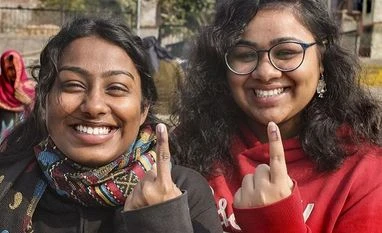
Photo: PTI
Photo: PTI
Samreen Wani New Delhi
1 min read Last Updated : May 15 2023 | 10:23 AM IST
The rise in women voters hasn’t translated into significantly more women finding representation in the Karnataka Assembly.

Women accounted for 26.3 million votes in the recently concluded state elections, while men made for 26.6 million votes. That’s 49.7 per cent share in votes from women. Yet, women have only 5 per cent share in the Karnataka state legislature.

The 10 elected women members in a 224-seat Assembly is itself a record, though a few previous elections came close to that number. The recent low was in 2008, when women accounted for only 1 per cent of the legislature .


This is despite the fact that women have been closing the participation gap in terms of voting. Only 52.8 per cent of eligible women had voted in the 1962 elections. This has since risen to 72.7 per cent. The voter turnout for men has risen from 64.87 per cent to 73.68 per cent during the same period. The gap between men and women voters is now less than 1 per cent. It was 12.1 per cent in 1962.    

Karnataka Panchayati Raj reservations had some positive effects, though it is difficult to establish a significant reordering of priorities or improved accountability, according to a 2003 study entitled “Engineering Elections: The Experiences of Women in Panchayati Raj in Karnataka, India,” by Neema Kudva of the Department of City and Regional Planning, Cornell University.

“...it has made women more visible, decreased levels of corruption in Panchayati Raj institutions, and increased self-efficiency of women representatives,” the study said.

Parliament is yet to pass the Women’s Reservation Bill, which would reserve one-third seats across state legislatures for them. It would also apply at the Centre in the Lok Sabha. The Lok Sabha had 14.4 per cent representation of women after the 2019 general elections. Parliament has discussed various versions of the Women’s Reservation Bill since 1996.

One subscription. Two world-class reads.

Already subscribed? Log in

Subscribe to read the full story →
*Subscribe to Business Standard digital and get complimentary access to The New York Times

Smart Quarterly

₹900

3 Months

₹300/Month

SAVE 25%

Smart Essential

₹2,700

1 Year

₹225/Month

SAVE 46%
*Complimentary New York Times access for the 2nd year will be given after 12 months

Super Saver

₹3,900

2 Years

₹162/Month

Subscribe

Renews automatically, cancel anytime

Here’s what’s included in our digital subscription plans

Exclusive premium stories online

  • Over 30 premium stories daily, handpicked by our editors

Complimentary Access to The New York Times

  • News, Games, Cooking, Audio, Wirecutter & The Athletic

Business Standard Epaper

  • Digital replica of our daily newspaper — with options to read, save, and share

Curated Newsletters

  • Insights on markets, finance, politics, tech, and more delivered to your inbox

Market Analysis & Investment Insights

  • In-depth market analysis & insights with access to The Smart Investor

Archives

  • Repository of articles and publications dating back to 1997

Ad-free Reading

  • Uninterrupted reading experience with no advertisements

Seamless Access Across All Devices

  • Access Business Standard across devices — mobile, tablet, or PC, via web or app

Topics :Karnataka electionsAssembly electionsWomen leaders

Next Story


