Home / Finance / News / There is money coming in: How cash recyclers are set to get a big leg up
There is money coming in: How cash recyclers are set to get a big leg up
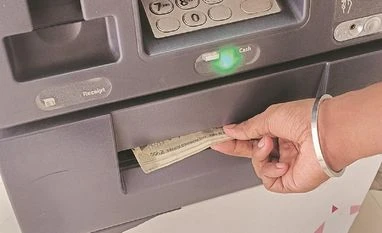
Going ahead, a customer can take a wad of notes to a CRM and use UPI to activate the process of depositing it rather than insert their debit card into the slot
4 min read Last Updated : Apr 07 2024 | 11:19 PM IST
Mint Road’s move to facilitate cash deposits through the Unified Payments Interface (UPI) will give a big fillip to cash-recycling machines (CRMs). Unlike the ubiquitous automated teller machines (ATMs), a CRM is an upscale variant: It dispenses cash and accepts deposits (cash). According to Stanley Johnson, executive director, AGS Transact Technologies, “CRMs enhance security, are more convenient, and at the same time, provide a faster way of depositing cash”.
Going ahead, a customer can take a wad of notes to a CRM and use UPI to activate the process of depositing it rather than insert their debit card into the slot. No worries of card details being skimmed, or being nervous of the sum not being reflected in their bank accounts.
Of the 260,000 deployed ATMs as on date, around 40,000 are CRMs. The trend towards higher CRM deployment picked up pace around three years ago with nearly 95 per cent of the replacement orders for ATMs being for new-age recyclers. It set the stage for ATMs to morph into a “virtual branch network”, and emerge as remittance channels in their own right.
In 2020, of the 240,000 ATMs deployed, 35,000 were recyclers or 14.58 per cent of the base, even though they have been around only for about three years in the Indian landscape in a meaningful way. And the share of recyclers at nearly 95 per cent of the annual replacement orders for 12,000-odd ATMs was despite the fact they cost around Rs 5,50,000 per unit compared to Rs 3,00,000 for the merely cash-vending till-box.
The big change agents were the Reserve Bank of India (RBI) and the National Payment Corporation of India, with the move to allow interoperability among banks, and white-label firms putting up CRMs. Until then, these were largely placed within banks’ branches as teller-replacement tools or for self-service. Interoperability of CRMs meant you could deposit cash in them like you withdrew it at ATMs. Of course, this comes at a price – the bank in which you have an account has to pay Rs 25 for every Rs 10,000 to the bank in whose CRM the cash is being deposited – as the latter is facilitating it. This fee is Rs 50 for sums above Rs 10,000. It is up to banks to pass on this charge to customers – if at all.
This higher inter-bank fee for depositing cash into recyclers (compared to the Rs 17 interchange for cash withdrawals) has more to do with the fact that the ATM business is not in a position to absorb costs. ATM deployments have stagnated in the country – just a tad more 30,000 have been added over the 225,000 thereabouts at the time of demonetisation in late 2016.
Regulatory guidelines from the Ministry of Home Affairs and the RBI on security and cassette swaps have added costs for deployers.
A senior industry official points out that unless the Rs 17 price point (for the interchange) goes up it’s tough for the business to be meaningful.
On an average, 140-250 transactions have to be done per day on an ATM to break at an interchange of Rs 17 (deploying banks wants this upped to Rs 24 or so). CRMs help cut it in a big way as they reduce cash-loading costs.
The fact that Rs 500 notes are more in circulation compared to the Rs 2,000 notes means more trips by cash-vans to replenish ATMs with the lower-denomination currency.
A big multiplier effect with the installation of recyclers is that small business owners can deposit the surplus in daily cash balances in them which is credited to their account immediately – all this without ever visiting a bank branch in their neigbourhood.
Convenient slot
>Cash-recycling machines cost Rs 5,50,000 per unit compared to Rs 3,00,000 for an ATM to be put up
>Mint Road, NPCI allowed interoperabiliy among banks to boost CRM deployment
>Small business owners can deposit cash which is credited to their account immediately
>Inter-bank charge: Rs 25 for depositing Rs 10,000; Rs 50 for higher sums
>CRMs reduce the movement of physical cash and logistic costs




