Home / India News / Delhi HC issues notice on plea for tree transplantation in SC premises
Delhi HC issues notice on plea for tree transplantation in SC premises
Trees are part of the ongoing project aimed at expanding the Supreme Court building to create additional courtrooms, including a constitutional court, as well as new chambers for judges
The Delhi High Court has issued a notice in response to an Intervention Application (IA) seeking permission for the transplantation of 26 trees within the Supreme Court premises.
The trees are part of the ongoing project aimed at expanding the Supreme Court building to create additional courtrooms, including a constitutional court, as well as new chambers for judges and enhanced facilities for lawyers and litigants.
The bench of Justice Jasmeet Singh sought responses in the fresh intervention application of respondents in the case Bhavreen Kandhari vs. C.D. Singh & Ors., pending before the Delhi High Court. The next hearing in the matter is January 31, 2025.
The Intervention Application (IA), filed and argued by Advocate Sudhir Mishra, explained that during the marking of the layout plan, it was found that approximately 61 trees fell within the building and excavation lines of the proposed expansion area, which covers about 2.03 acres. To minimize the environmental impact, efforts were made to reduce the number of trees requiring transplantation. Initially, the number was reduced from 61 to 47, and with further adjustments, the final count was brought down to 26, while 35 trees were successfully preserved.
Advocate, Sudhir Mishra, highlighted that special efforts were made to save a significant old Banyan tree with a girth of 675 cm, which was originally in the basement plan of the building. To retain this tree, the basement layout, ramp placement, and internal road design were all altered.
The application emphasized that preserving and minimizing the number of transplanted trees was of utmost importance, and the applicant fully supported efforts to protect the environment. In light of this, the applicant has requested the court's permission to transplant the remaining 26 trees to proceed with the Supreme Court's expansion project, which includes additional courtrooms, a constitutional court, chambers for judges, and facilities for lawyers and litigants.
Additionally, the applicant has submitted a detailed methodology statement to the Forest Officer, outlining the process to ensure the successful transplantation and proper care of the trees.
In October 2024, the Supreme Court officially began the construction of its new expansion building, which will feature a dedicated Constitutional Courtroom for 17 judges, along with state-of-the-art courtrooms. The ground-breaking ceremony was marked by a unique ritual involving 11 priests from various religions.
The expansion will be carried out in two phases, with the first phase expected to start soon and take approximately 29 months to complete. The new building, located within the existing Supreme Court complex, will cover 86,500 square meters and span five floors. The first and second floors will house courtrooms, while the fifth floor will be dedicated to the Constitutional Courtroom. The other floors will include various facilities to support litigants, lawyers, and court officials.
(Only the headline and picture of this report may have been reworked by the Business Standard staff; the rest of the content is auto-generated from a syndicated feed.)

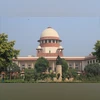 "Delhi HC issues notice on plea for tree transplantation in SC premises")


