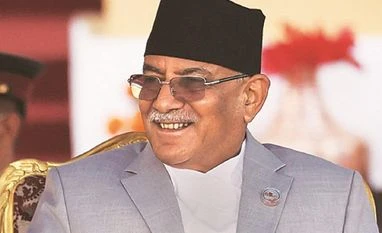
The Prime Minister (PM) of Nepal, Pushpa Kamal Dahal ‘Prachanda’, will come to India on May 31, almost nine years to the day after Narendra Modi’s first visit to Kathmandu as PM. Modi visited Nepal in June 2014 and captured the hearts of Nepalis (an ex-serviceman from the Gorkha Regiment told Business Standard wistfully at the time: “You are so lucky to have Modi as PM. I wish we had a leader like him.”). “Modi is giving us a good moment,” Bhekh Bahadur Thapa, a former Nepali minister of foreign affairs and finance, told The New York Times at the time, adding, “Whether it will yield results, time will tell.”
Modi’s speech in Parliament got special kudos because he said: “My work is to neither give directives nor interfere with your work in Nepal, because Nepal itself is a sovereign nation.”
Days after his visit, India and Nepal signed a historic power trading agreement. This was of a piece with the Neighbourhood First policy launched by the Modi government in 2014 that addressed the concerns and requirements of the neighbours on a par with those of India’s.
Between then and now, Nepal has gone through several PMs and governments, with at least one PM never getting the chance to visit New Delhi; a 2015 ‘blockade’ after the new Nepal Constitution sought to deny the Madheshis (people of Indian origin) cultural and linguistic safeguards; a change in Nepal’s boundary with India, with Kathmandu claiming parts of Uttarakhand, provoking the Indian Ministry of External Affairs (MEA) to state that Nepal’s revised map “includes parts of Indian territory” and that “this unilateral act is not based on historical facts and evidence”, urging Kathmandu “to respect India’s sovereignty and territorial integrity”.
Added to all this is the new issue on the table: India’s new Army recruitment scheme, Agnipath, which will curtail enlisting Nepali nationals, which Nepal feels is in violation of a 1947 treaty between India, Nepal, and Britain. “Bilateral relations between the two countries have significantly strengthened in all areas of cooperation. This visit underscores the importance given by both sides to adding further momentum to the bilateral partnership,” said MEA.
Nepalese media noted that the visit was only an official one and not a state visit, which means the absence of ceremonial heft. But the context is also geopolitical: the perception in India that Nepal had granted extensive access to China at India’s cost.
Nine years after the Neighbourhood First policy was announced, similar concerns persist in the neighbourhood — not just on the part of the neighbours but also on India’s.
Speaking at the diamond jubilee of the India International Centre a few weeks ago, Foreign Minister S Jaishankar said: “In India’s foreign policy, we speak about Neighbourhood First; it’s not just a slogan. It is a practical manifestation of the importance of standing by each other.”
He added, “This region is going through a very difficult period. If you look at our neighbourhood, a lot of our neighbours are suffering from issues, some of which are not of their making.”
India believes that in nine years, it has reached out to its neighbours as never before. The Vaccine Maitri humanitarian initiative helped the neighbourhood immensely during the Covid-19 outbreak; Nepal, Bangladesh, Bhutan, Sri Lanka, and the Maldives received large stocks of vaccines as gifts. When Sri Lanka was reeling from a financial crisis, New Delhi’s support was crucial.
“India decided not to wait on others but to do what it believes is right. We extended financial assurances to the International Monetary Fund to clear the way for Sri Lanka to move forward,” said Jaishankar in Colombo during an official visit earlier this year. Gifts of locomotives to Bangladesh and helping the country create infrastructure for internal connectivity have helped India in both deepening ties with the Awami League government and letting other powers, like the US, bother about taking a position on the state of democracy in that country.
Complexity has emerged in India’s relations with Bhutan, notes former Indian Ambassador to Bhutan, V P Haran, because of ongoing border disputes between the two countries with China and internal changes in Bhutan.
The elephant in the Neighbourhood First room continues to be China, says Smruti S Pattanaik, research Fellow at the Manohar Parrikar Institute for Defence Studies and Analyses.
“Even though the levels of debt of countries like Sri Lanka to China are low, many Chinese-built projects have not yielded the return they should have, putting pressure on the country’s finances. This is true of the Maldives as well,” she adds.

 "Setting boundaries for Neighbourhood First ahead of Nepal PM's India visit")









