BSE's derivatives journey sees speed bumps as several brokerages resist

Nearly 10 large brokers are yet to offer the relaunched Sensex and Bankex derivatives on their platforms, say they are working on back end
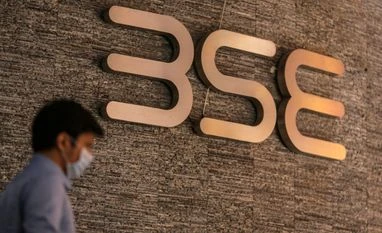
bse, bombay stock exchange, stock market, markets
Khushboo Tiwari Mumbai
4 min read Last Updated : Jul 21 2023 | 5:06 PM IST
BSE’s fresh shot at cracking the derivatives market is off to a promising start. However, Asia's oldest bourse is facing resistance from brokerages with nearly 10 large brokers yet to offer the relaunched Sensex and Bankex derivatives on their platforms.

Many brokers maintain that they are working on the back end to enable BSE derivatives on their apps and websites. Some said while volumes are picking up, they are still miniscule compared to bigger rival NSE, which is the most-preferred venue for derivatives trading.

Only a few brokers responded to formal queries sent by Business Standard on the issue of allowing BSE derivatives on their platform.

“We are working on it. Our front and back offices are not alive yet for these products and we are working on aligning our internal app. It would be better for the liquidity to pick up so that clients can have opportunities for squaring off their positions. (Otherwise) it is a risk for brokers too,” said Nilesh Sharma, executive director and Vice President, Samco Securities.

Sensex and Bankex derivatives were relaunched by the BSE on May 15 with a smaller lot size and a weekly expiry on each Friday to challenge NSE’s virtual monopoly in this high-turnover segment.

“One of them (challenges) is the low awareness and participation among traders and investors, as most of them prefer to trade on NSE, which has a dominant position and volume in the derivatives segment," said Tejas Khoday, Co-founder and CEO of Fyers, a broking platform.

BSE has been encouraging various market participants and algo-trading community to participate in its derivative segments. It has also been engaging with data vendors for offering live prices and charts of Sensex and Bankex derivatives on broker terminals to facilitate a faster adoption of its products.

Queries sent to BSE on the issue remained unanswered.

"We are collaborating with our technology partners to ensure a smooth and seamless integration of our systems with the clearing corporations of both exchanges. We are also testing and verifying our processes and procedures to ensure compliance with the regulatory standards and guidelines,” Khoday said.

In July so far, the average daily turnover (ADTV) for BSE derivatives stood at Rs 2.33 trillion, recording a more than two-fold jump over its previous month's ADTV. In comparison, NSE clocked ADTV of Rs 324 trillion ADTV in July.

Some brokers are of the view that the liquidity in BSE products will increase once larger players start offering the choice to their clients.  

 “As of now, the liquidity constraints limit use of certain trading strategies. However, the situation should improve considerably with BSE option offerings made available on trading platforms by all leading brokers and the growing awareness among investors. We are quite excited about the business opportunity and working towards introducing the BSE option trading facility on our trading platform soon,” Parminder Varma, Chief Business Officer, Sharekhan by BNP Paribas.

BSE’s derivatives segment could also get a regulatory push in the coming months.

In June, the Securities and Exchange Board of India (Sebi) issued a circular mandating stock brokers to offer trading preference. The circular will be effective from August 1. The regulator has provided a time period of three months to the brokers for compliance.

At present, clients need to give separate authorisation if they want to trade on different stock exchanges. Going ahead, while on-boarding new clients brokers will have to register them on all the active stock exchanges after obtaining their trading preferences. They will also have to offer access to all stock exchanges to their existing clients as well.

The regulator has been pushing multiple trading venues to mitigate cyber security risks and technological risks. Last month, it made NSE backtrack its move to shift the expiry of Bank Nifty derivatives from Thursday to Friday as it coincided with BSE’s derivatives expiry day.


One subscription. Two world-class reads.

Already subscribed? Log in

Subscribe to read the full story →
*Subscribe to Business Standard digital and get complimentary access to The New York Times

Smart Quarterly

₹900

3 Months

₹300/Month

SAVE 25%

Smart Essential

₹2,700

1 Year

₹225/Month

SAVE 46%
*Complimentary New York Times access for the 2nd year will be given after 12 months

Super Saver

₹3,900

2 Years

₹162/Month

Subscribe

Renews automatically, cancel anytime

Here’s what’s included in our digital subscription plans

Exclusive premium stories online

  • Over 30 premium stories daily, handpicked by our editors

Complimentary Access to The New York Times

  • News, Games, Cooking, Audio, Wirecutter & The Athletic

Business Standard Epaper

  • Digital replica of our daily newspaper — with options to read, save, and share

Curated Newsletters

  • Insights on markets, finance, politics, tech, and more delivered to your inbox

Market Analysis & Investment Insights

  • In-depth market analysis & insights with access to The Smart Investor

Archives

  • Repository of articles and publications dating back to 1997

Ad-free Reading

  • Uninterrupted reading experience with no advertisements

Seamless Access Across All Devices

  • Access Business Standard across devices — mobile, tablet, or PC, via web or app

Topics :BSEIndian stock markets

Next Story



