Green Revolution's unintended fallout: Deepening of India's farming crisis

The programme spared India from famine and the humiliation of its ship-to-mouth existence from Public Law or PL480 wheat shipments from the US
Farmer, Agriculture
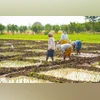
To conserve the rapidly sinking water table, paddy planting has, since 2009, been mandatorily postponed to synchronise with the onset of the monsoon | (Photo: Shutterstock)
Kanika Datta Mumbai
5 min read Last Updated : Dec 11 2024 | 11:03 PM IST
The Green Revolution is coming back to bite us in ways that policymakers then could not have bargained for. Now, as farmers block borders around the National Capital region (NCR), the downsides of that signature achievement of the sixties is manifesting itself in myriad crises — inefficient power supplies, water shortages, deteriorating soil health, air pollution, and an escalating freebie culture.
 
The Green Revolution was undoubtedly transformational. The programme spared India from famine and the humiliation of its ship-to-mouth existence from Public Law or PL480 wheat shipments from the US. Today, unfortunately, the policies that made it a success are causing unintended perverse outcomes from which central regimes are struggling to extricate themselves. These crises are all products of incentives that were rooted in persuading farmers to grow high-yielding varieties of wheat and rice: Broadly, free power, subsidised fertiliser and a guaranteed minimum support price or MSP for produce sold in official mandis. 
 
Consider the MSP. It started as a market-leavening price for farmers, shielding them from exploitation by private traders. But regular increases at the behest of the powerful farm lobbies have rendered the MSP a maximum support price, with the government emerging as a key buyer, procuring between 33 and 40 per cent of India’s annual wheat and rice production (the two key commodities that the government buys; there are MSPs for 22 other crops but government purchases are minimal or non-existent for them). Sometimes, state governments, Madhya Pradesh being a prime example, choose to offer a premium above the MSP, adding to the distortions.
 
These easy returns — in business terms the policy amounts to enabling producers to sell at a prescribed mark-up in a prescribed market — principally benefitted large landholders with surpluses rather than subsistence farmers who account for 80 per cent of Indian farmers. In 2020, the Modi government’s attempts to open up and deregulate agri-markets created an uproar. The government proposed three laws that, broadly, allowed sales outside the mandi networks, enabling farmers to sell directly to private traders, introduced (admittedly poorly designed) contract farming laws, removed some commodities from the Essential Commodities Act, and deregulated stockholding limits. Passed without sufficient debate or consultations with the farm lobbies, these laws paralysed the national capital as farmers, several of whom were also mandi middlemen, rode in on horses and tractors and occupied well-equipped pop-up shanty towns on the NCR’s borders for almost a year until the government relented.
 
The upshot of this imbroglio that put the government on the back foot was that the farm lobby demanded a legal guarantee for MSP. This is simply untenable for government finances. The current impasse over an MSP mandate is only one facet of the Green Revolution’s unintended consequences. Free or heavily subsidised inputs such as water, power and fertiliser have created another crisis. The incentive package increasingly encouraged farmers in Punjab and Haryana to grow paddy, a water-guzzling crop that is not a natural ecological fit for the region. Over the decades, this “alien” paddy cultivation has indirectly created the farm fire crisis that chokes the national capital region every post-harvest season.
 
To conserve the rapidly sinking water table, paddy planting has, since 2009, been mandatorily postponed to synchronise with the onset of the monsoon. Consequently, later harvests have meant that farmers have less time to pull up paddy stubble to clear the fields for rabi crops. Burning the stubble is the cheapest and fastest solution they have found but at the cost of a widespread and increasingly serious public health crisis.
 
As for fertiliser, a skewed subsidy structure towards urea, a price-controlled fertiliser that accounts for two-thirds of the enormous annual fertiliser subsidy of Rs 1.88 trillion, has caused a serious imbalance in soil nutrients. The price of urea has been unchanged for a decade. The upshot is that urea is being overused at the cost of potassium and phosphates. A recent article by Ashok Gulati and Ritika Juneja in the Indian Express  said Punjab uses 61 per cent more urea (N) than is needed, 89 per cent less potassium and 8 per cent less phosphates, which in turn is impacting grain productivity. As the writers point out, “It is ironic that the massive subsidy on urea is actually creating more poison in the atmosphere than increasing grain yields.”
 
The need to boost agricultural production soon after independence also resulted in state administrations distributing electricity to farmers either free or at generous subsidies. The impact of this can be seen in the increasingly bankrupt state-owned distribution companies (discoms) that have struggled to find a way out of their financial woes. Without money to upgrade infrastructure, the discoms are unable to meet peak demand. Prolonged power outages are forcing industry to rely on alternative sources of power. Five bailout schemes designed by the Centre and funded by taxpayers have proved ineffective. The irony is that every political leader knows that free power to farmers is the chief culprit of discom losses and inefficiencies. Yet no one wants to risk the hard decision; the Centre’s humiliation over the farm laws in 2021 remains a cautionary tale for even the most intrepid reformer.
 
Despite all this support, farming is becoming a losing proposition for thousands of small farmers. Add in the government’s periodic controls on trade to benefit the Indian consumer and the returns to farmers have shrunk even further. The Modi government’s solution was to offer an enormously popular direct annual subsidy of Rs 6,000 per farmer, paid directly into their bank accounts. As with Green Revolution-related freebies, withdrawing this subsidy, too, will be impossible, adding one more problem expense to be kicked down the road.

One subscription. Two world-class reads.

Already subscribed? Log in

Subscribe to read the full story →
*Subscribe to Business Standard digital and get complimentary access to The New York Times

Smart Quarterly

₹900

3 Months

₹300/Month

SAVE 25%

Smart Essential

₹2,700

1 Year

₹225/Month

SAVE 46%
*Complimentary New York Times access for the 2nd year will be given after 12 months

Super Saver

₹3,900

2 Years

₹162/Month

Subscribe

Renews automatically, cancel anytime

Here’s what’s included in our digital subscription plans

Exclusive premium stories online

  • Over 30 premium stories daily, handpicked by our editors

Complimentary Access to The New York Times

  • News, Games, Cooking, Audio, Wirecutter & The Athletic

Business Standard Epaper

  • Digital replica of our daily newspaper — with options to read, save, and share

Curated Newsletters

  • Insights on markets, finance, politics, tech, and more delivered to your inbox

Market Analysis & Investment Insights

  • In-depth market analysis & insights with access to The Smart Investor

Archives

  • Repository of articles and publications dating back to 1997

Ad-free Reading

  • Uninterrupted reading experience with no advertisements

Seamless Access Across All Devices

  • Access Business Standard across devices — mobile, tablet, or PC, via web or app

Topics :India's green revolutionMSPfarmersAgricultureBS Opinion

Next Story



