Survival and growth of FPOs

The advantages of the FPOs have been borne out and quantified by a study conducted by the National Bank for Agriculture and Rural Development (Nabard) in 2020-21 and 2021-22
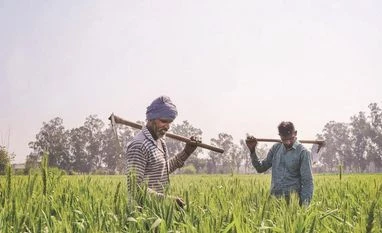
TENANT, farmer
Surinder Sud
5 min read Last Updated : Jan 21 2024 | 10:36 PM IST
With around 7,600 farmer producer organisations (FPOs) having already come up, the government’s target of extending their tally to 10,000 by 2024 seems within reach. This would be a significant achievement, considering the usefulness of these unique business enterprises for the member-farmers. The FPOs have been found to boost farmers’ income by enabling them to get higher prices for their produce and procuring inputs and services at lower costs, thanks largely to enhanced bargaining power and economies of scale, as also value-addition of the products. However, the long-term socioeconomic impact of these institutions on rural economy would depend on how many of them manage to survive and grow, especially after the government’s financial incentives and handholding stop after the initial phase.
 
The advantages of the FPOs have been borne out and quantified by a study conducted by the National Bank for Agriculture and Rural Development (Nabard) in 2020-21 and 2021-22. It revealed that the FPOs helped raise farm productivity by 18.75 per cent to 31.75 per cent and slash procurement costs of inputs like seeds and fertilisers by Rs 50-100 per bag. The increase in net per-acre annual income was estimated at between Rs 4,000 and Rs 30,500 in absolute terms, and 14 per cent to 60 per cent in relative terms. The study attributed these gains also to the reduction in post-harvest losses due to better handling, transportation and storage of the output, and realisation of higher prices through produce aggregation and bulk sale. The small and marginal farmers, who constitute over 85 per cent of all farmers, were found to benefit the most from the FPOs which served as aggregators of their produce for wholesaling and buyers of inputs in bulk on their behalf.
 
The concept of FPOs, also called farmer producer companies in some cases, was originally mooted way back in 2000 as a means of enabling farmers to come together, pool their resources, collect their produce, trade in large quantities, and draw advantages of collectivisation. These organisations were deemed better alternatives to cooperatives, which have failed to serve their objectives chiefly because of rampant political interference, incompetent management, and financial irregularities. The FPOs, for all practical purposes, are hybrids of cooperative societies and private limited companies, but without the unwanted features of either of them. Their membership is restricted to primary producers who also contribute to the working capital and have equal voting rights and say in the management. But their shares are not tradable on the stock markets, so any hostile takeover by business houses is ruled out.
 
However, not much headway could be made in the expansion of the FPOs sector for several years, despite amendment in 2002 of the Companies Act, 1956, to make specific provision for their registration. The modified law provided for the formation of company-like business enterprises not only by farmers but also by small producers in other rural sectors, such as animal husbandry, fisheries, beekeeping, spinning, weaving, and handicraft. The proliferation of FPOs began largely after 2010, when the Centre and some state governments started taking active interest in promoting these organisations by offering financial incentives. The real shot in the arm came in 2020 with the launch of the Centre-sponsored scheme for promoting 10,000 FPOs with a budgetary allocation of Rs 6,865 crore. 
 
This scheme involves provision of Rs 18 lakh to every FPO, and Rs 25 lakh to cluster-based business bodies, for the first three years. The promotional work and implementation of the programme has been assigned to several national-level agencies, including the Small Farmers Agri-business Consortium (SFAC), the National Cooperative Development Corporation (NCDC) and the Nabard. Many state governments and non-government organisations are also now promoting FPOs.
 
The bulk of the existing FPOs are located in six states where appropriate policy framework and ecosystem have been created. These are Maharashtra, Bihar, Odisha, Tamil Nadu, West Bengal and Uttar Pradesh. The Odisha government is, in fact, encouraging even foreign agencies to promote FPOs. The Uttar Pradesh government has decided to have at least one FPO in every block.
 
However, not all FPOs turn out to be successful, or economically viable. Many of them are struggling to survive or have gone defunct. One of the most challenging tasks for FPOs is to secure adequate funding to meet operational expenses and expand the business, especially after the withdrawal of government support. Banks are usually wary of lending to FPOs, which generally do not have enough owned assets to offer as collateral. Besides, many FPOs lose members’ loyalty, especially if their performance is below par in the early stages. Dominance of large farmers, who tend to prefer looking after their own interests rather than of all members, has also proved to be the bane of many FPOs. These issues need to be looked into, and suitably addressed, to improve the performance of the FPOs and their utility for the small and marginal farmers, who need their 
services the most.

One subscription. Two world-class reads.

Already subscribed? Log in

Subscribe to read the full story →
*Subscribe to Business Standard digital and get complimentary access to The New York Times

Smart Quarterly

₹900

3 Months

₹300/Month

SAVE 25%

Smart Essential

₹2,700

1 Year

₹225/Month

SAVE 46%
*Complimentary New York Times access for the 2nd year will be given after 12 months

Super Saver

₹3,900

2 Years

₹162/Month

Subscribe

Renews automatically, cancel anytime

Here’s what’s included in our digital subscription plans

Exclusive premium stories online

  • Over 30 premium stories daily, handpicked by our editors

Complimentary Access to The New York Times

  • News, Games, Cooking, Audio, Wirecutter & The Athletic

Business Standard Epaper

  • Digital replica of our daily newspaper — with options to read, save, and share

Curated Newsletters

  • Insights on markets, finance, politics, tech, and more delivered to your inbox

Market Analysis & Investment Insights

  • In-depth market analysis & insights with access to The Smart Investor

Archives

  • Repository of articles and publications dating back to 1997

Ad-free Reading

  • Uninterrupted reading experience with no advertisements

Seamless Access Across All Devices

  • Access Business Standard across devices — mobile, tablet, or PC, via web or app

More From This Section

Disclaimer: These are personal views of the writer. They do not necessarily reflect the opinion of www.business-standard.com or the Business Standard newspaper

Topics :BS OpinionFarmingAgricultureNABARD

Next Story



