3 min read Last Updated : Sep 07 2023 | 9:35 PM IST
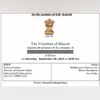
The use of “Bharat” in an English-language invitation from President Droupadi Murmu to heads of State and governments, as well as chief ministers, for an official banquet ahead of the G20 summit has sparked unnecessary controversy over the name of the country. The Opposition believes that the government’s choice of the Hindi word for the country, rather than following convention, is a way of undermining the 26-party alliance that goes by the name INDIA (the acronym stands for Indian National Developmental Inclusive Alliance). Whatever the motive, the abrupt departure from standard practice calls for an explanation from the government, especially because there has been no official announcement or notification to this effect. The timing also raises several questions. So far, there has been no issue over the country’s “international” and “indigenous” names, which are derived from constitutional provisions. The first sub-clause of the first article of the English (and original) version of the Constitution states, “India, that is Bharat, shall be a Union of States”.
In 1987, the 58th amendment to the Constitution empowered the President to have the Hindi version of the Constitution published. The concomitant first article gives primacy to the word Bharat — “Bharat that is India…”. The Hindi version did not create controversy simply because Indians accepted that India would be the term used internationally and in government publications in English, which remains a language of official communication in India, while Bharat would be used in Hindi publications. Most ordinary Indians have had no difficulty absorbing this interchangeable usage, singing praises to “Bharat” in the national anthem and rooting for “India” at international sporting events.
In over seven decades since Independence, there is no doubt that the term “India” has shaped the country’s global identity, which must count for something for a government that is keen to project power on the global stage. Indeed, the G20 presidency is widely regarded as a platform to fulfil this ambition. It is possible that the current government is keen to give the country a more indigenous identity than the name India, which is a variation of a collective term used, first by the Greeks, and later by West Asian traders, to refer to the sub-continental landmass east of the Indus river. This is not a novel aspiration; several countries have changed names to slough off colonial pasts — Sri Lanka (Ceylon), Zimbabwe (Rhodesia), Malawi (Nyasaland), Burkina Faso (Upper Volta) and so on. Equally, several countries have local names that differ from their international names — Deutschland (Germany), Eire (Ireland), Misr (Egypt) and Zhongguo (China).
Similarly, variations of the term Bharat are used in several local languages across the country. At the same time, there are also hundreds of communities and minorities for whom the term Bharat may not have the same cultural resonance. On the contrary, it may have exclusionary connotations. Retaining the India-Bharat duality conveys a pleasing sense of ambiguity. Officially excluding one of the names of the country, therefore, calls for wide consultation in an intensely multicultural country such as Bharat/India. Finally, there is the question of necessity. A name change is just that. Calling India only Bharat will not address the many critical issues that the country faces and surely demand more governmental concern and attention than the wording of a presidential invitation.