Clean the air

India needs a plan to address pollution
pollution building
Business Standard Editorial Comment Mumbai
3 min read Last Updated : Oct 25 2023 | 11:33 PM IST
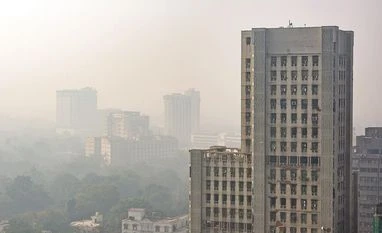
Delhi remains one of the most polluted megacities in the world despite its vast foliage and canopy cover. With rapid economic expansion, population growth, and a surging number of vehicles, its air quality has been deteriorating and becomes practically toxic in winter. There has been much debate over the sources of the problem and how they can be addressed. A recent research paper titled “Decadal growth in emission load of major air pollutants in Delhi”, published in the Earth System Science Data, presented a detailed study of all major and minor sources of pollution in the city for eight major pollutants. It found no evidence of a decline in pollution levels between 2010 and 2020. In fact, according to the paper, 39 per cent of the increase in the emission load can be attributed to the transport sector, while 36 per cent was due to pollution-intensive activities in the industrial sector.

Transport and industries are the two dominant sources of pollution in the city. Unsurprisingly, all traffic junctions experience high emission loads. The paper also highlights some of the emerging sectors contributing immensely to worsening air quality. These include construction, the burning of municipal solid waste (MSW), the use of incense sticks and mosquito coils in residences and small commercial establishments. Since 2010, their relative contribution has increased substantially. Currently, Delhi has three waste-to-energy (WTE) plants, but they process only 22 per cent of the MSW generated annually. Neighbouring states worsen the situation by inefficiently managing crop residue, allowing brick kilns to operate, and letting polluting vehicles ply. The only silver lining is that the emission load from windblown road dust and cooking has decreased due to improvements in the conditions of paved roads and penetration of liquefied petroleum gas (LPG) in slums, respectively. The permanent closure of thermal power plants within the city limits has also helped.

India needs policy resolve to address the issue. Since public pressure on such issues is still limited, environmental concerns are often ignored. In recent years, the government has turned to various piecemeal solutions, such as the odd-even scheme, vehicle-scrapping policy, and installing anti-smog guns. But they have been of little use. Recently, the Commission for Air Quality Management announced that starting from November 1, only electric, compressed natural gas, and BS-VI diesel-compliant buses will be allowed to ply between Delhi and other states of the National Capital Region (NCR). Expanding the Delhi Metro and developing high-speed railways in the NCR region like the RapidX network will help but may not be enough. There is an immediate need for an integrated public transport system that also takes care of the needs of cyclists and pedestrians.

Moreover, policies in Delhi alone cannot tackle the problem. Since the NCR is a landlocked region, the city needs an air-quality governance system for the entire airshed region, that is, the Indo-Gangetic plains, along with a proper crop-residue management system. Besides, since the problem is not limited to Delhi, and other large cities, such as Mumbai, are also witnessing poor air quality, India can no longer afford to ignore it. Poor air quality and an increase in respiratory diseases will also have direct economic implications. Sources of pollution are now well known and India needs a plan to deal with the menace.

One subscription. Two world-class reads.

Already subscribed? Log in

Subscribe to read the full story →
*Subscribe to Business Standard digital and get complimentary access to The New York Times

Smart Quarterly

₹900

3 Months

₹300/Month

SAVE 25%

Smart Essential

₹2,700

1 Year

₹225/Month

SAVE 46%
*Complimentary New York Times access for the 2nd year will be given after 12 months

Super Saver

₹3,900

2 Years

₹162/Month

Subscribe

Renews automatically, cancel anytime

Here’s what’s included in our digital subscription plans

Exclusive premium stories online

  • Over 30 premium stories daily, handpicked by our editors

Complimentary Access to The New York Times

  • News, Games, Cooking, Audio, Wirecutter & The Athletic

Business Standard Epaper

  • Digital replica of our daily newspaper — with options to read, save, and share

Curated Newsletters

  • Insights on markets, finance, politics, tech, and more delivered to your inbox

Market Analysis & Investment Insights

  • In-depth market analysis & insights with access to The Smart Investor

Archives

  • Repository of articles and publications dating back to 1997

Ad-free Reading

  • Uninterrupted reading experience with no advertisements

Seamless Access Across All Devices

  • Access Business Standard across devices — mobile, tablet, or PC, via web or app

Topics :Business Standard Editorial CommentDelhi PollutionAir pollution studytransport sectorDelhi-NCR

Next Story



