Decarbonisation key to firm profitability, India ahead of global average

Globally, only about 25 per cent of the companies reported annual decarbonisation benefits worth at least 7 per cent of sales
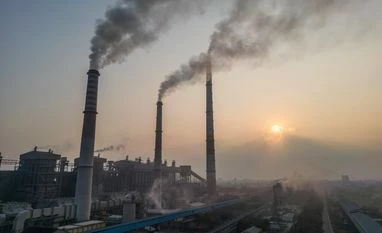
emission, smoke
Photo: Bloomberg
Business Standard Editorial Comment
3 min read Last Updated : Sep 26 2024 | 12:22 AM IST
How quickly firms adapt to the climate-change challenge will determine the achievement of emission targets. A global survey conducted recently by the Boston Consulting Group and CO2 AI, a sustainability-management platform, highlights that relative to 2022 and 2023, progress on climate issues stagnated this year. Using the data collected from 1,864 companies, belonging to 16 major industries and accounting for around 45 per cent of global greenhouse gas (GHG) emission, the report, titled “Boosting Your Bottom Line Through Decarbonization”, came at a time when this year’s summer officially became the hottest on record. Of the surveyed companies, only 9 per cent comprehensively report Scope 1, 2 and 3 emission, an internationally recognised standard for classifying GHG emissions based on their source. At the same time, only 16 per cent and 8 per cent of the companies have set and achieved emission-reductions targets, respectively. The corresponding numbers in India are higher than the global average, with 12 per cent of the companies reporting emissions, 24 per cent setting targets, and 14 per cent reducing emissions in line with the Paris Agreement. Overall, the country lags behind only China and Brazil.

Over 40 per cent of the Indian companies reported significant benefits from decarbonisation. Globally, only about 25 per cent of the companies reported annual decarbonisation benefits worth at least 7 per cent of sales. This equates to about $200 million in net benefit after investment. These benefits mostly accrue from lower operating costs, increased revenues, taxation benefits, enhanced reputational value, and regulatory compliance. In fact, over 50 per cent of the companies believe 10-40 per cent of their emission footprint can be decarbonised at net cost savings. It is also in the interests of firms, particularly in the developing world, to decarbonise, given that trade barriers are increasingly being linked to carbon emissions. The European Union’s Carbon Border Adjustment Mechanism (CBAM), the United States’ Inflation Reduction Act (IRA), and the European Green Deal (which covers the CBAM) are some of the climate-focused trade policies that aim to increase global regulatory pressures on companies to invest in combating climate change. However, carrot-and-stick policies can work towards reducing the carbon intensity of companies only when there are adequate green investment incentives, and companies can successfully raise funds for mitigation and adaptation strategies. This will require the availability of funds at a reasonable cost.

To get efficiency gains from decarbonisation in the future and reshape manufacturing practices for greater sustainability, companies across India need to leverage advanced technologies like artificial intelligence (AI). A tech firm in California, for instance, has developed an emission-tracking platform that combines satellite imagery with AI-based techniques, enabling companies to track, trace, and reduce their emissions. Firms can also gain from calculating emission at product level and remaining committed to a climate-transition plan. At this juncture, India must also consider carbon pricing and targeted investment subsidies for firms. Developing the Indian Carbon Market and the Carbon Credit Trading Scheme is ultimately expected to enhance energy transition efforts and accelerate the transition to a low-carbon economy.

One subscription. Two world-class reads.

Already subscribed? Log in

Subscribe to read the full story →
*Subscribe to Business Standard digital and get complimentary access to The New York Times

Smart Quarterly

₹900

3 Months

₹300/Month

SAVE 25%

Smart Essential

₹2,700

1 Year

₹225/Month

SAVE 46%
*Complimentary New York Times access for the 2nd year will be given after 12 months

Super Saver

₹3,900

2 Years

₹162/Month

Subscribe

Renews automatically, cancel anytime

Here’s what’s included in our digital subscription plans

Exclusive premium stories online

  • Over 30 premium stories daily, handpicked by our editors

Complimentary Access to The New York Times

  • News, Games, Cooking, Audio, Wirecutter & The Athletic

Business Standard Epaper

  • Digital replica of our daily newspaper — with options to read, save, and share

Curated Newsletters

  • Insights on markets, finance, politics, tech, and more delivered to your inbox

Market Analysis & Investment Insights

  • In-depth market analysis & insights with access to The Smart Investor

Archives

  • Repository of articles and publications dating back to 1997

Ad-free Reading

  • Uninterrupted reading experience with no advertisements

Seamless Access Across All Devices

  • Access Business Standard across devices — mobile, tablet, or PC, via web or app

Topics :Climate ChangeBusiness Standard Editorial Commentgreenhouse gasesgreenhouse gas emissions

Next Story



