Home / Opinion / Editorial / Power to Bhutan: Good relations balance Thimphu's geopolitical pragmatism
Power to Bhutan: Good relations balance Thimphu's geopolitical pragmatism
Sustained cordiality has been the result of India's constructive and dependable engagement with Bhutan since the 1960s, helping it build institutions of governance and military capabilities
premium
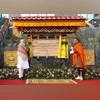
The Prime Minister was guest of honour at K4’s 70th birthday and inaugurated the Buddhist Kalachakra Empowerment ceremony, a three-day event as part of the Global Peace Prayer Festival. (Photo: ANI)
3 min read Last Updated : Nov 13 2025 | 11:02 PM IST
Prime Minister Narendra Modi’s visit to Bhutan reflected a model of cordial relations between two asymmetric powers — a model that the Indian state has consistently maintained with the Himalayan kingdom of about 792,000 people. Unlike Nepal, Bhutan’s transition to an electoral democracy in 2008 has not destabilised relations with India. Indeed, the nature of the India-Bhutan treaty went through a significant amendment in 2007, when Bhutan held its first direct elections to the National Council, with the clause that replaced the one stating India would “guide” Bhutan in foreign affairs with one of “mutual respect for each other’s independence, sovereignty and territorial integrity”. The two countries also agreed not to let their territories be used against each other, a clause that was tested during China’s occupation of the Bhutanese territory of Doklam in 2017.
Sustained cordiality has been the result of India’s constructive and dependable engagement with Bhutan since the 1960s, helping it build institutions of governance and military capabilities and offering generous development help. On Bhutan’s part, relations have been driven by Jigme Singye Wangchuck, the fourth Druk Gyalpo or king, popularly known as K4, who initiated his kingdom’s transition to a parliamentary democracy before abdicating in favour of his son Jigme Khesar Namgyel Wangchuck (K5). The tonality of Mr Modi’s visit reflected the traditional civilisational and strategic bonds between the two nations.
The Prime Minister was guest of honour at K4’s 70th birthday and inaugurated the Buddhist Kalachakra Empowerment ceremony, a three-day event as part of the Global Peace Prayer Festival. K5 led a prayer ceremony in Thimphu for the victims of the terror blast near the Red Fort, and Mr Modi attended it. More substantively, Mr Modi inaugurated the 1,020 Mw Punatsangchhu-II hydroelectric project, built by Bharat Heavy Electricals Ltd and funded by India, and announced ₹4,000 crore for new energy projects in the country. Together with Chukha, Kurichhu, Tala, Mangdechhu, and Punatsangchhu-I, hydropower has been one of the main pillars of India-Bhutan economic cooperation. A clutch of other agreements were concluded, including Phase-II of the Unified Payments System. India has also extended substantive support for the current king’s ambitious urban-development project, the Gelephu Mindfulness City, a special administrative region being developed in southern Bhutan. Mr Modi announced an immigration check-post in Assam to facilitate easy movement of investors and visitors to Gelephu.
There are solid geopolitical calculations behind this package of hard and soft power projected in Mr Modi’s visit and they concern the rising superpower on Bhutan’s borders. Bhutan and China do not have formal diplomatic relations because of Beijing’s claims on swathes of Bhutanese territory as historically part of Tibet. China’s concern over the Dalai Lama’s succession has exacerbated tensions. Since 2023, Bhutan has moved to assuage concerns by signing a cooperation agreement on border talks, continuing to maintain its distance from the Dalai Lama, and altering colonial connotations in references to Tibet. This year, Chinese New Year celebrations were observed in Thimphu, Bhutan’s capital. These moves may be driven by Bhutanese pragmatism but they nevertheless represent an element of caution for India. In that sense, Mr Modi’s visit can be seen as a necessary antidote.