2024 LS polls: Opposition strategists will need to agree on a common agenda

Opposition strategists will need to agree on a common agenda for the 2024 polls and iron out rough spots over areas where regional parties and the Congress contest for the same turf

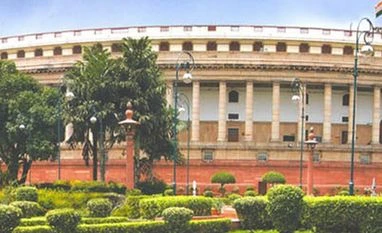
Indian Parliament, (Photo: Wikipedia)
Archis Mohan
4 min read Last Updated : Jun 11 2023 | 10:34 PM IST
Contradictions abound in the path to Opposition unity, some of which the Opposition leaders will discuss in Patna on June 23. Most other concerns could be resolved in subsequent meetings. Several could likely remain unsettled.

Opposition strategists will need to agree on a common agenda for the 2024 Lok Sabha (LS) polls and iron out rough spots over areas where regional parties and the Congress contest for the same turf, whether LS constituencies in states such as Delhi, Uttar Pradesh (UP), and West Bengal or their outreach to castes and communities that do not vote for the Bharatiya Janata Party (BJP).

After Rahul Gandhi’s Bharat Jodo Yatra and Congress’ Karnataka win, where it promised to restore 4 per cent job reservation for Muslims and threatened to ban the Popular Front of India and Bajrang Dal, regional parties, like the Samajwadi Party (SP) and ally Rashtriya Lok Dal (RLD) in UP, Trinamool Congress (TMC) in Bengal, and Aam Aadmi Party (AAP) in Delhi, are nervous about a reinvigorated Congress could potentially dent their support base. The Janata Dal (Secular), or JD(S), losing its minority support base to the Congress in the Karnataka Assembly polls — Muslims comprise 13 per cent of the state’s electorate — spurred its recent outreach to the BJP. “It is a matter of survival for the Deve Gowda family,” said a former JD(S) leader.

JD(S)’ 23 Muslim candidates lost, but nine of Congress’ 15 won.

In UP, the SP is taciturn about an alliance with the Congress, as it burned its fingers in the 2017 Assembly polls when the two joined forces. However, the RLD, an ally of the SP, is keen since it cannot take on the BJP in Western UP without a Jat-Muslim entente.

According to an analysis of the recently concluded UP local body elections, Muslims preferred the Congress over the SP in seats with sizeable minorities. Similarly, in the December 2022 civic polls in Delhi, Muslims returned to the Congress, especially in Northeast Delhi, which saw riots in February 2020, and Southeast Delhi — the heart of the anti-Citizenship Amendment Act protests. As a result, the AAP’s vote share dipped significantly. In Bengal, the Congress’ candidate, supported by the Left, won the Sagardighi by-poll in Murshidabad in March, defeating the TMC. When he joined the TMC last month, the Congress complained he was pressured.

Can a united Opposition catalyse not just arithmetic but also chemistry to defeat the charismatic leadership of Prime Minister Narendra Modi, who led the BJP to secure a vote share of over 50 per cent in 12 states in 2019?

In 14 Northern and Northwest Indian states, the BJP-led National Democratic Alliance (NDA) won 298 of 330, with the BJP itself winning 255, merely 17 short of the majority mark.

Opposition parties are working on a formula of their own.

According to a Janata Dal (United) leader, there are at least 450 of the 543 LS seats where the Opposition could agree to challenge the BJP-led NDA to one-on-one contests, with Odisha (21 seats), Kerala (20), Andhra Pradesh (25), and Telangana (17) as notable exceptions that could witness multi-cornered fights where the BJP is a marginal player. The Congress, however, believes it needs to primarily focus on the upcoming November-December Assembly polls in the Hindi heartland — Rajasthan, Madhya Pradesh (MP), and Chhattisgarh — where there is a bipolar contest with the BJP.

For the LS, the Congress will concentrate on 150-odd seats on which it is in direct contest with the BJP in Rajasthan, MP, Gujarat, Chhattisgarh, Jharkhand, Himachal Pradesh, Uttarakhand, and Maharashtra, seats where it performed abysmally in 2014 and 2019.

A Congress leader privy to the ongoing discussions in the party said the party is confident about its alliances in Tamil Nadu (and Puducherry), Bihar, and Maharashtra, which account for 128 seats together. In states such as UP and Bengal, it was willing to sacrifice its interests to stop the BJP and would work towards ensuring the BJP did not win incremental seats in Odisha and Telangana. The Congress may be amenable to alliances with the AAP in Delhi and Gujarat.

Party strategists disagree that the Congress’ refusal to attend the meeting in Patna on June 12, which Bihar Chief Minister (CM) Nitish Kumar announced earlier this month, was a sign of hubris. They pointed out that both Nitish and Nationalist Congress Party chief Sharad Pawar could soon be entrusted with crucial responsibilities. Rather than arrogance, the Karnataka win has given Mallikarjuna Kharge and his team the courage to stand up to the naysayers within the party who advise against sacrificing interests for Opposition unity.

One subscription. Two world-class reads.

Already subscribed? Log in

Subscribe to read the full story →
*Subscribe to Business Standard digital and get complimentary access to The New York Times

Smart Quarterly

₹900

3 Months

₹300/Month

SAVE 25%

Smart Essential

₹2,700

1 Year

₹225/Month

SAVE 46%
*Complimentary New York Times access for the 2nd year will be given after 12 months

Super Saver

₹3,900

2 Years

₹162/Month

Subscribe

Renews automatically, cancel anytime

Here’s what’s included in our digital subscription plans

Exclusive premium stories online

  • Over 30 premium stories daily, handpicked by our editors

Complimentary Access to The New York Times

  • News, Games, Cooking, Audio, Wirecutter & The Athletic

Business Standard Epaper

  • Digital replica of our daily newspaper — with options to read, save, and share

Curated Newsletters

  • Insights on markets, finance, politics, tech, and more delivered to your inbox

Market Analysis & Investment Insights

  • In-depth market analysis & insights with access to The Smart Investor

Archives

  • Repository of articles and publications dating back to 1997

Ad-free Reading

  • Uninterrupted reading experience with no advertisements

Seamless Access Across All Devices

  • Access Business Standard across devices — mobile, tablet, or PC, via web or app

Topics :AAPLok SabhaPolitics

Next Story




