China manufacturing activity contracts, but consumer spending strong
A non-manufacturing gauge of activity in the services and construction sectors declined to 56.4 from 58.2 in March. Economists had forecast the index to hit 57. A reading above 50 indicates expansion
Bloomberg China’s manufacturing activity unexpectedly contracted in April, a sign the economic recovery remains patchy and may be struggling to sustain momentum.
The official manufacturing purchasing managers’ index fell to 49.2 from 51.9 in March, the National Bureau of Statistics said Sunday. The gauge dropped below the level of 50 — which signals contraction from the previous month — for the first time since December. Economists surveyed by Bloomberg had forecast 51.4.
A non-manufacturing gauge of activity in the services and construction sectors declined to 56.4 from 58.2 in March. Economists had forecast the index to hit 57. A reading above 50 indicates expansion.
“This is a mixed PMI report and suggests that China’s post-Covid recovery has somewhat lost steam and calls for continued policy support,” said Zhou Hao, chief economist at Guotai Junan International Holdings
The world’s second-largest economy expanded at the fastest pace in a year last quarter, driven by consumer spending as the end of Covid restrictions lifted activity. Several major banks raised their annual growth forecasts to about 6 per cent or higher, expecting the economy to outperform Beijing’s target of around 5 per cent growth.
As the unexpected contraction in manufacturing activity showed, there’s still uncertainty if the recovery can be sustained. The property sector’s rebound has only just started, while investment has continued to fall. Industrial firms are struggling to turn a profit. Youth unemployment is also hovering near record highs.
Strong consumer spending was one of the reasons China was able to notch a 4.5 per cent year-over-year expansion in gross domestic product in the first three months of the year.
“The recovery of domestic demand is not broad based,” and while travel may be up, property market activities seem still muted, and joblessness is high, said Zhang Zhiwei, chief economist at Pinpoint Asset Management. “These mixed signals will likely keep the pressure on the government to continue its supportive fiscal and monetary policies” in the second quarter, he said.
The new orders subindex under the manufacturing PMI was at 48.8, falling into contraction territory for the first time since December when Chinese authorities abruptly ended Covid restrictions and hundreds of millions were infected nationwide. The sub-gauges for new export orders and manufacturing employment also contracted. The drop in the manufacturing gauge is “due to factors including insufficient market demand and the high base in the first quarter when the manufacturing industry rapidly recovered,” NBS senior statistician Zhao Qinghe said in a statement accompanying the data release.
Some analysts, including Bruce Pang, chief economist for Greater China at Jones Lang LaSalle also pointed to fewer working days in April due to public holidays as one of the factors resulting in the fall in factory activities.
Spike in home sales China’s home sales rose for a third month in April, adding to signs of a recovery after policymakers expanded support for the beleaguered sector.
The value of new home sales by the 100 biggest real estate developers climbed 31.6 per cent from a year earlier to $81.9 billion, according to preliminary data from China Real Estate Information. That compares with a 29.2 per cent increase in March.
The improvement suggests government measures to support the real estate industry, a crucial component of the world’s second-largest economy, are having a positive effect. Regulators have ramped up financial support for developers and lowered mortgage rates, while buying curbs have been eased in many big cities including Shanghai.

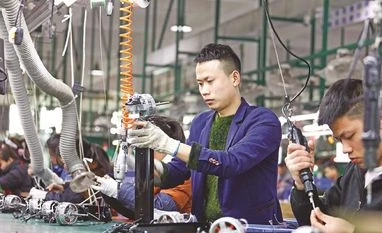 "China manufacturing activity contracts, but consumer spending strong")


 Connect with us on WhatsApp