Climate change can lead to global outbreak of mosquito-borne diseases dengue, zika and chikungunya, warned the World Health Organization on Wednesday.
The incidence of infections caused by arboviruses, such as dengue, Zika and chikungunya, has grown dramatically around the world in recent decades.
About half of the world's population is now at risk of dengue with an estimated 100-400 million infections occurring each year. Chikungunya virus (CHIKV) is found on nearly all continents and to date, 115 countries have reported transmission.
While Zika virus disease has declined globally, to date, 89 countries have current or previous spread of Zika virus.
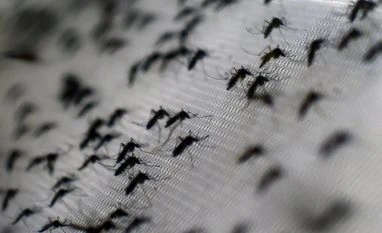
These diseases, that spread from mosquitoes to people, are causing an increasing number of outbreaks worldwide, with climate change, deforestation and urbanisation being some of the major risk factors, that allow mosquitoes to adapt better to new environments and spread the risk of infection geographically further, including to the European region.
"We are really at the right time to scale up the advocacy for the threat of arboviruses globally," Dr Raman Velayudhan, Unit Head, Global Programme on control of Neglected Tropical Diseases, WHO, said at a media briefing session.
Velayudhan said around 129 countries are at risk of dengue and it is endemic in over 100 countries. From about half a million cases in 2000, it has exponentially grown to 5.2 million in 2019.
This increasing trend is continuing in 2023 where till the end of March 2023, 441,898 cases and 119 deaths have been reported.
"This is really worrying because this shows that climate change has played a key role in facilitating the spread of the vector mosquitoes down south and then when people travel, naturally the virus goes along with them," he said, adding "this trend is likely to continue for the rest of the world".
Movement of people, urbanisation and associated problems with water and sanitation, are the factors leading to continuous spread of vectors into new regions, Velayudhan noted.
"And in terms of climatic change, certainly increased precipitation, higher temperature, higher humidity all favours the mosquito," he said, adding "the virus and the vectors also multiply faster in higher temperature."A
Diana Rojas Alvarez, WHO's technical lead on chikungunya and zika, stressed the need for urgent action to rein in the spread of the mosquitos, amid fears of larger outbreaks in new areas.
"The mosquitos and these diseases have with climate change been increasing ... by altitude and by latitude," Rojas Alvarez said, describing the situation as "alarming".
Further, Velayudhan explained that with dengue, which comes in four closely related serotypes, people who are reinfected with another serotype often develop severe disease.
This "can lead to organ failure and death", Velayudhan warned, adding that "this is a big threat to the world, because most of the countries nowAhave all four serotypes in circulation."
He called for countries to boost mosquito control and "be on the alert" to detect when the diseases are spreading "to avoid any major outbreak."
--IANS
rvt/svn/

 "Climate change can drive global outbreaks in dengue, Chikungunya: WHO")

