


A Sixth of Humanity: India's journey between democracy and economic growth
This narrative about India's development is described as an odyssey, perhaps because of the policy shortfalls and mishaps in the development voyage
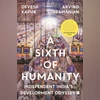 "A Sixth of Humanity: Independent India's Development Odyssey")
premium
A Sixth of Humanity: Independent India’s Development Odyssey
5 min read Last Updated : Nov 03 2025 | 10:35 PM IST
Listen to This Article
A Sixth of Humanity: Independent India’s Development Odyssey
by Devesh Kapur & Arvind Subramanian
Published by HarperCollins
760 pages ₹1,299
India’s economic evolution since independence has been the subject of several recent books. This rather long but readable book is special because it connects economic development with political and administrative evolution and is the joint product of Devesh Kapur, a professor of South Asian Studies in the United States, and Arvind Subramanian, best known as a policy analyst.
Their judgement on the policies that shaped the economy is exceptionally critical for the pre-1980 period, but also argues that the required structural transformation has not taken place fully in the post-1980 period of higher growth. This is reflected in their chapter titles listed below in the main part of their economic evaluation for the entire period:
- Misunderstood and Misdiagnosed: India’s Growth and Policy Regime
- Planning Failure: Neither Growth nor Structural Transformation
- Failure Amid Success: Robust Growth Without Structural Transformation
- The Kamadhenu Fiscal and Redistributive State
- Globalisation Skewed and Ambivalent
The dominant reason they assert for the substantial difference in growth performance assessment of the pre-1991 and post-1991 periods is the shift from the public to the private sector and a greater openness to the global economy. But their detailed examination of the data does indicate more specific changes through the four periods. One criticism that is advanced for all the periods is the failure to develop lower-intensity manufacturing production and exports, and more and better paid jobs for lower-skill workers. What is most striking is their assessment of the administrative mechanism and the shortfalls because of the way in which it sought to control the development process.
The authors have combined the pre-1980 period, which has a first part from 1950-64, the Nehru Era, and the post-Nehru period from 1965-80. This is not justifiable. The two periods differ in economic growth rate, which was 4.3 per cent FY51-FY65 and 3.3 per cent FY66-FY80. But the more important difference is in the political environment with the turbulence arising after the mid-sixties as a result of the split in the Congress, the emergence of competing parties, the political impact of the Emergency, and the Janata Party’s victory and collapse.
A crucial part of their assessment is the extent to which the government constrained the private sector. Their argument that the private sector was prevented from participating in growth when planned development started in 1950 is misleading, as can be seen in the fact that the share of the private corporate sector in fixed investment rose from 9.5 per cent in 1950-51 to 16.2 per cent in 1960-61. In fact, the availability of private corporations for industrial development was limited at that time and new ones emerged during the era of protection and control.
Could India have planned for an export-oriented growth process in 1950? In the years before 1950, global trade growth was slow — $58.5 billion in 1948, $58.6 billion in 1949 and $61.5 billion in 1950. Moreover, the main sector for low-skill, labour-intensive exports was cotton textile manufacturing. Here, policy was constrained by the political goal of protecting the handloom sector, which, according to a 1954 assessment, involved close to three million handloom units employing several million people. They do accept that “planning and state direction, creating a dominant public sector, and the neglect of trading opportunities cannot be fairly described as blunder for the simple reason that they reflected the thinking of the times.”
They often compare India’s growth performance with that of the other Asian states. However, compared to the East Asian states, India is far more diverse in ethnic and religious terms and was a more acute democracy, particularly in the earlier decades. An effective democracy in a large, diverse state will focus on issues of income distribution, and that can constrain the ability of implementing a pro-private sector, outward-oriented strategy.
The comparison with China is important. But do note that China’s phenomenal post-1980 growth has been driven not just by manufacturing production and exports but also by strong support for the public sector enterprises and for technological research and development, both largely missing in India’s post-liberalisation period since 1991. Another important dimension is the greater flexibility for sub-national governments, which has happened both in China and India after liberalisation. This is well explored in this book’s section on state-level performance in India.
This narrative about India’s development is described as an odyssey, perhaps because of the policy shortfalls and mishaps in the development voyage. But as in Homer’s Odyssey the voyager has survived these shortfalls. Hence, what comes across in the last part of the book, which presents the author’s overall assessment, is their view that a diverse India requires an effective democracy as the basis for development. Their broad assessment is that “the unlocked potential of India and Indians is immense and has been built up steadily, especially since the 1990s” but also that “if changes in the economy have been cumulative and (mostly) for the better, the same cannot be said of the dramatic changes in the country’s politics”. That is why India’s development future depends as much on what happens to democracy as on the approach to economic policy.
desaind@icloud.com
Topics : Book Reviews Literature Indian Economy