


A turbulent political life
Journalist Pallavi Rebbapragada's book attempts to introduce Odiyas and non-Odiyas alike to the complexities of the state's politics through the fascinating life of its chief minister Nandini Satpathy
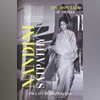 "Nandini Satpathy: The Iron Lady of Orissa")
premium
Nandini Satpathy: The Iron Lady of Orissa
5 min read Last Updated : May 06 2024 | 9:13 PM IST
Nandini Satpathy: The Iron Lady of Orissa
Author: Pallavi Rebbapragada
Publisher: Simon & Schuster India
Pages: 271
Price: Rs 899
If there is a state in India where politics is both complex and perplexing, it is Odisha. The Biju Janata Dal (BJD) was formed in 1997 by Naveen Patnaik, the son of Odisha’s best-known politician, Biju Patnaik, but at the time, Naveenbabu (as he is known in the state) could neither speak fluent Odiya nor read and write the language. And yet he is likely to become the longest serving chief minister in India’s history. He is on the verge of bequeathing his political empire, not to a politician from Odisha or even neighbouring Andhra Pradesh, Chhattisgarh, Jharkhand or Bengal, but to a bureaucrat from distant Tamil Nadu. When it comes to complexity, there is much that non-Odiyas and Odiyas alike need to learn about the politics, language and ambitions of the state. We know so little.
This book represents a significant effort in that direction. While it is a biography of Odisha’s chief minister Nandini Satpathy, it also locates Satpathy’s fascinating life in the context of the politics of the state. She was a political figure much before she became a politician: Even before she was a teenager, she was jailed for pulling down the Union Jack from atop a dome in Cuttack’s Ravenshaw College. She was fired by communism, but the communist movement itself was going through upheavals and looked askance at her relationship with Devendra Satpathy, a fellow comrade whom she later married. Both were expelled from the party. Satpathy and Indira Gandhi were friends and Gandhi, herself a vulnerable target of attack from colleagues in the Congress, embraced Satpathy as an ally, though outsiders saw her as nothing more than a satellite.
By 1962, she had become a member of the Rajya Sabha from the Congress: In her speech supporting the Emergency imposed on India as a result of the India-China war, she responded as a Communist in the Congress, urging the government passionately not to give up centralised planning. Reading the debate is instructive, not the least because there actually was one — unlike the present. She became a Union Minister and though Indira Gandhi pleaded meekly with P N Haksar to give her a more consequential portfolio, she was named only a junior minister. She was promoted soon, and the book explores her contribution to the 1971 war for the liberation of Bangladesh as the minister of state for information and broadcasting. The Liberation Radio of Bangladesh was her brainchild, devised on the advice and recommendation of those working underground, something with which she was completely at ease. It was not just a challenge to Pakistan; it was a way of refashioning Bengali nationalism. But Bangladeshi nationalism would assert itself virulently later and the book explains that Satpathy translated Tasleema Nasrin’s controversial novel Lajja into Odiya in the early 1990s because she was so distressed at the communalisation and curbs on freedom of expression in that country.
In 1972, Satpathy returned to state politics after she was made chief minister. The government fell but she was able to keep it afloat for another term. The book explains the pressures and pulls within the Congress, with stalwarts like Biju Patnaik always ready to trip Satpathy up, though they shared good personal relations. The chapter on agrarian governance describes Satpathy’s commitment to redistribution of land. On this issue, there was no ambiguity in her mind, unlike the rest of the Congress. But ensuring this got done seamlessly was another matter altogether. Different parts of Odisha had different land revenue assessment rules under the British. On top of that, the tribals’ collective ownership of land needed to be factored in as well. Under her chief ministership, Odisha passed many laws that ensured equity in principle, including nationalisation of the Kendu leaf trade. But implementation was chaotic, and incomplete.
Then came the Emergency. Satpathy’s interpretation of the Emergency was interesting. In an address to secretaries on June 28, 1975, the day after it was imposed, she said the idea of Emergency was “not to extinguish political dissent. The right to dissent is basic in a democracy….” But the way it was conveyed to Delhi by J B Patnaik and Ram Chandra Rath, both leaders aspiring to unseat Satpathy from her perch as a friend of Indira Gandhi, was that Satpathy was plotting to overthrow Mrs Gandhi. Their point of contact was Sanjay Gandhi.
Satpathy resigned from the Congress and joined, first, the Congress For Democracy (CFD) and then the Janata Party. She felt awkward there and possibly also unwelcome. She had rivals there and enemies in the Congress. That was the beginning of the legal problems in which the government embroiled her that would last 18 years.
The author says the quintessential Satpathy was captured in a quote used by the New York Times. She told the reporter: “Certain things look very odd to me. For example, why should a man rush up to open the door of my car when I go to the office? I can do it myself”
There is some careless proofing —Naval Tata should have been well heeled, instead he is well healed (page 107); Subas Bose, Subhas Bose and Subhash Bose are used interchangeably; in many places, the Janata Party appears as the Janata Dal. The two belong to different eras. But other than that, this book is researched extensively and is evocatively written. It is essential reading for anyone seeking to understand the evolution of the politics of Odisha and its political economy.
Topics : BOOK REVIEW Book reading books national politics