


Beyond the aid recipient: India's strategic shift in its Africa engagement
All the essays focus attention on two compelling trends - development for Africa and development by Africa
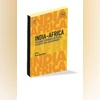 "India-Africa: Building Synergies In Peace, Security And Development")
premium
India-Africa: Building Synergies In Peace, Security And Development
4 min read Last Updated : May 15 2025 | 12:14 AM IST
Listen to This Article
India-Africa: Building Synergies In Peace, Security And Development
by Ruchita Beri,
Published by Pentagon Press
258 pages ₹1,295
For any rising power in the 21st century, partnering with Africa has become an imperative. It is, after all, a continent endowed with vast natural resources such as oil, gas, critical minerals, agricultural lands with abundant fresh water and a market size of 1.5 billion people. India’s enduring partnership with Africa has evolved over time, beyond the sentimentality of the freedom struggle and liberation. The multidimensionality of the partnership has been elucidated in the edited book by Ruchita Beri, a consultant with the Manohar Parrikar Institute for Defence Studies and Analyses, with a foreword by Ambassador Sujan R Chinoy and scholarly contributions from Sanusha Naidu, Rajeesh Kumar, Aparajita Biswas, Yeshi Choedon, and Hussein Solomon, among others.
All the essays focus attention on two compelling trends — development for Africa and development by Africa. The latter assumes greater significance for contemporary Africa as it seeks to carve out its own destiny, leveraged through industrialisation and trade liberalisation. “Agenda 2063,” the African Union’s strategic framework for the continent’s socio-economic transformation, outlining a 50-year vision for development (it was adopted in 2013), advocates industrialisation. The African Continental Free Trade Area seeks value-added manufacturing in the continent. Indian businesses would need to take note of this aspirational Africa that has moved beyond its traditional aid recipient tag.
To achieve an ambitious goal of $200 billion trade by 2030 — set at the India-Africa Forum Summit in 2015 — from the current trade of $100 billion (annual) and $80 billion in investment (cumulative), a long-term strategy of deeper engagement is needed. In an era of global supply chains, local manufacturing near markets makes economic sense. Indian firms should be supported to set up local units, offer low-cost digital solutions, and promote trade in national currencies. This investment-led trade can deepen India’s economic relations in Africa and create much-needed jobs for the African youth.
India’s support through numerous lines of credit and grants have helped Indian companies establish a strong presence in Africa, the book notes. Perhaps, the time has come to look at the prospects of undertaking infrastructure projects under public private partnership mode. Indian firms can be supported through easier access to low-interest financing. Of the multiple ideas for cooperation that the book presents, how India can help Africa become a breadbasket is noteworthy. Africa has 60 per cent of the world’s arable land but generates only 10 per cent of global agriculture produce. This gap offers major opportunities for Indian agribusiness to supply seeds, agro-chemicals, equipment, and tractors. Similarly, replicating India’s success in solar through the International Solar Alliance can be a game changer in Africa’s energy transition, while keeping its fight on climate change going.
In health care, India’s low-cost medicines with an admirable reputation as the “pharmacy of the world” can play a catalytic role in Africa with the possibility of introducing “Jan Aushadi” units across Africa. Making formulations and vaccines in a “fill and finish” method locally can help overcome regulatory hurdles and expand market outreach. The book reinforces the necessity for building institutions for enduring democracy and education at the local level. Its importance has been reiterated by Nelson Mandela that “No country can really develop unless its citizens are educated and any nation that is progressive is led by people who have had the privilege of studying’’. Even as India scales up its capacity building through Indian Technical and Economic Cooperation, and scholarships, institutions set up locally in African countries can have a lasting impact. Like the IIT (Madras) branch set up in Zanzibar in 2023, India could help to expand a network of vocational training centres and information and communication centres. The book’s assertion that security is propitious for achieving comprehensive development could not have been more appropriate. India’s unceasing efforts for peace and stability in parts of Africa are worth underlining. The specialised training courses for peacekeepers under the Centre for UN Peacekeeping in New Delhi; military colleges set up by India in Africa, and intelligence sharing can help counter radicalisation and Islamic terrorism in the continent.
The book’s broader objective of reimagining Africa to be a priority should form part of India’s strategic calculations. Harnessing the talent of the 3.2 million Indian diaspora in Africa should form part of the strategy. India’s leadership of the Global South gains credibility and strengthens its claim for the rightful place as a permanent member of the UNSC. The much awaited India-Africa Forum Summit IV will present an opportune occasion to present a road map for building a more robust India-Africa partnership.
The reviewer is an IFS officer