


Dapaan: Kashmir's stories of conflict, resilience and remembrance
After 35 years of armed conflict, Kashmir abounds with stories-heard and unheard-of loss, laughter, haunting, and place-making, but also of defiance against the state
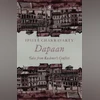 "Dapaan: Tales from Kashmir's Conflict")
premium
Dapaan: Tales from Kashmir’s Conflict
4 min read Last Updated : Sep 16 2025 | 8:36 PM IST
Listen to This Article
Dapaan: Tales from Kashmir’s Conflict
By Ipsita Chakravarty
Published by Hurst & Co Ltd
291 pages ₹699
Award-winning journalist Ipsita Chakravarty’s debut book is a story about stories in Kashmir. Ms Chakravarty, who has reported on politics and armed conflict in Kashmir and Northeast India for decades, brings out multiple Kashmiri voices — heard and unheard — through several forms of storytelling, including personal memories, urban legends, oral histories, folk theatre, songs, jokes, rumours, myths and fables. The book consists of various stories in the region — about loss, laughter, haunting and place-making.
In Kashmir, “haalaat” is the word used to describe the time after 1989. According to Ms Chakravarty, stories of the haalaat are part-fact, part-rumour, part-fever dream. By 1989, when armed rebellion spread through the state, many of these traditions had died or been forced underground. It is possibly for this reason that folktales and local narratives in the region — told and retold about the past — often begin with the word “dapaan”, meaning “it is said”. “It is said, two things can change at any time in Kashmir, the weather and the haalaat,” she explains in the book’s Introduction.
When the author first visited the Valley as a journalist in 2016, she found that the haalaat was continually being turned into a story. “There were always two stories about any news event, one from state authorities and one from local residents,” recalls Ms Chakravarty. It soon became a truism for her that there were no facts in Kashmir, only versions. Through the book, she explains that after 35 years, an armed conflict does not stay in the streets. “It enters homes and minds; it enters language,” she writes. When Ms Chakravarty started gathering stories for this book in 2022, she found that few people wanted to be interviewed. Most of those who agreed to speak did not want to be recorded or quoted. “Kashmir was an information war, after all, in which stories told by the tehreek competed with those spread by the state,” she writes.
In the book’s first section, Ms Chakravarty discusses among other things, “zulm” — the heaviest word in Kashmir — meaning injustice or oppression, whether in the form of killings, disappearances, crackdowns, curfews and everyday humiliations. “Zulm is buried in language itself. Generations forced to live and die in silence, leaving no trace but in words,” she writes. For centuries, the Laddi Shah was the poet of zulm in the region, his songs changing from year to year, mocking the folly of kings and governors. “The Laddi Shah inhabited the Kashmiri public sphere by tapping into cultural memory as he spoke of the present, and setting off ripples of dissent that would travel far into the future,” writes Ms Chakravarty. In today’s times, there is a fresh crop of Kashmiri rap songs by young protestors. “They know how to sing their rage because they have been doing it for hundreds of years,” she adds.
In one of the sections of the book, Ms Chakravarty explores how militant bodies are mourned in a way that becomes a form of defiance against the state. “As the haalaat claimed lives, militants were memorialised in traditional wedding songs often composed, improvised and sung by women,” she writes. Further, wedding songs were also sung at militant funerals, where an ecstatic grief led many young mourners to take up arms, she adds. For instance, the funeral of Hizbul Mujahideen militant Burhan Wani, whose death triggered mass protests in 2016, was one of the largest Kashmir has ever seen. “He was a son to mothers, a mentor to young boys, a brother to young girls,” writes Ms Chakravarty.
After he went underground in 2010, Burhan Wani turned into stories. “Posters and videos of Burhan and his band of militants circulated online, creating a cloud of Facebook folklore,” writes Ms Chakravarty. However, even these traces have now been sadly driven underground by a government crackdown. Phones are checked and profiles are watched closely in the state. Social media posts have been taken down, and WhatsApp groups have wound up. “Photographs of dead militants have been replaced by pictures of the Indian flag and other symbols of Indian nationalism,” Ms Chakravarty elaborates on the “digital burial.”
In another part of the book, the author shares ghost stories on the street and in the local press about the “raantas and the daen”, demonic women who are believed to have roamed the night — which became a metaphor for military presence that spread across the Valley in 1993. In the final section of the book, she starts with the tales of the dastaangoh and the mythic geographies they hold.
The reviewer is a New Delhi-based freelance writer