


Girls Who Said Nothing and Everything: A journey towards selfhood
In a sense, the book is a kind of quiet revolution, reclaiming the voice and identity of Indian girls across generations
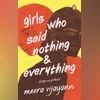 "Girls Who Said Nothing and Everything: Essays on Girlhood")
premium
Girls Who Said Nothing and Everything: Essays on Girlhood
5 min read Last Updated : Nov 13 2025 | 11:00 PM IST
Listen to This Article
Girls Who Said Nothing and Everything: Essays on Girlhood
by Meera Vijayann
Published by Penguin
272 pages ₹499
Kirkland-based writer, essayist and activist Meera Vijayann’s powerful maiden essay collection explores the costs of silence and the journey towards selfhood in Indian girlhood. The book, which is written in the form of a memoir, revisits what it meant to come of age as a young girl in middle-class India in the 1990s. Through 11 autobiographical essays, the author takes us through various stages and incidents in her life, revealing several hidden textures of girlhood — first love, shame, guilt, body image struggles, family pressures, moral policing, confusion and societal expectations — that have shaped the lives of generations of Indian women.
Ms Vijayann belongs to the Tamil Nadar community, where speaking the truth about one’s family life is considered a great betrayal. “No one talked openly about domestic violence, sexual abuse, misogyny, loneliness or depression,” she recalls in the author’s note. Unable to talk to anyone openly about things that bothered her, she began writing journals while in seventh grade to try and process the injustices of being a girl. Revisiting the journals, written between 1997 and 2008, inspired Ms Vijayann to begin writing the essays that form this book.
Growing up, Ms Vijayann felt suffocated and confined to the walls of her home. Unlike boys who had no limitations, she could not freely walk around the neighbourhood or ride a bicycle on her own. As a seven-year-old third grader, Ms Vijayann was always told in school that girls must be well-behaved, no matter how the boys behaved. “Every living thing but a girl had freedom,” she laments.
Her parents sent her and her sisters to a hostel, hoping to offer them a chance to dream about the future. The boarding school was a sprawling 200-acre campus located in the heart of a tiny village town in the Nilgiris. Here, too, she found that girls were often subject to threats, scoldings, fear and embarrassment rather than understanding. “To be a girl was to go to an all-you-can-eat buffet in handcuffs,” writes Ms Vijayann. She developed a phobia for maths, mostly due to a male teacher who felt that girls were good for nothing. Further, the tutor her parents hired would put his hand up her skirt. Back then, none of the things that she was good at — music, writing stories and drawing — could guarantee her a future.
Borrowing the idea of love from books and movies, a 13-year-old Ms Vijayann fell in love with a boy in her class. In her hometown, Sivakasi, love threatened the institution of family. “The slightest scent of teenage desire could mean being locked away at home or being disowned or worse — married off to a stranger,” she writes. Desperate for validation, she longed for someone to acknowledge her existence, “to be noticed, to feel important, to be desired”. Ms Vijayann’s parents, on the other hand, felt that a girl’s honour was sullied if she had boyfriends.
The idea of love in her so-called liberated school was taboo too, as it followed Christian teachings that insisted on purity and abstinence among boys and girls. Religious conservatism continued in her Hindu ideology-led women’s college too. This made Ms Vijayann believe that all faiths were the same – “their teachings focused so much on what girls could do and could not do”. The book also has her talking about her “distorted, anxiety-inducing relationship” with money. A topic fraught with confusion and pain, no one talked about money in Ms Vijayann’s house. Her discomfort around spending became a lifelong ailment, making her paranoid about saving.
However, her female friendships at boarding school helped Ms Vijayann talk about and confront some of these challenges in her life. In 2004, as a first-year student of visual communication, she saw Barkha Dutt on television for the first time — and decided that she wanted to be her. Later, as a student in the West, Ms Vijayann tasted true freedom while working many part-time jobs. In 2008, she began working for an information technology company in Bengaluru. Around this time, Ms Vijayann became outspoken about what it meant to face gender-based discrimination and sexual assault. In 2014, her TED talk on experiencing sexual assault as a girl in India went viral, garnering over 1.1 million views. Subsequently, Ms Vijayann worked closely with the United Nations Foundation’s +SocialGood community to encourage young people to speak up against sexual violence.
In a sense, the book is a kind of quiet revolution, reclaiming the voice and identity of Indian girls across generations. “I see it as a refusal to continue the oppressive culture of silence that I was raised in,” Ms Vijayann concludes.
The reviewer is a New Delhi-based freelance writer
Topics : Book Reviews & Features BOOK REVIEW Literature