


High Altitude Heroines: Women's travelogues from British India revived
A collection of essays brings together enchanting travelogues by women from early 20th-century British India
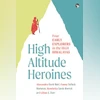 "High Altitude Heroines: Four Early Explorers in the High Himalayas")
premium
High Altitude Heroines: Four Early Explorers in the High Himalayas
5 min read Last Updated : May 13 2025 | 11:34 PM IST
Listen to This Article
High Altitude Heroines
Authors: Alexandra David-Néel, Fanny Bullock Workman, Henrietta Sands Merrick and Lilian A Starr
Publisher: Speaking Tiger
Pages: 296
Price: ₹599
People who love travelogues often gravitate towards them for the vicarious pleasure that is to be found in the adventures of those who have the time, money and opportunity to undertake perilous journeys. The thrill of being transported to an exciting new location, even as they remain surrounded by their daily obligations and responsibilities, is beyond compare.
High Altitude Heroines: Four Early Explorers in the High Himalayas published by Speaking Tiger, is one such volume. It brings together a set of enchanting travelogues written by Alexandra David-Néel, Fanny Bullock Workman, Henrietta Sands Merrick and Lilian A Starr. These women set out on their explorations in the early 20th century when India was under British colonial rule, and documented their experiences in tremendous detail.
Alexandra David-Néel (1868-1969), described as “a Belgian-French explorer, spiritualist, Buddhist, anarchist, opera singer, and writer”, was the first Western woman to visit Lhasa in Tibet in 1924 when it was out of bounds for foreigners. Accompanied by a young lama named Yongden, she disguised herself in local attire to pass off as a Tibetan woman and pretended to be his mother. Her colourful and astonishing account, titled “My Journey to Lhasa”, captures not only the landscape and the people but all the cautionary measures that they had to take to avoid being busted. They begged for alms, ate whatever they could get, slept in unsanitary accommodation, participated in endless small talk, and conducted religious ceremonies.
The author’s confession that she powdered her face with “a mixture of cocoa and crushed charcoal” and darkened her hair with ink to deceive Tibetan officials might not go down well with the cultural sensitivities of contemporary readers, given the growing awareness about the history of blackface as a tool of racial impersonation that has benefited white people.
Viewing her as nothing but a scam artist would be quite reductive. There is so much more to her than being privileged on account of her race. Her courage and determination in that unforgiving terrain are admirable, as is her knowledge of Buddhist scriptures and practices.
Henrietta Sands Merrick (1879-1944), an American traveller, was the first woman to become a member of the Himalayan Club. Her account, “In the World’s Attic”, is about a 1931 trip through Leh, Suru, Dras, Kargil, Matayan, Shimshi Kharbu and elsewhere in Ladakh with her friends Sandy and Margot, and her orderlies Happy and Gulam. She writes, “When one has climbed so high, one is close to the great Amen, one realizes that each new experience is a door opened on to some treasure if he has vision to see it; that life is the soul’s chance to grow.” There is an emotional rawness and sincerity in some passages that makes them moving.
However, her description of Gulam is utterly cringeworthy. She writes, “Tall and thin was Gulam, with Mongolian features, his eyes very keen, his air alert and gestures quick. Gulam means slave. He was all of that to me.” She makes sweeping generalisations, for instance: “While the Western world is absorbed with material progress, the East is absorbed in prayer.” This description sounds a lot like what one might hear from backpackers in McLeodganj and Rishikesh, looking around for a meditation course or wellness retreat to sign up for.
The third account in this book— “Peaks and Glaciers of Nun Kun”—belongs to Fanny Bullock Workman (1859-1925), an American geographer, cartographer, mountaineer, explorer and champion of women’s rights. Stripping away the glamour associated with her dangerous but exciting trip to Nun Kun, the mountain massif bordering Jammu & Kashmir, she draws attention to the physical hardships — loss of sleep, reduced energy levels, respiratory disturbances — that one has to undergo as one climbs higher. Oddly, she resorts to the same language of conquest that is encountered in hyper-masculine narratives about scaling peaks.
Lillian A Starr, whose nationality as well as years of birth and death are not mentioned, was a nurse at the Church Missionary Society’s hospital in Peshawar. Her successful rescue of an abducted English girl, narrated in her account titled “An Errand of Mercy: Searching for Miss Ellis among the Afridis”, is worthy of applause. Her writing tells the reader less about Tirah, the Khyber Pass and the Khanki Valley in Pakistan and more about how she views locals.
Her remarks about the inferior status accorded to women in the tribal areas seem convincing because of the examples she provides but her claim that “under Christian law and Christian ideals alone does freedom perfectly exist” smacks of a colonial and missionary mindset.
Despite the disappointing aspects of all four accounts, this book deserves to be read because we live in a patriarchal society that still places a million restrictions on women’s mobility.
It would have been even more enriching with a substantial preface detailing the thought process, research and curatorial labour that went into bringing together the voices of these “pioneering women”. Its absence seems jarring. One hopes that future editions of the volume would rectify this omission with an introductory essay and also provide more biographical details about the four “high altitude heroines” to satiate the curiosity of contemporary readers.
The reviewer is a journalist, educator and literary critic. Instagram/X: @chintanwriting
Topics : Book reading BOOK REVIEW BS Reads Himalaya Trekkers