


Hostile Homelands: Azad Essa's book traces India-Israel ties before BJP era
The author, who is based in New York, notes that India's arms imports from Israel rose by 175 per cent between 2015 and 2019
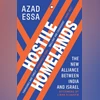 "Hostile Homelands: The New Alliance between India and Israel")
premium
Hostile Homelands: The New Alliance between India and Israel
5 min read Last Updated : Jul 16 2025 | 3:27 PM IST
Listen to This Article
Hostile Homelands: The New Alliance between India and Israel
By Azad Essa
Published by Westland Books
274 pages ₹599
India’s support for the Palestinian cause has grown so feeble in the last decade that soon it might be hard to remember that India was the first non-Arab state to recognise the Palestinian Liberation Organisation (PLO). Though the shift in India’s foreign policy is often seen only through an ideological lens, the real picture is more complex. South African journalist Azad Essa talks economics in his book, Hostile Homelands: The New Alliance between India and Israel.
The author, who is based in New York, notes that India’s arms imports from Israel rose by 175 per cent between 2015 and 2019. The trade between these countries increased from $4.52 billion in 2014 to $5.43 billion by 2018. These numbers show that India’s increasing proximity to Israel—and distance from Palestine—needs to be studied more carefully and comprehensively. There is more to it than the ideological overlaps between Zionism and Hindutva.
This book also contextualises India’s dependence on Israel with reference to the fall of the Soviet Union and the altered geopolitical situation in its aftermath. India needed to upgrade its technology and equipment, and Israel provided what was required as “a country willing to sell arms without asking too many questions, with an ability to upgrade Russian hardware and crucially, a country more than willing to transfer technology to India itself.”
This book also dispels the myth that, before the Bharatiya Janata Party’s victory in the last two national elections, India and Israel did not have much of a relationship. Essa reveals that, in 1962, when India was under attack from China, Prime Minister Jawaharlal Nehru contacted his Israeli counterpart—David Ben-Gurion — for help, “underlining the backchannels…between the two governments”. He claims that Nehru wanted Israel to send weapons on “ships that did not carry the Israeli flag”. Ben-Gurion was not amenable. Apparently, Nehru had to drop the request because he had no choice.
While reading this book, one realises that India’s relationship with Israel is an old one, even though no Indian Prime Minister had visited Israel until 2017. Mr Essa recalls that “India secured more armaments from Tel Aviv in the 1965 and 1971 wars against Pakistan” because the United States military stopped selling weapons to India and a new supplier was needed. Even during the Kargil War with Pakistan in 1999, it was Israel that came to India’s rescue. Countries act in their self-interest. With this history, India’s proximity to Israel is no surprise.
It is widely known that Prime Minister Indira Gandhi was on friendly terms with PLO Chairman Yasser Arafat, this book claims that she had a “secret liaison with the Israelis”. Mr Essa says that the Special Group commandos sent by Mrs Gandhi to crush a rebellion by Sikh fighters “within the Golden Temple complex” in 1984 were trained by “an elite branch of Mossad commanders in 1983 under an agreement with RAW”. This sensational claim is made on the basis of one news report. One wishes that it had been backed by more evidence.
Mr Essa writes, “The story of India’s normalisation of relations with Israel is also the story of the decline of the PLO as a credible and legitimate representative of the Palestinian people.” According to him, the core Palestinian demand — the right of return for millions of refugees — was forsaken with the PLO’s recognition of Israel in 1988 in return for a two-state solution. The Oslo Accords, which were signed in 1993, “only served to further entrench Israel’s occupation and made the lives of Palestinians in the West Bank and Gaza Strip worse”.
The author also asks, “If India was an opponent of colonialism and apartheid, why does its agenda in Kashmir look so similar to Israel’s settler-colonial project in Palestine?” This is a bad-faith argument, though his point that India is replicating counterterrorism lessons learnt from Israel, and is also looking to change the demographics in Kashmir, are well taken.
Unlike India, military service is compulsory in Israel. The training that young people undergo while serving in the Israeli Defence Forces shapes their view of Palestinians. A large number of Indian citizens have no direct contact with the Indian military. Their perception of Kashmir is shaped not through indoctrination by the military but their own experiences as tourists. Most Kashmiris welcome Indian tourists, as was evident from the solidarity marches held in Kashmir to protest the killing of Indian tourists during a terrorist attack in Pahalgam in April.
Moreover, the Kashmir conflict involves India and Pakistan. The history of this conflict, and the factors at play, cannot be assumed to be the same as the conflict in West Asia.
The reviewer is a journalist, educator, and literary critic. Instagram/X: @chintanwriting