


India's negotiating imperatives
Even as the global power equations are in a state of flux, India's basic circumstances have to change for it to play a lead role in negotiations
 "Book")
premium
5 min read Last Updated : Jan 24 2024 | 10:13 PM IST
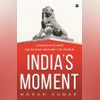
India’s Moment : Changing Power Equations around the World
Author: Mohan Kumar
Publisher: Harper Collins
Price: Rs 599
The raison d’etre for international negotiations is to tackle global challenges through international cooperation where each country advances its national interests. India’s approach is no different, but the exercise of arriving at a common national position in negotiations is a complex one, as the erudite scholarly diplomat Ambassador Mohan Kumar explains in his book India’s Moment. The book is an attempt to set straight India’s record in multilateral negotiations, which is often criticised as obstructionist.
India’s predicament in negotiations has been analysed through the prism of an integrated assessment framework consisting of six factors of variable importance — Gandhi Litmus Test (poverty veto); policy space; domestic politics; geopolitical imperatives; commitment to multilateralism, and principles; and realpolitik and material gain. The author’s assertion that the “poverty veto” always triumphed in India’s negotiations ignores the underlying fears of our negotiators going wrong that is so symptomatic of our bureaucracy.
Asymmetrical rules of engagement that were framed much before the developing world was liberated are said to be the reason for deep divisions in multilateral trade negotiations. The glorified unlimited virtues of free market economic policies popularly known as the “Washington Consensus” were challenged in the 1980s by developing countries as they sought more favourable treatment in World Trade Organization (WTO) negotiations. The author exposes the West’s arm-twisting tactics and its duplicity in selectively seeking trade liberalisation in areas of their interests. The current disagreement over the issue of “public stockholding for food security purposes” is a legacy issue, drawn from the iniquitous Agreement on Agriculture from which the West benefited under Green Box subsidies, while the 10 per cent leeway under Amber Box risks developing countries breaching the limit. The possibility of its impingement on Pradhan Mantri Garib Kalyan Yojana to feed India’s poor is a concern. India’s inability to garner developing countries’ support at the WTO has been attributed to the latter’s varying levels of development and integration in the global economy. This reasoning overlooks India’s negotiating shortcomings in deftly managing WTO negotiations, a Sisyphean task where the art of the game is to subsume national interests in the multilateral trade rules.
In the context of a dysfunctional WTO dispute settlement, Mr Kumar believes that the most-favoured nation-based trade will be on the wane and in its place free-trade agreement and plurilaterals will become increasingly relevant. He advocates India participating in the plurilateral joint initiative on “investment facilitation” in the WTO to at least shape the rules rather than preserving policy space for the future. The hard-earned policy space, he laments, often goes waste with no domestic reform forthcoming. He suggests a code of conduct for all political parties to support a consistent national position in negotiations.
On climate change, the substantial shifts in India’s negotiating position have been well brought out. We get a sense of the theatrics in the Copenhagen COP15 in 2009 when Barack Obama, displaying unipolar hegemony, barged into the BASIC Leaders’ meeting to rein them in (BASIC stands for Brazil, South Africa, India and China). As India’s Ambassador to France during the famous Paris Deal on Climate Change (COP 21) in 2014 Mr Kumar provides a ringside view of how the negotiations played out with Prime Minister Narendra Modi, a novice to international negotiations then, emerging as a lead player with the timely launch of the International Solar Alliance. With the emphasis on the National Hydrogen Mission, bio-fuels, Smart City initiatives and so on, India is expected to play a decisive role on climate change.
India’s stands on various geopolitical developments are lucidly covered, as the author underlines the spirit of pragmatism in our approach. On the Ukraine crisis, India took a nuanced stand in consideration of the legacy relationship with Russia and balanced it with reference to the UN charter and sovereignty in support of Ukraine. He highlights the hypocrisy of the West, which does not hesitate to engage with countries such as Pakistan and China and takes unilateral decisions in deference to their allies’ concerns. Through the QUAD, India seeks to counter security threats from its neighbours. But this policy of multi-alignment, the author cautions, could unwittingly cause India to succumb to external pressures. In the author’s perception, the G20 is more representative of contemporary geopolitical realities than multilateral organisations. Even as the global power equations are in a state of flux, India’s basic circumstances have to change for it to play a lead role in negotiations, the author contends. It hinges on the need to bring down poverty numbers to 100-150 million through inclusive policies and manufacturing as India grows to become a $10 trillion economy. Such a transformation would presumably mitigate the “poverty veto” and give enough margin for manoeuvre in negotiations but does not discount the imperativeness of a negotiating strategy that is fearless and takes decisions with a view to wiping out poverty from the country.
This passionately written book provides interesting reflections; India’s success is not just important for itself but for the world at large, for it will have demonstrated that it is eminently possible for a country to be a democracy and yet achieve significant economic prosperity — in obvious comparison to China. The scale and size of its success would mean a tectonic shift on the global development index, especially on the Sustainable Development Goals. This evolution would truly signify “India’s Moment”.
The reviewer is an Indian Foreign Service officer
Topics : Quad BS Reads BOOK REVIEW World Trade Organization