


Gujarat's 19 century trailblazer: 'My Truth' revives legacy of Veer Narmad
Narmad was, thus, our very own Samuel Johnson, besides being his own James Boswel as well! The Narmad-Johnson comparison goes deep
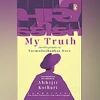 "My Truth: Autobiography of Narmadashankar Dave")
premium
My Truth: Autobiography of Narmadashankar Dave
5 min read Last Updated : Apr 04 2025 | 11:55 PM IST
Listen to This Article
My Truth: Autobiography of Narmadashankar Dave
Translator: Abhijit Kothari
Publisher: Penguin Random House
Pages: xxii+200
Price: ₹399
Narmadashankar Lalshankar Dave (1833-1886), popularly known as Veer Narmad in his native Gujarat, is rightly revered for his rousing anthem Jai Jai Garvi Gujarat (Hail to proud Gujarat), which enjoys the same status as Vande Mataram in Gujarat and is the state’s official song. But Narmad’s star blazes bright across the entire modern Indian literary firmament. He published 10 volumes of poetry and prose each, about half a dozen play or dialogue scripts, compendia on Gujarat and Saurashtra and numerous miscellaneous tracts, not all of which were part of the later published collections.
That would have been a prodigious feat in any language in any era. Yet this list does not include his most critical and pioneering achievements: his Narmkosh (1873) and Mari Hakikat (completed in 1866 but published posthumously according to his wishes, in his birth centenary year of 1933). The former is a Gujarati lexicon with over 25,000 entries and the latter his autobiography covering the first 33 years of his life.
Both these are the first works of their kind by an Indian. Narmkosh narrowly missed out on being the first modern Indian dictionary, as Father Hermann Gundert’s Malayalam-English dictionary was published just a year earlier in 1872 (Narmad was almost certainly not aware of it). But his autobiography predated Mahatma Gandhi’s The Story of My Experiments with Truth (also in Gujarati), written between 1925 and 1929. Gandhi’s autobiography, with a title strikingly similar to that of Narmad’s, is wrongly considered to be the first autobiography in India by many (including Microsoft’s AI Copilot).
Narmad was, thus, our very own Samuel Johnson, besides being his own James Boswel as well! The Narmad-Johnson comparison goes deep. Both explored, a century apart, numerous literary genres in their respective languages and proved themselves remarkably adept in their pursuits. Both were scarred by great fires, Johnson by the London fire of 1666 and Narmad by the Surat fire of 1837. Johnson only knew of the fire as history, but wrote at length about the squalor of London of the day in his poem London (1763). Narmad was a small boy at the time of the Surat fire, but he, too, in his later writings referred to the abysmal conditions of Surat at the time of the fire.
It is to the great credit of the Ashoka Centre of Translation, Viking and the most competent translator Abhijit Kothari that Narmad’s autobiography is now available in English in an eminently readable and richly engaging form.
The volume has nine epochs, each called a viram (pause) covering a specific period of time. Narmad numbers his paragraphs, much as an official journal would and provides copious footnotes. He begins with the story of his descent from a Nagar Brahmin family, originally from north Gujarat (Siddhpur, Champaner), which eventually settled in Surat, then the urbs prima of Gujarat, next only to Bombay (as it was then) in its commercial and cultural importance. He diligently explores the gotras and pravaras of his caste and ancestors before beginning his own story.
His father was a gifted scribe, whose excellent calligraphy was a valued asset in the pre-printing press era. Narmad was a quick and avid learner and progressed well in his education despite frequent interruptions. He won all the important scholarships as he enrolled in what was then the Elphinstone Institution of Bombay. He read English poetry and was greatly impressed by Wordsworth, Cowper and Pope. But before venturing into poetry himself, he made a deep study of Sanskrit works on prosody and poetics, and published his own commentary. He won quick fame for his poems, many composed extempore. He was seen as a worthy competitor to Kavi Dalpatram, then the doyen of Gujarati poets.
His curious mind sought justifications for many social restrictions and taboos. He ended up espousing reformist positions on most issues, including women’s education and widow remarriage. But at home, he had to perforce follow the diktats of the day, including his first two marriages to pre-pubescent girls and his food sharing restricted to fellow caste members. He is frank enough to mention his extramarital relations (including his contacting venereal diseases) but discreet enough not to name names. He maintains this adherence to truth throughout his account, regardless of what light he is seen in. His affection for and devotion to his father is most moving. His story ends as we see him on the threshold of greatness.
The translation does ample justice to Narmad’s narrative genius. The English prose is lucid and contemporary in syntax and vocabulary. A tiny quibble: If it is Bombay throughout, why are there references to Vadodara and Pune? Also, a small sketch map of the region would have been helpful to readers.
This book needs to be widely read for both its historical and contemporary significance. The brilliant polymath Narmad would be a role model to any community anywhere in the world.
This reviewer abhors administrative intervention in the affairs of academia; however, the naming of the South Gujarat University at Surat after Veer Narmad is an outstanding and most appropriate exception.
The reviewer is a Vadodara-based economist
Topics : BOOK REVIEW books Book reading