


On the Margins of Protection: How refugee rights are being redefined
With right-wing populism on the rise, refugee protection is seen as a problem. This book examines how protection works across contexts, shaped by history and geopolitics
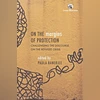 "On the Margins of Protection")
premium
On the Margins of Protection
5 min read Last Updated : Oct 14 2025 | 10:49 PM IST
Listen to This Article
On the Margins of Protection
Edited by Paula Banerjee
Published by Orient BlackSwan
279 pages ₹1020
By the end of April 2025, more than 122 million people were displaced around the world, according to the United Nations High Commissioner for Refugees (UNHCR). On the Margins of Protection, edited by Paula Banerjee, aims to provide a fresh perspective to the long-standing crisis of displaced people, while challenging the ways in which we have understood the global problem.
The book’s origins date back to 2015, called the “summer of migrations”, when Europe experienced thousands of Syrian refugees attempting to make it across the sea to the continent. This crisis led to the re-evaluation of the refugee management paradigm and two Global Compacts, one for refugees and the other for migrants. This collection of essays is a response to the deliberations driven by the UNHCR on the Global Compact on Refugees.
The book examines in meticulous detail the hypocrisies of the developed world in how the flow of refugees is perceived and managed and are increasingly being repressed in different ways. The authors question how this mass movement of people was deemed a “crisis” in the first place: “The migration of these post-colonial people — who are racially different, several practising a different religion, and all without any tangible resources — created a perception of crisis in Europe. However, this crisis completely overlooked the fact that many more refugees had been accommodated within Africa and Asia in the last decades than anywhere else in the world….” The book highlights the fact that “often, crisis happens not when thousands are displaced from underdeveloped, post-colonial countries because of policies undertaken in the developed world, but when these same displaced individuals begin to appear on the borders of these developed countries for sheer survival.”
The ground has shifted in recent years. Refugee protection is treated as a problem. With right-wing populism on the rise, refugees are seen as a constant threat. The book asks: How does the concept of protection operate in different contexts across the world, keeping in view history and evolving geopolitics?
The book attempts to answer this complex question by bringing together a range of essays by experts on the subject across three core areas through a post-colonial perspective: New technologies of protection, the fault-lines of race, religion and gender among displaced groups, and neoliberalism and immigrant economies.
We operate in a time when society is “facing a perfect cacophony storm of populist leaders’ voices in the Americas, EU, Asia and Africa, which attribute the ills of their societies to migrants”. Accordingly, migration pathways to destination countries of choice that offer full citizenship and equal rights are shrinking globally, says Bandana Purkayastha in her essay “Distancing as Governance: Reflections on Migrants and Contemporary (in) Securities.” She observes that states attempt to govern flows of people in an effort to tighten “security”. Commercialisation of refugees, too, is on the rise. More alarmingly, the book points out, there is a progressive criminalisation of migrants.
Though global refugee flows have intensified in recent years, international responses remain inadequate. “In Population Flows, Refugees and the Responsibility to Protect” Shibashis Chatterjee highlights the plight of the Rohingya and Afghan refugees across Asia, while examining India’s position on the issue as a non-signatory to the Refugee Convention. In “Reframing the Refugee Crisis: Resistances and Solidarities,” Priya Singh digs deep into the movement of refugees through Europe in its specific political context, focusing on the larger framing of the “so-called summer of migration” in public discourse, that was marked by hundreds of drownings off a ship and the searing image of the drowned Syrian child, Alan Kurdi, that shocked the world.
Although many chapters in the book feature overlapping discussions on the subject, they are laid out with notable academic rigour. A compelling overarching argument unpacks the link between geopolitics in the Global North, asylum policies, and the resulting dislocations in the Global South. Another explores how migrants resist the inequalities and fractures within a protection regime shaped by race, religion, and gender.
Professor Banerjee highlights the forced displacement of women, challenging the “state-sanctioned narrative” that portrays refugee women as victims. She refers to value judgements that occur to minimise the importance of crimes committed against them as they are reduced to political non-subjects. Ilina Sen’s essay on the experiences of Asian female migrants employed as domestic workers in the Gulf, and the gendered violence they routinely face, forms an equally important part of the book. Calling for an urgent look at reforms in region-specific refugee policies, the book is an important read on overlooked issues as it pushes the reader to re-examine long-held notions about the global refugee crisis.
The reviewer is a Delhi-based freelance journalist and author who reports on gender, policy, public health and culture
Topics : Book Reviews Refugees Gaza books