


On the surface of electoral politics
What shapes election outcomes in India? Psephologist Pradeep Gupta's book attempts to answer this question and argues money is not the sole determinant
 "book")
premium
5 min read Last Updated : Aug 28 2023 | 10:01 PM IST
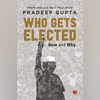
Who Gets Elected: How and Why
Author: Pradeep Gupta
Publisher: Rupa
Pages: 161
Price: Rs 495
Pradeep Gupta, psephologist, is not one to hide his light under a bushel. He describes himself as India’s No 1 pollster, drawing, no doubt, from the fact that the company he founded, Axis My India, has predicted the outcome of many elections accurately. He summarises the challenge: “In May 2019, when the country saw general elections, we reached out to over 800,000 people across the country and interviewed them to understand which way the election pendulum would swing. The effort was worth it: We managed to predict the elections spot-on. This wasn’t an exception — we have managed to predict 59 of 63 elections accurately so far.”
The book covers a range of issues in electoral politics, spread over 12 chapters: Leaders and party organisations, the bureaucracy, the TINA (there is no alternative) factor versus multiple choices, the role of money and geography, women as a swing factor, caste, whether the poor vote more than the rich, and so on. Some conclusions are simplistic to the point of being banal. His views about democratic politics and advice about whom India should opt for reflect in undisguised admiration for Narendra Modi: “Modi ticked all the right boxes. He had been chief minister of Gujarat since the end of 2001 and since then had been elected every time the state had gone to polls,” Mr Gupta says about the 2014 elections.
By that logic, India’s Prime Minister could just as easily have been former Sikkim CM Pawan Chamling or current Odisha CM Naveen Patnaik, who have served terms in their states longer than Mr Modi. But he adds about Mr Modi: “His governance had brought about a dramatic transformation in Gujarat — something that was acknowledged not just nationally but across the world. He is a charismatic and powerful orator, speaking a language that the masses connected with.” Not all the masses, especially Muslims living in Gujarat, will agree with this assessment.
Mr Gupta freely offers suggestions on why the Congress has failed to make the cut in recent years: The party “has depended almost entirely on the Nehru-Gandhi family for its sustenance and leadership”. So, did P V Narasimha Rao and Manmohan Singh become PM in spite of the Nehru-Gandhi family? Or because of it? This is a puzzle he does not unravel, more so, as he asserts that this was not the case “during Nehru’s time” or “even in the earlier years of Indira Gandhi’s leadership” as the “Congress party’s organisation played a determining role in the advancement of electoral prospects”. If so, how did the same family-dominated, and the organisationally-moribund Congress form governments in 1980 and 1984? The reasons are not analysed in psephological terms. Instead, he says: Eventually everything boils down to “handling the organisation”.
He explains. With the Bharatiya Janata Party (BJP), the man managing the organisation is Amit Shah, the “perfect man-manager, not only plotting the party’s election campaigns with the help of his connect with leaders from the top to the grassroots, but also building strategic coalitions with allies in the North East and elsewhere”.
Mr Gupta says winning elections in India is not entirely about money. He cites Chandrababu Naidu’s rule in undivided Andhra Pradesh (AP) whose role in introducing information technology (IT) to the state and economic reforms resulted in global acknowledgement of AP as the IT hotspot in India. Despite this, Mr Naidu lost elections and Karnataka overtook Hyderabad as India’s Silicon Valley. By contrast, despite its “poor economic management”, the Left Front ruled West Bengal for 34 years.
Mr Gupta says there is a difference between the way voters, politicians, and economists see the economy. Voters judge economic management by proximate infrastructure development and employment. Social welfare rules the roost for politicians. Economists measure growth by tracking gross domestic product, inflation, the movement of the Sensex and tax collections. His conclusion: “the connection between economic (or GDP) growth and electoral results is more an imagination of the experts. The reality, as the empirical data shows, is very different.” It would be helpful to see the data on the two approaches: Garibi Hatao versus Garib Hatao.
The chapter on “Election Results and Technology” speaks of the role of technology, and the lack of it in winning elections. In 2014, in the Mahasamund constituency in Chhattisgarh, Ajit Jogi used the oldest trick in the game by propping up 10 candidates with the same name as his BJP opponent, Chandu Lal Sahu. The BJP candidate, expected to win a landslide on the back of Mr Modi’s triumphant entry in national politics, won by just 1,600 votes. By contrast, in the 2019 Haryana Assembly election, Jat voters, using new communication methods, chose the Congress or the Jannayak Janata Party (JJP), leading to a precipitous fall in the BJP’s seat share in Jat-dominated constituencies. Though the BJP got to form the government, Chief Minister ML Khattar had to seek JJP support.
A drawback of the book is that it does not discuss how and why Mr Gupta got some election outcomes wrong, beyond a passing reference to mistakes in ignoring women as an important vote bank.
The next book should be on Mr Gupta’s life story as his family went from riches to rags. At one stage, he was the sole breadwinner for a family of 14 women, from 14 to 80. From being the only house in the neighbourhood with a car and telephone to struggling to make ends meet: Growing up, there was not a week that he did not have to go to the market to sell copper and brass vessels that the family owned to put food on the table, he writes. That story would be riveting.
Topics : BOOK REVIEW Electoral battles Pradeep Gupta