


The dehumanising factor
Social commentator Ziya Us Salam's book debunks popular myths around history and laments the slow encroachments on Muslim rights by far-right groups, providing truth and hope in the process
 "book")
premium
4 min read Last Updated : Feb 29 2024 | 10:39 PM IST
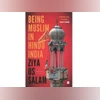
Being Muslim in Hindu India: A Critical View
Author: Ziya Us Salam
Publisher: HarperCollins
Pages: 344
Price: Rs 599
Growing up, the phrase that always came up in some context or the other was Vasudhaiva Kutumbakam , which means that the world is one family. The phrase certainly shaped my worldview. But when we live in post-truth reality, where words are being dissociated from their meaning, does this phrase retain its essence? Noted social commentator and writer Ziya Us Salam in Being Muslim in Hindu India has tried to chronicle the events that are gradually leading to the disintegrations of India’s promised family.
The writer starts by stating certain indisputable facts. In 2014, for the first time in Indian electoral history, the ruling party didn’t have a single Muslim Member of Parliament; by mid-2022, the Union government did not have a single Muslim Union minister, again for the first time. This is just the introduction to what the book attempts to portray — the gradual disenfranchisement of the largest minority in India.
The initial chapters debunk certain popular myths around history and its misrepresentation into conferring a communal turn to what obviously has layered realities. Being an Allahabadi, I was happy to see that a chapter was dedicated to illogical changes being made to the names of certain cities and even railway stations. Just as Allahabad always carried the essence of Prayag within, it becomes difficult when politics tries to dissociate the two from each other.
Ziya Us Salam raises several issues where slow and steady moves were made by different groups supported by the far right ecosystem infringing the most basic rights of the Muslim community. From lynching to bulldozer “justice” to the Tablighi Jamaat, the author has covered several such aspects that bypasses the justice system as laid down in the Constitution of India. Another incident of blatant disregard for set precedents was shown when convicted rapists of Bilkis Bano were granted remission by the Gujarat state government just before the Assembly elections and their felicitation by different individuals and organisations when they were released. What does it say about a society that garlands convicted rapists and murderers? At least in this case the Supreme Court decided to set things in order and sent them back to jail but the intended message reached the audience at which it was targeted.
What started during the Ram Janmabhoomi movement with the destruction of one masjid is being seen as a precedent all over the country. The author mentions how during the Delhi riots of 2020 about 19 mosques were attacked and at present, the same Babri Masjid template is being applied in Mathura and Varanasi. Apart from using Mughal history against the Muslim minority, the ultimate aim seems to be dehumanisation. One of the prominent examples of this trend is that of the Tablighi Jamaat, which was wrongly stigmatised as a group of people bringing Covid-19 to India. They were portrayed as “super spreaders” and the media even started to create their own narratives that their presence may be part of an international conspiracy. Ultimately, the organisation’s members were exonerated by the courts. Similarly, another trend given space in Indian media involves adding a random word before jihad to propagate the notion about an imaginary movement being orchestrated against India. From love jihad to land jihad, the Indian media has created it all.
The combination of religious radicalism and majoritarian politics along with a fascination with an imagined past clubbed together with the dehumanisation project of Muslims makes a lethal combination for India’s multicultural society. While this book covers the grim reality of today’s India, where the majority of people have been kept distracted by superficial debates with the help of the mainstream media, this book is living documentation of what is happening to Indian society. A certain comment that one would think twice before even joking about can now be said openly using a loudspeaker, including calling for the genocide of an entire population.
While these realities exist, it is equally important to note the resilience and will displayed by the community at large to fight for the idea of India as visualised at independence. The author’s attempt at stating the truth but leaving us with hope is admirable in such testing times when it is quite easy to feel demoralised. It is books like these that will help future generations understand the mistakes that were made in the evolution of India and how not to repeat them.
The reviewer is a writer and translator from Allahabad and a co-founder of RAQS, a collective working in the city on gender, sexuality and mental health
Topics : BOOK REVIEW rights issue Parliament Muslim