


The Fifteen: How diverse women united to shape free India's Constitution
At a time when the Uniform Civil Code is being widely discussed, the book explores what the women in the Constituent Assembly thought of the idea
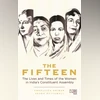 "Book")
premium
5 min read Last Updated : Oct 08 2024 | 11:01 PM IST
Listen to This Article
The Fifteen: The Lives and Times of the Women in India’s Constituent Assembly
Author: Angellica Aribam & Akash Satyawali
Publisher: Hatchette
Pages: 310
Price: Rs 799
Hidden Figures, a Hollywood film released in 2016 was about the lives of three Black women mathematicians whose contribution to the launch of the American space capsule, Friendship 7, was seminal. The film describes their day-to-day struggles against discrimination, prejudice and other barriers that they overcame to become role models for many.
Angellica Aribam and Akash Satyawali have embarked on a similar project about the 15 women who were among the 299 people in the Indian Constituent Assembly who drafted the constitution of India as members of the Assembly. This book is much more than a bald recounting of the inputs by these women. It locates their lives in the socio-political context of the 1930s and 1940s with all the attendant prejudices, and describes their disparate backgrounds but unity of purpose: To give free India, a document to govern itself that was informed by their own struggles.
And how they struggled! Many, like Begum Qudsia Aizaz Rasul and Hansa Mehta came from privileged families but threw off fetters like purdah and family pressures to become influential figures in drafting constitutional provisions that would have a long term impact on India.
Rasul was the only Muslim woman in the Constituent Assembly. We learn that although she belonged to a wealthy but socially orthodox Muslim family, she argued against separate electorates, going against her party, the All India Muslim League, later, simply the Muslim League. Despite her initial enthusiasm for the creation of Pakistan, she and her husband remained in Uttar Pradesh because “it was a moral responsibility” to “stay back and help the Muslims”. When she and her husband took the plunge into electoral politics in 1936 (it would prove to be one of the most interesting years in India’s freedom movement), she had a fatwa issued against her because “voting for a non-Purdah Muslim woman was un-Islamic”. She won by a massive majority. As a legislator, she raised issues of birth control, more money for women’s education and more women police officers. But she was also pragmatic about the battles she chose to fight — like revolutionaries before her, she wrote: “Revolution, be it political or economic, must have strong roots; otherwise, it will be wiped out by a counter revolution.”
The book chronicles the context and lives of the other women who braved their circumstances to reach the Constituent Assembly. Dakshayani Velayudhan was born a Dalit in the deeply caste-entrenched society of Kerala and was the only Dalit woman in the Constituent Assembly. She was the first Dalit woman in Cochin to earn a science degree and the first Dalit woman in the Cochin Legislative Council. Velayudhan said in the Constituent Assembly in her speech in 1946: “I refuse to believe that the 70 mn Harijans are to be considered as a minority…what we want is immediate removal of our social disabilities…our freedom can be obtained only from Indians and not from the British Government”. Velayudhan was a product of a society where women of her caste could only wear beaded necklaces to cover their upper body. Their children were barred from school. They couldn’t wear ornaments, carry umbrellas or even tile the roof of the huts in which they lived.
A lot was going on in India in the decade of the 1930s. Of course, there was the preoccupation with the Constitution. But many of these 15 women were doing other things as well, in parallel. They were political revolutionaries, members of the establishment like the legislative councils in the states, working for women’s rights in the All India Women’s Conference (AIWC) and even arguing before the League of Nations in Geneva to mobilise international support for Indian women’s right to vote. But all the women without exception, advocated a progressive Hindu Code Bill to remove legal disabilities of women, and finally, equality of men and women.
Their stories are stirring. At 12, when girls were only beginning to learn about the birds and bees, Durgabai Deshmukh was fighting for the end of the Devadasi system and virtually forced Gandhi to attend a meeting with them. She was married as a child but encouraged her husband to go his own way, marry again and even took care of his widow after he died. She was to accept C D Deshmukh’s proposal of marriage many years later and became a member of India’s Planning Commission. In the Constituent Assembly, Deshmukh argued that Hindustani (Hindi plus Urdu) not Hindi should be the national language. She considered the propaganda for Hindi “a serious obstacle to the growth of the provincial languages and provincial culture”.
At a time when the Uniform Civil Code is being widely discussed, the book explores what the women in the Constituent Assembly thought of the idea. Contemporary issues such as citizenship also come up in the debate about the shape India should take.
What about the men who partnered these remarkable women? They were, the book tells us, uniformly self-assured and encouraged their wives to take the lead, even when this collided with their own careers. Many were more ambitious for their wives than the women themselves.
The book could have done with language editing: “on a par” goes as “at par”, a stock market term. Neither the French nor the British would ever use “etiquettes”. But overall, it is a scrupulously fair, deeply researched work, always respectful of the context in which these women lived. Everyone who is interested in India must read this book.
Topics : BS Reads BOOK REVIEW