


The genius in his labyrinth
Nandan Dasgupta's book dispels misconceptions surrounding Michael Madhusudan Datta, shedding light on the life and literary contributions of one of Bengal's most talented poets
 "Book")
premium
5 min read Last Updated : Mar 13 2024 | 9:15 PM IST
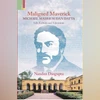
Maligned Maverick: Michael Madhusudan Datta – Life, Letters and Literature
Author: Nandan Dasgupta
Publisher: Primus Books
Pages: 400
Price: Rs 1,750
More than 150 years after his death in 1873, Michael Madhusudan Datta continues to occupy a unique place in Bangla literature. Not just because he pioneered the use of blank verse and introduced sonnets in Bangla poetry, but also for daring to reinterpret the key characters of the Ramayana in a new epic that he produced at a time when Bengal was going through the churns of an intellectual, social and cultural renaissance.
And all this from a man who was a rebel of sorts, who embraced Christianity because of which his father disowned him, driving him to penury, and who for many years in his youth believed that he could secure literary fame and immortality only if he wrote in English. Indeed, he penned a few poems in English that earned some praise, though without giving him an assurance that he would find a place among the best English poets.
Fortunately for Bangla literature, Michael, as he was popularly called, decided to get back to writing in his mother tongue and produced not just a couple of masterly epics, but several poems including some sonnets and even a few satirical dramas. Many decades before Rabindranath Tagore, it was Michael who succeeded in his creative experimentation with Bangla to help it evolve and become a modern, powerful language with flexible usage. Tagore took that process to greater heights, but that journey had begun with Michael.
It is, therefore, a pity that even as Michael’s literary genius has received some recognition, his life and poetic achievements have been a victim of misinterpretation through amateurish research or romanticised storytelling. Nandan Dasgupta’s book on Michael has taken a bold initiative to dispel some of those misconceptions about one of Bengal’s most talented poets, who died prematurely at the age of 50. Mr Dasgupta has produced an authoritative book on Michael’s life and literature, based on extensive research, often relying on some existing materials and rejecting some unfounded notions about the poet.
The structure of the book is one of the book’s many strengths. By providing a detailed glossary of the important personalities living around that time, who had a direct as well as indirect bearing on Michael’s life and poetry, Mr Dasgupta has rendered a yeoman’s service to all those readers who would like to contextualise the various developments in the poet’s life, his travels to London and travails there to become a barrister, his two marriages and his famous interactions with Ishwar Chandra Vidyasagar (his benefactor apart from being a noted social reformer, educator and moderniser of Bangla prose) and his bosom friend, Gourdas Basak. The author has also taken care to provide a detailed account of the years of Michael’s life, which could be correlated with the book’s seven chapters that follow a chronological order.
Mr Dasgupta’s narrative also excels while interweaving some of the historical events like the death of William Carey (a British missionary, who taught Bangla in a Calcutta college and produced the first printed prose in modern Bangla, in 1834, a decade after Michael was born) or the arrival of Thomas Macaulay around the same time, and who a year later would unveil his famous policy on why Indians should have access to modern education in English.
The title of Mr Dasgupta’s book ( Maligned Maverick ) also reveals his mission behind producing this biographical account. The book meticulously narrates numerous instances of how Michael was denied his due even by his own countrymen. The much-hyped story of Michael consulting half a dozen Sanskrit stalwarts, gathered by him in a room, and writing more than one epic at a time after consulting them on synonyms of difficult words has been suitably debunked by the author. Mr Dasgupta also argues that one of the reasons for society labelling him a misogynist or a wife deserter was perhaps because of Michael’s unorthodox behaviour. Mr Dasgupta leaves nobody in doubt that Michael was a maverick, but he had also been maligned.
Even Rabindranath Tagore has not been spared. A young Tagore in 1888 reviewed Michael’s Meghnadvadh Kavya in a contemporary journal describing the epic’s author as a synonym hunter. In subsequent years, Tagore apologised for that comment realising perhaps that his criticism was an outcome of his “youth’s unprintable aberration”. Indeed, in 1894, Tagore wrote another essay explaining how Michael deliberately chose Sankritised words in Bangla as he knew that they would be more suitable for composing his epic in blank verse. To Mr Dasgupta’s credit, this book effectively establishes that Michael was a language prodigy, and not a synonym hunter.
Two shortcomings, however, are noticeable in this otherwise stupendous effort at recounting Michael’s life. What a reader will miss here is a critical analysis and commentary on the epics, poems and plays that Michael wrote during his short life. For instance, Mr Dasgupta does suggest how Michael may have portrayed his own predicament with his life and destiny through the character of Ravana, the father who lost his favourite son in “an unfair” war that was also an inevitable part of his destiny. Such references needed further elaboration. Moreover, he could have dwelt a little more on the literary excellence of these epics and poems, in particular.
The second shortcoming pertains to the wealth of letters that Michael left behind, an indication of which Mr Dasgupta provides in his book. Indeed, like Tagore, Michael was also a tireless writer of letters to his friends, in particular. A selection of Michael’s letters in an appendix would have made the book richer and, perhaps, more complete.