


Eyes on the road: How Santosh Iyer is shaping Mercedes-Benz India's path
For Santosh Iyer, the drive is as much about the journey as it is about the destination - whether on the road or steering Mercedes-Benz India into the future
 "Santosh Iyer")
premium
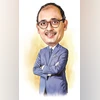
Santosh Iyer, MD & CEO, Mercedes-Benz India. (Illustration: Binay Sinha)
7 min read Last Updated : Feb 07 2025 | 10:39 PM IST


Listen to This Article
It helps that Santosh Iyer enjoys long drives — he has just cruised down from Pune to Mumbai in his sleek all-electric Mercedes-Benz EQS for our lunch meeting. The car, he mentions with pride, offers a real-world range of over 700 km on a single charge, making such trips effortless.
We’re seated at Shamiana, the all-day dining restaurant at the Taj Trees in Vikhroli, where he’s ordered a Tuscan vegetable soup.
Tall, thin-built, and always sporting a friendly smile, Iyer embodies a balance of ambition and groundedness. As the managing director and CEO of Mercedes-Benz India, the 48-year-old is one of the youngest to hold this position.
Taking a careful sip of his soup, Iyer reflects on a pivotal moment back in mid-2021 at Mercedes-Benz India’s Pune headquarters. A good deal of brainstorming was going on around how best to work out a direct-to-consumer model for the company that would be distinct from the traditional dealer-led retail model.
“Initially, there was a lot of pushback — from our dealer partners, and even internally,” he recalls. “But the core of luxury is all about the customer experience.”
I take a spoonful of my chicken and leek soup as he delves deeper into the philosophy behind the change. “Traditional retail pushes cars to dealers, and discounts often depend on the customer’s negotiating skills. We wanted transparency — no hidden handling charges, no opaque pricing.”
This October marked three years since Mercedes-Benz India implemented its ‘Retail of the Future’ model. The results? Over 50,000 cars sold and Rs 40,000 crore in revenue. The success in India has inspired markets like Germany, the UK, Thailand, Turkey, and Australia to follow suit.
“Central inventory allows us to meet customer preferences more flexibly,” explains Iyer, who has been with the German luxury auto major for 15 years. “If a car is in Guwahati and the customer is in Mumbai, we can deliver it seamlessly.” This shift also redefined the role of dealers, who now act more like agents. “In Mumbai, for instance, if you have two dealers, the choice comes down to the service experience,” he adds.
Dealers typically made most of their money from service rather than sales. But with the direct-to-consumer model, where price quotes and vehicle registration come directly from Mercedes-Benz’s IT systems, the focus has shifted entirely to the customer journey. “Now, every dealer is making money on sales too,” he says, adding that the sales experience at Mercedes-Benz isn’t about pushing products; it’s about creating a pull. “From the ambiance in showrooms to the ceremonial handing over of keys, every touchpoint is crafted to exude luxury,” Iyer says. “Our ambition is to have a service centre within a two-hour drive of any customer.”
Iyer is organised to the T. He maintains a strict zero-inbox policy, and likes to be on top of things, but isn’t a workaholic. In the raging debate on how long a workweek should be, he is on the side that believes in work-life balance. That balance extends to keeping the body and mind fit – he seldom skips his post-dinner walk, and he makes it a point to keep in touch with old friends.
Mercedes-Benz India had its best year in its 30-year history in 2024, selling 19,565 vehicles — a 12.4 per cent year-on-year growth. The company is optimistic about continued growth in 2025, backed by an order book of over 2,000 cars. Notably, India’s overall luxury car market crossed 51,000 units for the first time in 2024.
“If you look at the first half of 2024, the luxury car industry grew by 9 per cent, and Mercedes-Benz India matched that growth. However, in the second half, while the industry growth slowed to 2-3 per cent, Mercedes-Benz India surged ahead with 16 per cent growth,” Iyer says. “This gives us a lot of confidence that we’ve performed exceptionally well.”
For 2025, the company has planned eight new launches, including two electric vehicles (EVs). In 2024, it introduced 14 models, four of which were EVs. EV sales for Mercedes-Benz India nearly doubled, growing by 94 per cent and contributing to a 6 per cent share of the company’s total sales.
Iyer’s own shift to BEV reflects his confidence in the technology. “I’ve taken my EQS to Goa — over 700 km on a single charge,” he reminds. “There’s a fast charger in Goa and one in Kolhapur, but we didn’t even need them,” he says with a grin. During the pandemic, he drove the GLS to Chikkamagaluru in Kerala and stumbled upon an EV charging farm off the Pune-Bengaluru highway in Belgaum.
As technology improves, range anxiety will fade, he assures, though he’s quick to note the role of government policies. Stringent corporate average fuel economy (CAFE) norms, subsidies, and tech advancements will shape EV adoption, he adds. “Consumers need to be educated—no one wants to pay extra just for sustainability.”
We pause to order our main courses. Iyer opts for a light Kathiawadi khichdi, mindful of his workday ahead, and nudges me towards trying fish. “You must be fond of fish,” he says, alluding to my Bengali roots. I settle on the Parsi patrani macchhi on his recommendation.
As we wait for our meals, the conversation shifts to future powertrains. “We’re keeping all options open,” Iyer says. “Every model will have an EV variant, but we’re also investing in internal combustion engines — their lifecycle isn’t over yet.”
According to him, first-time buyers often prefer combustion engines, while second-time buyers or households with multiple cars are more open to EVs. “Kids love EVs. Today’s school education and early focus on sustainability are helping shift perceptions,” he says.
Hybrids, particularly plug-in hybrids (PHEVs), are another topic of interest. “PHEVs are expensive because they have two powertrains. And how can you guarantee how much they’ll run on electric?” he questions. “Markets like the US and EU have pulled back incentives for PHEVs because they aren’t truly sustainable — they’re just better for fuel efficiency. If zero emissions are the goal, EVs are the only way forward.”
When asked about the Indian EV policy, Iyer highlights the need for clarity. “We’re advocates of free trade and duty-free imports, but we need clear policies on GST (goods and services tax) and incentives. If OEMs (original equipment manufacturers) invest in India and then GST shoots up to 48 per cent, that’s a problem.” He cites Hyderabad as an example, where Mercedes’ EV penetration dropped from 10 per cent to 4 per cent when state taxes were aligned with those for internal combustion engines.
Regardless of the powertrain, Iyer is optimistic about Mercedes-Benz’s future in India. “The three-pointed star is aspirational,” he says, recalling a recent school exhibition where kids’ drawings prominently featured the iconic logo.
“We’re three to four years away from a real inflection point for luxury cars in India. The first 15 years were slow, but now we want India to be in the top three among our ‘Rest of the World’ markets,” he adds, referring to markets outside the US, China, and Europe.
As we finish our meals and order cappuccinos, Iyer shares a personal memory of when he got his first C-Class in 2011 as head of marketing. “The excitement at home was palpable. We immediately went out for a drive. My mother called her friends, filled with pride — there’s a deep cultural connection with this brand.”
He’s full of heartwarming consumer stories, too — like the son who called him to fulfill his terminally ill father’s last wish of going home in their newly ordered GLE, or the family who named their daughter Mercedes and son Benz. Such is the enduring allure of the three-pointed star in India.
Topics : Mercedes-Benz Luxury car Vehicles sales