


Falling Saudi Arabia LPG prices likely to help refiners breathe easy
Saudi benchmark contract prices (CPs) for November for propane and butane, blended to make LPG, dropped to their lowest since August 2023 - $475 and $460 a tonne
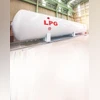 "LPG")
premium
Representative Image
4 min read Last Updated : Nov 02 2025 | 11:20 PM IST
Listen to This Article
Indian state-run refiners will see underrecoveries from selling liquefied petroleum gas (LPG) to households fall to the lowest in recent times after Saudi Arabia, one of India’s biggest suppliers, cut benchmark rates to a 27-month low, according to Saudi Aramco, analysts, and industry executives.
Saudi benchmark contract prices (CPs) for November for propane and butane, blended to make LPG, dropped to their lowest since August 2023 — $475 and $460 a tonne, respectively — Aramco said in a note to market participants. Rates were also $20 and $15 lower than in October.
“This is the lowest benchmark price in recent times and will bring the LPG cylinder underrecovery down to about ~20 per cylinder,” said a Mumbai-based analyst at a state-run refiner. That’s less than a tenth of the losses state-run oil companies faced a year earlier, executives said.
For instance, Indian Oil Corporation’s (IndianOil’s) loss per cylinder stood at around ~100 in the second quarter and has now reduced to ~40, according to its latest earnings call. With Saudi CP trending lower, IndianOil expects underrecoveries to moderate further to ~25–30 per cylinder. This implies industry-wide losses of roughly ~400 crore a month, down from over ~4,000 crore earlier, an analyst said.
Indian refiners led by IndianOil, Bharat Petroleum, and Hindustan Petroleum (HPCL) — suppliers of LPG to households — were losing ~200–250 per 14.2-kilogram cylinder last year, said Prashant Vasisht, senior vice-president at Icra, a Moody’s unit. He said the sharp slide in crude oil prices in April, by about $10 a barrel after US President Donald Trump’s tariffs, set the tone for the fall in LPG prices. He expects crude to stabilise near $65 a barrel.
The drop in underrecoveries comes as relief for the government, which in August approved ~30,000 crore in compensation for LPG-related losses incurred last financial year. The amount will be disbursed from November 2025 in 12 monthly instalments.
“Oil companies incurred losses of ~40,000 crore last year to keep LPG prices affordable,” Petroleum Minister Hardeep Singh Puri said in May. A cylinder costing about ~1,058 is supplied to Pradhan Mantri Ujjwala Yojana (PMUY) beneficiaries at ~553 and to regular consumers at ~853, he said. Of India’s 330 million LPG-linked households, about a third belong to the PMUY category, where most losses occur.
“There will still be underrecoveries even after compensation — half in 2025-26 and half in 2026-27,” Vasisht said. But lower global prices this year will help cap losses, he added.
Imports rise as Saudi benchmark falls
Saudi prices are crucial because India — the world’s second-largest LPG consumer after China — imports 60 per cent of its needs. India imported more than 19 million tonnes (mt) between January and October, according to Kpler ship-tracking data. The United Arab Emirates is the biggest supplier, but Saudi prices set the regional benchmark.
Imports could also feature in trade talks with the US. India bought 1.3 mt of LPG from the US this year — 14 times more than in 2024 — despite the long distance. On October 30, a 2026 LPG term tender from IndianOil and HPCL for up to three very large gas carriers a month of US-origin cargoes closed, with results due mid-November, said Samantha Hartke, head of market analysis (Americas) at Vortexa.
“India’s seemingly endless appetite for LPG, mainly for residential use, has seen it record consecutive seasonal highs in imports since June,” Hartke said. “More volumes are likely given additional financial support and infrastructure in the near term.”
Industrial switch slows city gas uptake
Lower propane rates are hurting city gas utilities such as Gujarat Gas, as industries in Gujarat switch between natural gas and LPG based on prices. In Morbi, India’s biggest gas hub, industrial gas intake has fallen to record lows of 1.7 million cubic metres per day, replaced largely by propane, executives said.
LPG demand growth is nearing saturation, projected at 3.7 per cent compound annual growth rate (CAGR) over 2024–30, according to UK-based commodity agency Argus. By contrast, piped natural gas is set to grow at 24 per cent CAGR over the same period.
Yet recent data show no slowdown: LPG was the second-fastest-growing fuel in October after petrol, up 5.4 per cent year-on-year to 2.97 mt, oil ministry data show. Demand in April–October rose over 7 per cent on the year to 19.7 mt.