


India, UK deal in time of US trade talks: Long-pending FTA finally sealed
The India-UK FTA is being touted as a modern, and the most comprehensive agreement that India has signed till now - comprising non-trade issues such as gender, labour, anti-corruption, sustainability
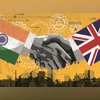 "India UK TARDE, India, UK")
premium
The India-UK FTA is being touted as a modern, and the most comprehensive agreement that India has signed till now
6 min read Last Updated : May 11 2025 | 11:00 PM IST


Listen to This Article
Having missed two Diwali deadlines for the free trade agreement (FTA) between India and the United Kingdom, the announcement of the deal last week came as a surprise. While there was a buzz about a likely pact last Tuesday, it was Prime Minister Narendra Modi who broke the news on X late evening, posting his message on the conclusion of the FTA that has been in the works for three-and-a-half years. His British counterpart Keir Starmer did the same.
The FTA with the UK came at a time when all eyes were on the United States (US) and its evolving trade policies following Donald Trump’s reciprocal tariff developments, making it a surprise deal. But, the now-on, now-off UK FTA was progressing in the background. The final push came after commerce and industry minister Piyush Goyal’s visit to London end of April to meet his counterpart Jonathan Reynolds.
Government officials said that in an increasingly complex global landscape, this FTA has not only set a new benchmark for ‘equitable and ambitious’ trade deals but will also serve as a gold standard for India’s future trade engagements — considering that India is negotiating trade deals with the European Union, United States, New Zealand, Australia, among others.
Deeper analysis of the implications of the FTA will take time as the text of the deal is yet to be made public. Both sides have now started legal scrubbing of the text, which will take around three months to complete. Thereafter, the agreement will be signed. While India will seek the approval of the Union Cabinet, Britain will need to get the deal passed by its Parliament — a process that may take up to a year.
Landmark deal
The India-UK FTA is being touted as a modern, and the most comprehensive agreement that India has signed till now— comprising non-trade issues such as gender, labour, anti-corruption, sustainability. The details on India’s commitments on these matters are not clear yet.
But in a massive win for New Delhi, both countries concluded a double contribution convention or a social security agreement— that will give Indian employees working in Britain a three-year exemption from social security payments. This has been India’s long-standing demand, which will not only protect the interests of cross-border workers, but also will lead to significant financial gains for the Indian service providers. Ajay Sahai, director-general (DG) and chief executive officer (CEO), Federation of Indian Export Organisations (FIEO), said that this pact is unique since it is the first deal where we are seeing equal or much more gains for the services sector.
“The industry will gain a lot because it will not be required to pay for social security. So roughly, there will be a saving of 20 per cent, which was being either spent by the companies or their employees. To that extent, services will become competitive. It will encourage mobility and at the same time, it will deter companies from deputing anyone beyond three years,” Sahai said.
On tariffs, India agreed to sharply go for cuts on some of its ‘most protected’ sectors such as automobiles and alcohol, although in a phased manner. New Delhi has been under immense pressure from its key trade partners, such as the US, the EU, New Zealand, Australia, to reduce the over 100 per cent import tariff that India has been imposing to protect its local industry.
Under the deal, import tariffs on automobiles have been brought down from 100 per cent to 10 per cent, along with a cap on import — a clear signal that New Delhi is gradually shedding its protectionist stance. Similarly, India has reduced import tariffs for whiskey and gin from 150 per cent to 75 per cent before reducing to 40 per cent by the tenth year of the deal.
Indian negotiators are of the opinion that the phased duty reduction will not hurt Indian industry and will give them time to become more competitive. Besides, India decided to protect the small electric vehicles segment.
Ajay Srivastava, former trade ministry official and the founder of Global Trade Research Initiative, called the India-UK FTA a policy turning point — especially for its unprecedented opening of the automobile sector. “Slashing auto import duties from 100 per cent to 10 per cent — even with quotas — sets a dangerous precedent. This is the first time India has offered such deep auto tariff cuts in any FTA. It will trigger fresh demands from Japan, Korea, the EU, and the US for equal or better terms,” Srivastava. It also risks undercutting India’s push to become a global auto manufacturing hub, he argued.
Also, trade experts said the UK FTA had set a precedent for further opening up of the government procurement market. Under the deal, New Delhi will allow UK businesses access to around 40,000 government procurement tenders with a value of at least 38 billion pounds a year – which may hurt micro, small and medium enterprises (MSMEs).
Compromises
Till at least a year ago, the UK government under the Conservative Party was not ready to sign the FTA without a bilateral investment treaty (BIT) as the pact remained a top priority for British investors. A year later, the trade agreement was signed with a social security agreement — one of India’s top priorities. However, the contentious BIT between the two countries remains pending.
Besides, India didn't get any exemption even as it bargained hard for concessions under UK’s carbon border adjustment mechanism (CBAM). Eventually, both sides agreed that if the UK introduces CBAM (from 2027), India reserves the right to retaliate.
Despite strong reservations against such a levy, the government seems to have softened its stance. In a recent briefing, government officials told reporters that since CBAM will be applicable on a few products, it won’t hurt the industry.
On the UK’s carbon border tax, Srivastava cautioned that India had missed a vital safeguard.
Despite the compromises, India has excluded sensitive items such as dairy products, apples, cheese from any duty concession to protect its farmers. And, on the whole, the deal aims to strengthen the strategic partnership between the fifth and sixth largest economies in the world and opens new avenues for cooperation on global issues.