


Home / India News / Newsmaker: Meet Justice Ranjana Desai, head of Gujarat panel on UCC
Newsmaker: Meet Justice Ranjana Desai, head of Gujarat panel on UCC
The retired Supreme Court judge, on the basis of whose report the Uniform Civil Code came into being in Uttarakhand, will draft a similar law for Gujarat
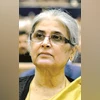 "Justice Ranjana Desai")
premium
Justice Ranjana Desai
5 min read Last Updated : Feb 10 2025 | 12:11 AM IST
Listen to This Article
Retired Supreme Court judge Ranjana Prakash Desai, who on February 4 became head of a five-member panel to frame guidelines on the Uniform Civil Code (UCC) for Gujarat, was born in a lawyer’s family and has had a career straddling various fields.
Just before this, she headed the drafting committee for the UCC in Uttarakhand.
The panel (for Gujarat) has been given 45 days to submit its report, which will be the basis for drafting the proposed law. Gujarat is now the latest Bharatiya Janata Party-ruled state to move towards a UCC rollout, following Uttarakhand last month.
Goa now remains the only other Indian state with a UCC, having retained its Portuguese-era civil code after joining the Indian Union in 1961.
Justice Desai is known for her contributions to the judiciary and her post-retirement roles in key public positions. When appointed to the Supreme Court in September 2011, she was the fifth woman to be appointed judge there. “I am often asked how smooth my journey to the highest court in the country was,” she wrote in an article in the “Women and the Law” edition of The Indian Advocate, the journal of the Bar Association of India.
“It was very difficult at times, even turbulent, making me wonder whether it was a mistake to enter this profession. A few kind individuals and my determination saw me through,” she said, and expressed the hope that her experiences might perhaps benefit “my sisters” in the legal profession. The former judge reminisced when she began her career in 1973, there were very few woman lawyers in the Bombay High Court, and named Justice Sujata V Manohar, who later became a judge of the Supreme Court, Sohini Nanavati, and Kusum Hariani as women who inspired her.
Born on October 30, 1949, and raised in Mumbai, she earned her Bachelor of Arts from the city’s Elphinstone College in 1970 and Bachelor of Laws from the Government Law College, Bombay, in 1973. After joining the legal profession, she worked as a junior of Justice S C Pratap of Bombay High Court when he was at the bar. She appeared in several civil and criminal matters. She later worked with her father, S G Samant, who was an eminent criminal lawyer.
Justice Desai has written that she had parents with a liberal outlook. “I have no brother. We were three sisters brought up in a free environment. We were encouraged to speak on any subject, we had the liberty to oppose our parents, and the liberty to move freely in society. No questions were asked; no restrictions placed,” she wrote.
But Desai was surprised to find that her father opposed her joining the legal profession. “He asked me whether I would be able to deal with the kind of people who came to his office,” she has written, acknowledging how her mother supported her, and later when her father-in-law advised her to stop her practice and concentrate on managing the family property, it was her mother-in-law who told her not to abandon the profession. Justice Desai was elevated to the Bench of the Bombay High Court on April 15, 1996, and then became a Supreme Court judge on September 13, 2011. She retired on October 29, 2014. She wrote: “As children, my sisters and I were never taken out of Bombay for vacations. As a little girl, I once asked my mother when she would take me to Delhi. She was busy with her domestic chores. She looked at me sternly and said, ‘You must go to Delhi only if the President calls you. Go, do your work.’ When the warrant of my elevation to the Supreme Court came so many years later, tears rolled down my cheeks as I thought of what she said. She was the woman who set the goals for us.”
After she retired from the Supreme Court, Justice Desai was appointed chairperson of the Appellate Tribunal for Electricity in 2014, where she oversaw disputes related to electricity regulation. She became chairperson of the Advance Ruling Authority in 2018, where she dealt with tax-related matters and their interpretations.
On the basis of her committee’s report, the UCC in Uttarakhand established mandatory registration for marriages and live-in relationships, banned polygamy, and provided equal inheritance rights for women.
Reminiscing about her career, Desai has written that her mother was struck with Alzheimer’s just when she was appointed judge. “I do not know whether she understood that I had become a judge. But to her I owe an enormous debt.”
Notable cases heard and pronouncements by Justice Desai
- In September 2013, she was part of a three-judge bench that on a petition asked the Election Commission to provide a ‘None of the Above’, or NOTA, button on EVMs
- November 2013, part of a five judge bench that held that registration of FIR in cognisable offence is a must and action must be taken against police officials for not lodging a case in such offences
- In May 2012, the SC bench of Justices Altamas Kabir and Desai directed the Centre to gradually reduce the amount of subsidies being given to Haj pilgrims
- In February 2011, she was part of the Bombay High Court’s division bench that upheld the death sentence to Ajmal Kasab in the 26/11 Mumbai terror attack case
- In 2009, she was part of the Bombay High Court’s division bench that directed the EC to seize licenced arms from people during elections
- In 2009, the Bombay High Court’s division bench comprising of her and Justice R G Ketkar framed guidelines to prevent baby thefts in public hospitals
Topics : justice Supreme Court Judges' appointment