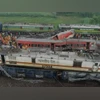
Many of these deficiencies were pointed out by the Commissioner of Railway Safety in its probe report after the accident in June, which claimed nearly 300 lives.
“The Rolling Block Programme is showing impressive progress. We initiated it as a pilot programme with the modest goal of one week of forward planning for repair and maintenance. Initially, integrating all zonal railways into an integrated block was challenging. However, we have successfully expanded the scope of the programme to two months now,” said a senior railway official.
Rolling block planning involves each zonal railway updating its operational safety work every week with an eight-week buffer, which is then reviewed by the board for integrated planning. The official mentioned that the Japanese rail system operates on a 26-week rolling block system, providing a model for enhanced safety measures.
For the railways, this approach translates into safer train operations. Previously, the pressure to generate higher revenue from freight and passenger trains often caused hesitation among field officials in demanding longer or more frequent blocks.
A previous report by Business Standard highlighted that following the Balasore tragedy, then Chairman and Chief Executive Officer of Railway Board, Anil Kumar Lahoti, emphasised in a meeting with zonal heads that this practice needed to change. He underlined that even the lowest-level staffer should not hesitate to stop a train if there is even the slightest doubt over safety, and some margin of error in judgment would be allowed in these cases.
A maintenance block refers to a period of a few hours during which train operations are entirely suspended in a specific area. This pause allows for repair work in electrical equipment, tracks, signalling, and civil engineering.
“There was no synchronisation among contractors, technicians, maintenance staff, and zonal administrative staff. Each division used to have its own plans, resulting in delays in crucial safety works and wastage of manpower,” explained another official. However, records indicate that progress has been slower than expected. According to the ministry’s response to a question in the Lok Sabha on August 9 — two months after the accident — the advance maintenance planning system had only achieved two weeks of forward planning.
Despite the dire consequences of lapses in the system, many railway divisions had not submitted their block plans for two weeks even after a month. The railway board asked zonal heads to comply, as around 7 divisions had sent no rolling block plans for July 10-23. Lahoti had previously mentioned that the plan would be "watched seriously".
The ministry had earlier stated that the ultimate goal is to ensure six months of forward planning on a continuous basis. However, officials said no firm deadline had been set for this plan’s implementation.


 "Odisha triple train crash")