


Home / India News / Special focus on Naxal-hit areas in industrial policy: Chhattisgarh CM
Special focus on Naxal-hit areas in industrial policy: Chhattisgarh CM
In an interview, Chief Minister Vishnu Deo Sai discusses investment pacts from his foreign visit, the state's industrial policy, efforts to end Naxalism, and plans to create a State Capital Region
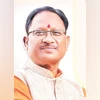 "Vishnu Deo Sai")
premium
Chhattisgarh Chief Minister Vishnu Deo Sai
6 min read Last Updated : Sep 07 2025 | 11:24 PM IST
Listen to This Article
Days after returning from Japan and South Korea, Chhattisgarh Chief Minister Vishnu Deo Sai speaks to Archis Mohan at Chhattisgarh Sadan in New Delhi about the agreements signed to boost investment in the state, his government’s plan to create a State Capital Region (SCR), efforts to plug revenue leakages, and preparations to mark 25 years of the state’s creation on November 1. Edited excerpts:
What have been the gains from your visit to Japan and South Korea?
It was a highly productive visit. We set up the Chhattisgarh Pavilion at the Osaka World Expo 2025 from August 24 to 30, which attracted a daily footfall of around 30,000 visitors. We showcased the state’s new industrial policy and presented our signature products, including Dokra metal craft, Kosa handicrafts, silk products, and the Buddhist heritage of Sirpur. We also organised investor-connect sessions in Tokyo and Seoul, where discussions covered sectors such as artificial intelligence, semiconductors, clean energy, food processing, and skill development.
Six agreements were signed, including one focused on skilling. Japan is keen to conduct skilling courses in Chhattisgarh, and a Japanese delegation is expected to visit the state later this month. During Prime Minister Narendra Modi’s visit to Japan, the country committed 10 trillion yen ($67 billion) in private investment in India over the next decade and announced a roadmap for talent mobility, including the placement of 50,000 skilled personnel from India to Japan. Additionally, Osaka-based Sartaj Foods will set up a food processing unit in the state. I also met the president of Morabu Hanshin Company to discuss collaboration in skill training and workforce exchange, as well as representatives of the Japan External Trade Organisation.
What are the highlights of the new industrial policy?
The new industrial policy, launched in November for a five-year period, has already resulted in investment commitments worth ₹6.65 trillion. We shaped this policy after consulting a wide range of stakeholders. These commitments will not remain merely on paper; they will be implemented effectively on the ground. Our bureaucracy is working diligently to deliver results.
The single-window clearance system has reduced processing time and is geared towards job creation. The government provides special incentives to projects that promise to create at least 1,000 jobs. Predominantly tribal-dominated areas like Sarguja, and regions such as Bastar that have lagged in development due to Naxalism, are receiving special attention. We are determined to achieve the target set by PM Modi and Union Home Minister Amit Shah of ending Naxalism by March 31, 2026. A semiconductor manufacturing facility is being set up, alongside an AI data centre.
What could be the impact of US tariffs on Chhattisgarh’s exports?
The impact is expected to be minimal, as we are actively working to diversify and increase our exports — particularly in textiles. We are encouraged by the promising results of our initiatives to promote silk exports.
What are your plans for Bastar, including mining activity in the district?
Bastar’s potential goes far beyond mining. The region has immense opportunities in tourism because of its waterfalls and natural beauty. We are promoting model villages and homestays, which have gained popularity after we launched a supportive policy.
Agriculture is another focus area, where we are providing irrigation support and boosting milk production by giving two cows to each tribal family. For this, we have partnered with the National Dairy Development Board (NDDB) for milk collection.
Tendu leaves are a vital forest produce and a source of livelihood for 1.25 million families. To support them, the state government has increased the procurement price of a standard bag of tendu leaves to ₹5,500.
What are the government’s plans to utilise its mineral wealth, and efforts to improve infrastructure?
We have allocated an additional ₹4,000 crore for infrastructure development, especially road construction, while the rail network is also being expanded. As we mark 25 years of Chhattisgarh’s creation, we honour the state’s creator, former PM Atal Bihari Vajpayee, and are celebrating his birth centenary.
Chhattisgarh is richly endowed with iron ore, coal, bauxite, tin, lithium and diamond reserves. We have eliminated corrupt practices prevalent under the previous Congress government and introduced reforms to optimise revenue from mining. We are also studying the practices of states that generate higher revenue from the sector to replicate successful models.
How is the state government dealing with issues such as the rights of tribals on their resources — jal, jungle, and zameen?
We are committed to safeguarding tribal rights by adhering to democratic processes. Jan sunwai (public hearings) are conducted, and decisions are taken only after approval from gram sabhas. Funds are allocated not only under corporate social responsibility but also from the Mineral Development Fund to provide health, education, drinking water, and other essential services in these areas.
The state government has announced a plan to shape an SCR…
The Vidhan Sabha recently passed the proposal to create an SCR, modelled on the National Capital Region. It will encompass Raipur and adjoining districts such as Durg-Bhilai and Naya Raipur Atal Nagar. An authority will soon be established to oversee the SCR’s development.
Atal Nagar–Nava Raipur is already shaping up as a modern city, and I assure you that in the coming years it will surpass Chandigarh.
The Congress has said the council of ministers you lead has 14 ministers, which is unconstitutional and one too many for a state with a 90-member Assembly…
There is already a case pending in the courts regarding the Haryana government’s council of ministers, which also has 14 members despite the state having a 90-member Assembly. We will await the court’s decision on this matter.
What is the status of ‘Modi ki guarantees’ on which the BJP contested the Chhattisgarh Assembly polls in December 2023?
We have fulfilled most of our promises within 20 months of taking office. These include approving the construction of 1.8 million houses for the poor, clearing pending dues of 1.3 million farmers, purchasing 21 quintals of paddy per acre from farmers at a price of ₹3,100, and providing ₹1,000 monthly allowance to women.
At the same time, we are maintaining a balance between welfare schemes and revenue.
We have introduced reforms, plugged leakages in the mining sector, ordered probes into corruption scams of the previous government, and increased excise revenue from ₹6,000 crore (during the Congress tenure) to ₹11,000 crore. Chhattisgarh now ranks among the top states in GST collections, and our enhanced revenues are funding these welfare schemes.