


Unchained melodies: DIY culture, AI are helping indie musicians grow
The indie music industry is on a roll. The old song is playing to a new tune
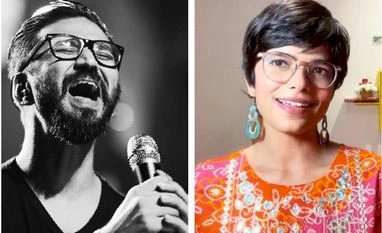 "Amit Trivedi, Ananya Dwivedi")
premium
Music director Amit Trivedi (left) launched his independent label, AT Azaad; musician Ananya Dwivedi is building a music platform for content creators (Photos: Social Media)
8 min read Last Updated : Mar 15 2024 | 10:43 PM IST
In the ever-fluid music industry, a revolution is underway — one fuelled by the fusion of DIY (do-it-yourself) culture and cutting-edge technology. From the rise of independent artists to the integration of artificial intelligence (AI), the traditional paradigms of music creation, distribution, and consumption are shifting, giving rise to a new era of creativity and accessibility.
Justh, a former chartered accountant turned singer-songwriter, epitomises this newfound independence. His track, ‘Chor’, made it to the top of Spotify’s Viral 50 (India) list, amassing more than 1.5 million views on YouTube and trending on Instagram reels at top three.
Justh’s success underscores the growing influence of independent artists who are forging direct connections with audiences, bypassing the conventional gatekeepers of the industry.
Gone are the days when artists were beholden to record labels for exposure and infrastructure, says music director-singer Amit Trivedi.
Adds musician Ananya Dwivedi (unplugged_ananya on Instagram): “We are living in the times of ‘trend’.” Dwivedi is building a music platform for content creators. People on social media, especially Instagrammers, she adds, need music for everything – their stories, photos, and reels.
The indie music industry — that is, music produced by new singers or bands working with small, independent record companies — today has space for anybody who wants to create music. Digital platforms have given them access to wider markets. However, it has also birthed a generation of hopeful creators who may have no idea how the industry works.
Sold for a song
The creator economy today is not very different from the other industries of paid work. Just like thousands sit for competitive exams but only a few make it despite studying the same course, not every artist or creator who goes through the grind ends up with fame and money. Though digital platforms help musicians connect with their audience directly to distribute a song, creating music is hardly a one-person job. The six stages of music production – songwriting, arranging, tracking, editing, mixing, and mastering – require skills and money.
Dwivedi, before she was an independent artist, did a Rs 25,000 course to learn music production because of which, she says, she is now able to earn in lakhs. She started by creating a home studio set-up, making videos for social media and gaining a fan base. Eventually, she tapped into the creator economy by opening her own “Creator School” to become an enabler of music creation.
Teaching social-media-friendly music and conducting masterclasses to build home studios and distribute the music has become a growing business with a number of creators across platforms.
In an industry where creators can now easily gain more than 100,000 followers, the bell curve of who’s most famous is flat. Content is king, and what relates to the daily life of people, wins. “Social media churns numbers (in terms of views, likes, and shares), and these numbers bring you brands and collaborations,” says Dwivedi.
A steady stream
The rise of streaming services such as Spotify and YouTube has levelled the playing field, adds Trivedi. “Artists can now release their music without any middleman.”
However, Dwivedi says “there is very little an artist earns from streaming,” unless maybe they become a sensation like Badshah or the Kakkar siblings.
So where does the big money come from?
Tours, live shows, commissioned projects, collaborations, social video monetisation, sales, etc. But to reach there, again, an artist has to be somewhat popular or get help from a label.
That said, brands and the film industry have recognised the power of indie music. Before they became a nationwide sensation through their music for Bollywood film Gehraiyaan (2022), the composer duo of Oaff and Savera were already a hit among their fan base and had been enlisted with Spotify’s RADAR programme.
On the RADAR
Independent music, now the fastest-growing category on Spotify in India, saw the playlist, ‘Indie India’, grow by more than 200 per cent during the 12 months of 2023. Recognising indie music’s potential, Spotify introduced initiatives such as RADAR, Fresh Finds, Indie India, and more. These initiatives provide up-and-coming independent artists with a platform to connect with a broader local and global audience, including support for playlist curation and marketing, both on and off the platform.
On average, RADAR India artists saw a 20 to 25 per cent increase in followers after being playlisted. Artists such as Akshath Acharya, Tanmaya Bhatnagar, and Naalayak recorded growth of more than 30 per cent in streams after featuring on RADAR. Others such as Kanishk Seth found success in film music, proving that independent artists could transition to mainstream platforms with greater ease.
“The independent music space in India, once distinct from film albums, has witnessed a dynamic shift,” says Akshay Kapoor, CEO and founder of the platform Indian Music Diaries. “While independent artists have found opportunities to collaborate with the film industry, Bollywood artists are beginning to explore music outside of films,” he says.
One such is Amit Trivedi, who launched his independent label, AT Azaad, with the tagline, “Unshackled, untamed, azaad”, in 2020. “It is not like I don't enjoy making music for films, but there is something else about making music without scripts, being truly free,” he says.
Tune into the MADverse
Among the digital trends disrupting – or perhaps assisting – the industry is AI. To gauge its impact, it might help to step into the ‘MADverse’.
Founded by tech entrepreneur Rohan Nesho Jain, this is a one-stop service platform for independent artists. MADverse enables everything, from audio-video distribution, royalty collection, collaborative royalty splits, and management, to marketing through tools such as pre-save, master streaming link and link in bio (micro website builder). It also covers promotion through playlisting and social media, and includes sync licensing to movies, games, and TV.
“For an artist like me, who is striving to grow while navigating the complexities of the industry, MADverse provides an invaluable platform, allowing artists to focus on creating art,” says Bharg Kale, a New Delhi-based singer-songwriter and producer.
Bharg, who has over 20,000 subscribers on YouTube and 33,000 followers on Instagram, recently unveiled his debut solo album, “Nikamma”, with MADverse’s help.
The platform currently hosts more than 21,000 artists, including recognisable ones such as Prabh Deep, Rashmeet Kaur, Sunny Kaushal, Amit Bhadana, Yashraj, Bharg, and Abhijay Sharma.
Artists on MADverse can access music production services offered through packages ranging from free to Rs 2,999 a year. Earnings for the artists come from streaming royalties and sync licensing, with some making upwards of Rs 10 lakh.
On what makes MADverse different from traditional labels, Jain says, “The key distinction lies in the ethos and accessibility of the tools, which are typically reserved for established artists.” The platform, he adds, prioritises transparency in data and numbers, “a feature often lacking in traditional label agreements”.
Despite availing of these services, artists retain complete ownership of their songs, he says. “With a decentralised system that empowers artists to take centre stage, artistry prevails.”
For a musician willing to shell out Rs 800, the platform claims to help master the tracks in two minutes flat. And there is more.
On Friday, the platform launched an AI Art Cover Generation tool as an alternative to designers and production houses, some of whom are said to charge an arm and a leg. With this tool, musicians can describe their song's essence, or provide keywords, and the AI will generate a range of unique, professional-quality cover art options. Jain says he also plans to roll out an AI artist relations executive with 24X7 service.
The indie music industry is on a roll. The old song is playing to a new tune.
Music creators’ toolkit
Hook it: A song with a hook is a winner on digital platforms
Originality: Best trends are often driven by original, but hyperlocal, unique content
Playlisting: A great way to expose music on streaming platforms to an audience that may not have come across it yet
Build communities: Online chat groups, like the one enabled by Instagram for creators, allows a consistent connection with fans
Collaborations: Creating with other musicians, both within and outside the genre, to reach new audiences
For social media: Success equals the number of ‘save’, ‘watch’, ‘shares’
Music for marketing: Brands dig music as marketing strategy