


Leather industry looks at boom year with US, EU trade deals in bag
India-US and India-EU trade deals lift sentiment for leather exporters, who expect stronger orders, factory expansion and job creation as global sourcing shifts to India
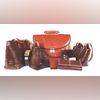 "Tamil Nadu, Uttar Pradesh and West Bengal are the three top contributors to Indian leather exports.")
premium
Tamil Nadu, Uttar Pradesh and West Bengal are the three top contributors to Indian leather exports.
4 min read Last Updated : Feb 04 2026 | 11:16 PM IST
Listen to This Article
The India-United States (India-US) trade agreement has lifted sentiment among leather exporters, who are now looking ahead to a strong year after months of uncertainty.
Along with the free-trade agreement (FTA) with the European Union (EU), the pacts are expected to position India as a key manufacturing hub for global brands as companies diversify supply chains under the China-plus-one strategy, say exporters.
Across the industry, the shift in mood is hard to miss. The boom is coming, and all members of the Indian Leather Products Association (ILPA) are excited, said M Azhar, president.
“We expect 2026 to be a strong year for India’s leather industry. Orders will flow in, factories will expand, and employment will increase.”
Abdul Wahab, regional chairman (south), Council of Leather Exports, said: “The future is perfect as we have both the deals – the India-EU FTA and India-US.”
The deals will change leather, footwear, and non-leather in a big way, pushing exports to $14 billion by 2020 from around $5 billion now, he added.
“Already 10 factories have seen large-scale investment, and now they are set to go up like the ones in Tamil Nadu, Andhra Pradesh, and Uttar Pradesh.”
Tamil Nadu, Uttar Pradesh, and West Bengal are the three top contributors to India’s leather exports.
According to Arjun Kulkarni, past president, ILPA, exports from India to the US could rise 15-20 per cent following the deal, which significantly lowers duties.
“With the US accounting for about 20 per cent of our exports, the tariff cuts make India more competitive than peers such as Vietnam, China, Bangladesh, and Indonesia. As a result, we expect more American buyers to shift sourcing to India,” Kulkarni said.
Vietnam, a major rival in electronics, garments, and footwear, faces a 20 per cent tariff, while Indonesia, Malaysia, and Thailand are at 19 per cent. Globally, India’s tariff positioning compares favourably with large exporters: Brazil faces 50 per cent; Myanmar and Laos 40 per cent; South Africa 30 per cent; and Mexico 25 per cent. Even developed economies such as Canada are at 35 per cent.
India in FY25 exported leather and leather products worth around $4.8 billion. The US, which accounts for around 20 per cent of India’s leather exports, is the largest importer. The US is followed by Germany, the United Kingdom (UK), and Italy, which together contribute about 25 per cent.
In August, the US administration imposed an additional 25 per cent tariff on Indian exports as penalty for the country’s purchase of Russian oil.
The combined 50 per cent tariff, comprising a 25 per cent reciprocal levy and a further 25 per cent linked to Russian oil imports, dealt a blow to orders from the US.
Azhar, who is managing director of Crescent Exports Syndicate, said that exports were dull after the US tariff.
The company, which has factories in the Calcutta Leather Complex, manufactures handbags and wallets for Hugo Boss’ global markets, but exports to the US were halted.
“The tariff was very high and we could not export to the US.”
Azhar also supplies to department stores like Macy’s and Walmart there.
Kevin Juneja, managing director, JC International, said while existing orders were smoothly carried out, new ones had fallen. “With the settlement in place, we expect volumes to recover and lost business to return.”
Hope is building in the industry.
N Mohan, director of Kothari Industrial Corporation and a member of the National Footwear and Leather Development Council, said: “This momentum reinforces India’s emergence as a global manufacturing and sourcing hub for footwear and accessories.”
The evolving India-US tariff understanding is a clear positive for India’s footwear and accessories industry, sharply improving competitiveness in the US market.
“Better tariff dynamics and the global supply-chain realignment make India a preferred destination for US-focused investment in footwear and accessories, creating a strong window for capacity build-up and long-term capital inflows,” he said.