What did the original strategists advise? Chanakya advocated scoring a decisive win whereas Sun Tzu advocated patient encirclement: India must learn to play Weiqi (known as GO), not chess. Let us unpack the spaghetti of issues by choosing those that matter.
The Chinese have the concept of tianxia, which visualises the world as being under the canopy of heaven; everything coexists in natural order. They also refer to their own country as Zhongguo (Middle Kingdom), which means that they are the centre of the civilised world, while others are referred to as yemanren (barbarians). China is the centre of the civilised world, surrounded by barbarians. They don’t wear their exceptionalism in day-to-day behaviour, but many foreigners discern an air of superiority.
In India, we too have deep-set beliefs. Our scriptures propound vasudeiva kutumbakam (the world is one), we believe in the purushartha (purpose), and dharma-artha-kama-moksha (righteousness, sustainable living, wants, and self-awareness). We think that we are Vishwa Guru (teacher to the world). The Indian air of exceptionalism most likely would be discerned by foreigners.
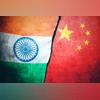
Two ancient and proud civilisations sit cheek by jowl, each with rich history and culture and each has a self-perception of exceptionalism. Both believe they have something unique to give to the world. They have a divergent economic performance.
Both were approximately wealthy around the year 1700, together accounting for about half the world. Indian wealth even pipped China’s, according to the records, alas during Aurangzeb’s years! Thereafter, both suffered two centuries of humiliation through colonisation and imperialism. Around 1980, both had similarly low gross domestic product (GDP). Some decades later, China’s GDP is five times India’s, and it has a vastly better infrastructure, with impressive records in research, technology, and manufacturing.
As a businessperson with no pretensions to expertise in the fields of foreign affairs, defence, and policy, I wonder if the two ascendant nations can do business together if they unravel the spaghetti of geopolitical relations. They should focus on trade, travel, and thought. Those were the very instruments of India-China relations for over 2,000 years anyway! We must reimagine the spirit of 1015 CE, when Chola Samudran sat opposite Song Zhenzhong to do business together; or the spirit of 1988, when Rajiv Gandhi and Li Peng signed a momentous cooperation agreement.
My experience of China is through visits for my employers. By now, Unilever has a $4 billion business in China, while the Tata group does a business of about $8 billion per annum. Of course, there are difficulties and challenges, but business investment, mutual benefits, and learning are the rewards for the toil. China is economically far ahead of India, which may have to play the “younger brother” as China did culturally a century ago. When Rabindranath Tagore visited China in the 1920s, renowned Chinese intellectual Liang Qichao remarked that India and China were like two brothers. “India is ahead of us, and we, like the little brother, followed behind.”
Mao was fond of Raj Kapoor in Awara (1951). Indian films like Dangal (2016) and Secret Superstar (2017) have grossed well in China. Bollywood films and cultural exchanges can promote relations like Raj Kapoor in Russia in the 1960s, and Amitabh Bachhan in Egypt in the 1980s. India runs a huge trade deficit with China, increasing each year in recent times. They may disagree on many things, but they have no choice but to engage. Trade, thought, and travel can provide a strong basis to engage.
Commenting on United States-China relations in his new book (Breaking the Engagement: How China Won and Lost America, OUP), David Shambaugh points out how it is the American business community that has spearheaded the idea of American engagement with China, far more than any other group. This is despite the natural, geopolitical response of avoiding engagement. Indian business must do likewise. There is a lesson for India.
The writer is an author. His new book, Chanakya and Sun Tzu: A Business Lens on Trade, Thought and Travel, with Nirmala Isaac as co-author, will be published by Rupa in February 2026. rgopal@themindworks.me


 "India china, India, China")