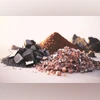
Ancient civilisations discovered lodestone and its natural magnetic qualities. Some cultures believed in its healing powers while others used it for navigation. It wasn’t until the 18th century that the properties of magnets were understood and deployed for industry. Traditional magnets were used in manufacturing and mobility until the introduction of high-efficiency rare-earth magnets a few decades ago. Rare-earth magnets, called so because they are “rarely” found in high-enough concentrations to be easily mined, are known for their exceptional magnetic strength that surpasses that of traditional magnets.
The use of high-efficiency magnets in consumer electronics, hard disk drives, renewable energy sectors, and mobility has made the material critically important to several industries. The global magnet market is expected to increase from $41.75 billion to $58.7 billion by 2033, a report by Research and Markets said. “Recent innovations in magnetic materials, such as improvements in neodymium iron boron (NdFeB) magnets and the development of environmentally sustainable magnetic solutions are supporting the market growth,” it said.
A production-linked incentive scheme worth ₹1,345 crore “has been circulated” to support manufacturers of rare-earth magnets in India,” said H D Kumaraswamy, Union Minister for Heavy Industry and Steel, in July. “We are targeting those engaged in complete end-to-end processing — from rare earth oxides to finished magnets.”
A report by State Bank of India said India's rare earth and compound imports for FY25 were valued at $31.9 million, while magnet imports reached $291 million. Rare-earth magnet imports spiked this year amid rising consumption in various sectors. “China dominates in India's direction of trade in rare earth minerals and compounds,” the report said, flagging the need for India to boost domestic exploration and reduce import reliance.
Rare-earth magnets are vital in various fields. In medical sciences, they are used in portable X-ray machines, MRI scanners, cancer therapies, and genetic-screening tests. In renewable energy, they are used in hybrid vehicles, wind turbines, advanced rechargeable batteries, and biofuel catalysts. In technology, they contribute to the development of lasers, fibre optics, radar detection systems, and high-temperature superconductors.
India’s requirement for rare-earths and magnets will increase rapidly across sectors. The fear that the supply of magnets is being weaponised is real and recognised by government and industry alike. The focus on enhancing domestic manufacturing capacity has to be matched by a relentless hunt for rare earths within the country.
Technology Development Board, which works under the government’s Department of Science and Technology, will fund Midwest Advanced Materials, a private company based in Hyderabad, for the commercial manufacturing of NdFeB rare-earth permanent magnets. The support also involves technology transfer from Nonferrous Materials Technology Development Centre to Midwest to annually produce 500 tonnes of finished NdFeB magnets, the most powerful type of rare-earth magnet. India Rare Earth Engineers, a state-owned company, will supply the raw materials. The project hopes to have an annual production capacity of 5,000 tonnes by 2030.
Indian entrepreneurs have established their technology prowess in space, which was once the preserve of the state. A similar movement is needed for rare earths and magnets. India’s public sector has a long history of rare-earths processing and magnet production. The combination of incentives and domestic demand should bring more private players into the sector. Now capabilities must convert to capacity enhancement.


 "rare earth magnet, magnet")