


Liberation day: How should Indian firms and policymakers respond?
Firms in India tend to be highly connected into the US economy through elite human networks
 "trade tariff, US tariff, Trump Tariff")
premium
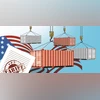
India has bubbled up into the prioritisation of the Trump team as the Indian government has the highest tariffs among large countries in the world | Illustration: Ajaya Mohanty
6 min read Last Updated : Mar 30 2025 | 10:08 PM IST
Listen to This Article
The United States (US) accounts for about a quarter of world gross domestic product (GDP), and used to play a leadership role in the globalised liberal order. Everyone’s eyes are now on April 2, termed “liberation day”, where the US promises new tariffs.
We in India have an intuitive understanding of underdevelopment. This gives us an edge in understanding the new US. Good policymaking involves research, consultation, and negotiation. None of these has been done in the period leading up to April 2.
With emerging-market levels of policy capability, the announcements of April 2 are fully unknown today. They will be littered with mistakes and unintended consequences. Populist regimes suffer from low capability and also from pride: It is hard to accept there was a mistake and backtrack. The index of global economic policy uncertainty is at its all-time high. After April 2 there is plenty of uncertainty yet to go.
In 1930, the US introduced the Smoot-Hawley Tariff Act, a significant milestone in the economic and political catastrophes that led to World War II. There is room for optimism that things will work out better this time. This is because the other advanced economies are less likely to repeat the mistakes of that period, in terms of retaliatory tariffs and retreats from floating-exchange rates.
It is easy to think of trade as a process of deal making: I cut my tariffs because you cut your tariffs. Economists know better: Unilateral tariff reductions in India are a good thing for our self-interest regardless of what others do. When you drink poison because someone else drank poison, it is mere machismo. Alongside this, the power of global financial markets and international capital mobility has reduced the possibility of governments interfering in floating exchange rates with competitive devaluations.
There is a recognisable strain that connects Smoot, Hawley, and Hoover (Herbert Hoover, then US President) to the philosophy of today’s US government. But the rest of the advanced economies remain at first-world capabilities in politics and the state. Some countries will carefully introduce tariffs that harm Donald Trump voters in marginal constituencies, in order to negotiate with the US in ways that its political leadership understands. In the main, it is unlikely that the rest of the global trading system will collapse.
The tariff story will not end on April 2, and looking beyond this, the liberation day is not the only problem in the air. From January 20 on, there has been an uncertainty shock to the world economy. Many kinds of uncertainty have been induced by the changed US government. Tariffs in the US will induce inflation, which could kick off rate hikes in the Fed through the 2 per cent inflation target. Sectors like tourism and higher education are in retreat. Tariffs will harm exports by the US. The decline in US asset prices and the dollar is likely to feed into reduced US consumption.
High uncertainty is adversely affecting the world economy. Managers look at the fog and prefer going slow, gathering more information before actions are taken. Firms worldwide have gone slow on decisions of strategic import. This demand shock has been coursing through the world economy from January 20, and is now percolating into data releases. There is little possibility of uncertainty going down through April and May.
Indian interests are critically tied to a successful world economy. The most important successful sector that has come about in India is services exports, with a run rate of doubling every eight years. Difficulties in the world economy are bad for India.
Firms in India tend to be highly connected into the US economy through elite human networks. They need to factor in greater uncertainty and reduced economic performance in the US while planning. It would be efficient to prioritise advanced economies other than the US as touchpoints for cross-border activities.
Difficulties in America create incentives for American companies to do more in India. Tariffs and tariff uncertainties in America favour an America+China+1 policy. More work will be sent to other production destinations, including India. If difficulties in the US economy hinder revenue and profit growth, boards can readily double activities in India through the beachheads of contracts and foreign direct investment that are already in place.
In some products, there could be relative gains for India if tariffs on Indian exports to the US prove to be lower than those seen with other countries. When many numbers are up in the air, and new announcements come out fast and furious, there will be some such situations. Indian firms need to seize them, recognising that in a few days that nice configuration of tariffs could be gone.
India has bubbled up into the prioritisation of the Trump team as the Indian government has the highest tariffs among large countries in the world. According to newspaper reports, the Indian government has responded to this situation by offering to pull back on Indian economic nationalism and protectionism. Indian trade barriers are too high, and there are high levels of effective protection because of the dispersion of rates. A single rate like 0 or 1 per cent, alongside special mechanisms crafted for special situations, is the right framework for us.
A sharp phase of pro-globalisation policies — even if done under threat of the Trump regime — would be a strong positive for the Indian economy. In that vein, we should applaud the decision to remove the “equalisation levy”, which was (in any case) an error in the thinking of Indian tax policy.
This moment could be catalysed for comprehensive economic agreements with the US, the United Kingdom, and the European Union. These should not be the old-style Indian agreements, with hundreds of special clauses that preserve the existing structure of protectionism: They should be simple agreements that remove all barriers to cross-border activities. Such a group of agreements, which do genuine globalisation as distinct from the traditional approaches of suspicion and protectionism, would be transformative for India’s economic future.
The author is a researcher at the XKDR Forum
Disclaimer: These are personal views of the writer. They do not necessarily reflect the opinion of www.business-standard.com or the Business Standard newspaper