There is no dearth online of pure profane and abusive T-shirts laced with POTUS hatred — “Duck you Fonald”, “FDT”, “*uck Trump and *uck you for voting Trump”, “FCK TRMP”, “Trump Lies, Trump Lies, Trump Lies”, “Anti Trump Social Club”, “Trump Unsubscribe”, “Clowns Are for the Circus, We Need a President,” “Let’s Go Felon,” and even one that reads, “One day, Trump’s epitaph should read: Here lies Donald Trump—just like when he was alive.”
Bright red Maga hats that have symbolised the Trump conquest of America are also finding their match. A week before US Vice-President J D Vance, and wife Usha, arrived in Greenland, red hats made their appearance in Nuuk, loudly saying “Make America Go Away”. In Canada, Mr Trump’s perceived attempt to convert the country into America’s 51st state has triggered a wave of trucker hats darker than Maga red that simply says, “Canada is not for sale.” Are they effective? Well, the hats seem surely to have united the local populace against Mr Trump’s expansionist ambitions. And they represent what political analysts call the three components of a successful protest: Resistance, refusal and ridicule.
Symbolism has always been the cornerstone of protest. And we don’t even have to go as far as Greenland to find the symbolism. Mahatma Gandhi used powerful symbolism, including the charkha (spinning wheel), simple clothing (khadi), and the “three monkeys” sculpture, to mobilise the masses against British rule, promoting self-reliance, non-violence, and resistance through acts like the Salt March and boycotts (Satyagraha). Canada and Greenland may want to take a few leaves out of the Mahatma’s brand book for inspiration. And Mexico can be invited to join.
Study of symbolism is a fascinating exercise. Symbolism plays a crucial role in protests by unifying participants, conveying complex messages, and facilitating social mobilisation, making the protests more impactful and visible. Symbols, like flags, slogans, or specific attire, can create a sense of shared identity and belonging among protesters, fostering solidarity and collective action. Symbols can be powerful motivators, serving as constant reminders of the cause and inspiring people to keep fighting. Symbols help to create a common language and understanding within a group, promoting shared meaning and purpose. Symbols can condense complex ideas, emotions, and grievances into easily recognisable and memorable forms. Visual symbols especially transcend language barriers, allowing protesters to communicate their message to a wider audience. Symbols can be used to draw attention to specific issues or injustices, making them more visible and impactful — facilitating social mobilisation and public engagement. Symbols can attract media attention, raising awareness about the protest and its goals. Symbols can shape public perceptions and influence public opinion, potentially leading to broader social change. Protests, through the use of symbols, can create a public sphere where different voices can be heard and where dominant narratives can be challenged. National flags, or flags representing specific movements or causes, can symbolise identity and unity. Memorable slogans, often displayed on banners or signs, can convey key messages and rally support. Specific clothing, like the yellow jackets worn by the Gilet Jaunes movement, can become powerful symbols of protest. Actions like raising fists or kneeling can be used to express solidarity or resistance. Protest art, like murals or graffiti, can communicate complex ideas and emotions in a visually engaging way.
So the anti-Maga protest is just beginning to scratch the surface. Hats and T-shirts are still polite stuff. The anti-Trump sentiment is building up for sure, but it still has a long way to go. And Mr Trump has had a big head start with the Maga idea. Honestly, it’s going to be tough for Greenland and Canada to play catch-up.
The author is chairman of Rediffusion


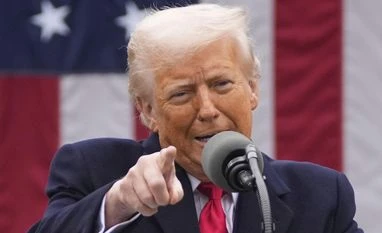 "Donald Trump, Trump")